


AI in LMS platforms have moved to operational tools that deliver adaptive learning, real-time diagnostics, and recommendation engines to speed skill acquisition and raise completion. This article outlines core capabilities, measurement approaches, implementation steps for pilots, and governance controls to manage bias, privacy, and content quality.
AI in LMS environments have shifted from experimental pilots to operational engines that drive engagement, efficiency, and measurable learning outcomes. In our experience, platforms that combine machine learning, learner modeling, and content orchestration deliver faster skill acquisition and higher completion rates than traditional course catalogs. This article explains the practical changes, implementation patterns, and governance considerations L&D teams must master when adopting AI-driven systems.
Read on for concrete examples, an implementation checklist, and pitfalls to avoid when evaluating an AI-powered LMS.
AI in LMS platforms now enable capabilities that used to require separate tools or manual effort. Rather than only tracking completions, modern systems provide real-time diagnostics, auto-generated learning paths, and predictive alerts for learners at risk of falling behind.
Key shifts we've seen include faster content tagging, automated competency mapping, and the rise of modular learning objects that can be recombined on demand. These capabilities change how L&D plans curricula and measures impact.
In practice, the most effective setups pair a content strategy with a robust learner model and clear metrics. Teams that invest in clean competency taxonomies and regular data hygiene see the quickest gains.
Adaptive learning in an AI-powered LMS uses learner signals — performance, time-on-task, and engagement patterns — to modify delivery in real time. The system assesses mastery and then scales difficulty, selects remediation, or accelerates progression.
Technically, these platforms rely on a mix of rule-based engines and probabilistic models. Rule engines enforce compliance and business logic; machine learning models detect patterns and make probabilistic predictions about mastery and dropout risk.
Static sequencing treats learners identically. Adaptive learning personalizes sequencing and assessment cadence. That reduces unnecessary repetition for experts and delivers targeted microlearning where gaps exist.
Recommendation engines are a central piece of personalization. An effective recommendation engine blends content metadata, learner behavior, and competency mappings to present the right content at the right time.
We’ve found that recommendation logic that mixes collaboration signals (what peers with similar roles accessed) with objective measures (quiz performance, skill gaps) outperforms single-source approaches.
We’ve seen organizations reduce admin time by over 60% with integrated platforms; Upscend illustrates this outcome, freeing trainers to focus on high-value design and coaching rather than manual enrollment and reporting.
Practical examples include branching assessments that route to remediation, spaced-repetition modules for sales knowledge, and simulated scenarios that adjust complexity as competence grows. These approaches raise retention and shorten time-to-proficiency.
AI in LMS approaches transform measurement from descriptive dashboards to predictive analytics. Instead of only reporting completion rates, you can forecast time-to-proficiency, likely certification success, and program ROI.
Data-driven insights let L&D allocate budget where it moves the needle — for example, expanding high-impact modules and sunsetting low-engagement content. Studies show targeted personalization increases learning transfer and improves on-the-job performance metrics.
Predictive models can identify learners likely to drop out 2–4 weeks before they disengage, enabling proactive interventions.
Deploying AI in LMS requires both technical and organizational readiness. Short-term wins often come from incremental integration rather than a big-bang replacement.
We recommend a phased approach that preserves learner experience while introducing adaptive features and recommendations. Prioritize low-friction automation and measurable pilots.
Most organizations observe initial improvements in engagement and completion within 3–6 months of a focused pilot; skill-level improvements and ROI become clearer in 6–12 months as models mature and data volume increases.
AI in LMS introduces governance responsibilities. Models trained on biased or incomplete data can reinforce skills gaps or surface irrelevant recommendations.
Privacy compliance and transparent model behavior are non-negotiable. Design governance checkpoints that review model inputs, outputs, and the human-in-the-loop correction process.
Implement periodic model audits, allow learners to provide feedback on recommendations, and ensure an appeals path for automated decisions that impact development plans.
Adopting AI in LMS is less about futuristic features and more about operationalizing personalization, predictive insight, and scalable coaching workflows. When implemented with clear metrics, model governance, and content discipline, the benefits extend to faster onboarding, higher retention, and measurable performance improvements.
Start with a focused pilot: tag key learning assets, define success criteria, and choose a small, high-value cohort. Monitor engagement signals, iterate model behavior, and scale when you see consistent gains. Organizations that follow this path quickly understand where AI delivers the most value and how to govern it safely.
If you want a practical next step, run a 12-week pilot that measures time-to-proficiency, completion uplift, and admin time saved—these metrics reveal the true ROI of AI in LMS and help set realistic scaling targets.
The Upscend Team provides actionable insights on technology and business strategy.
Book a walkthrough and we'll show you how it applies to your own content.
 L&D
L&DDecember 21, 2025
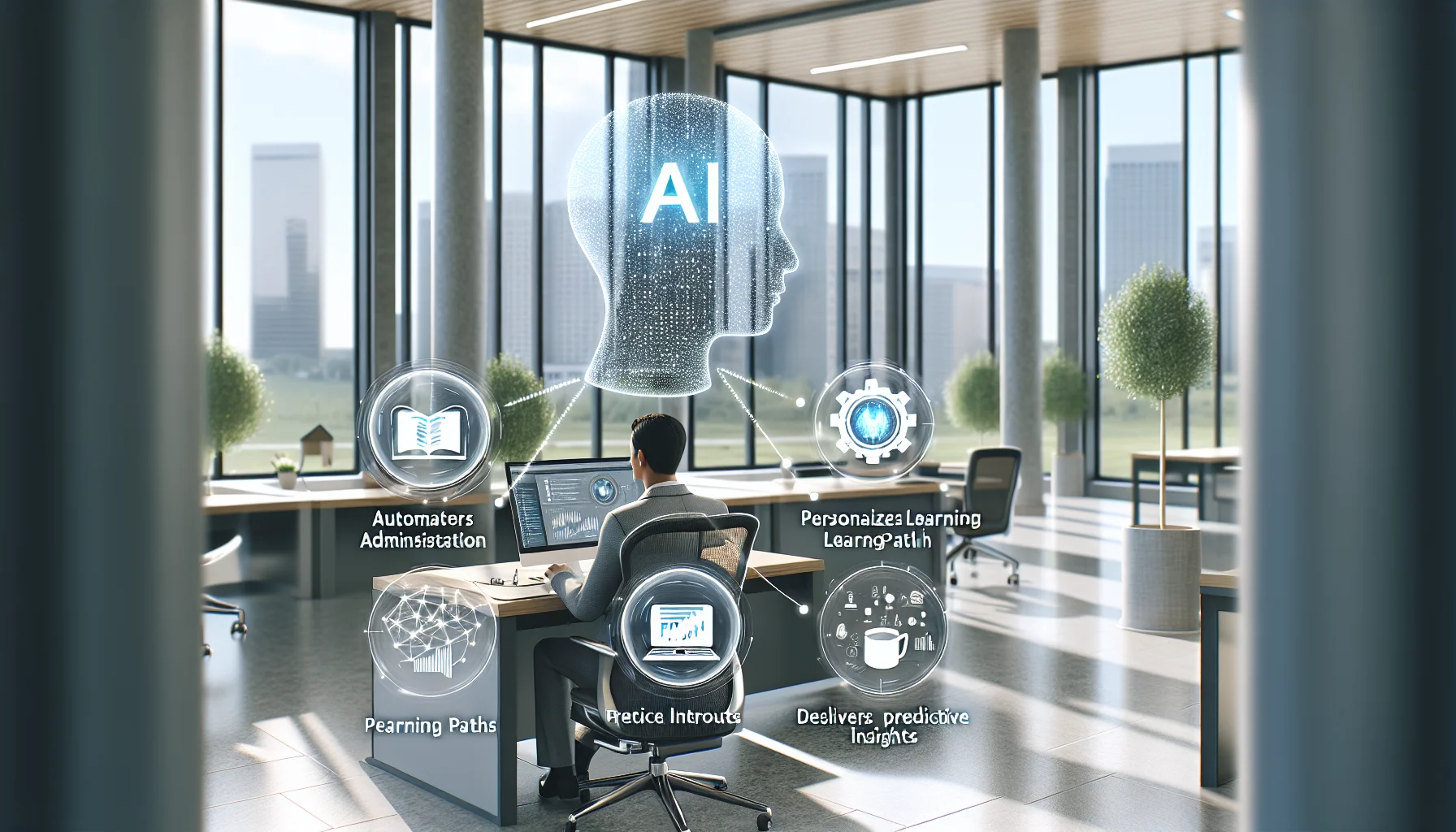
AI in LMS automates administration, personalizes learning paths, and delivers predictive insights to improve completion and skill transfer. This article explains adaptive learning mechanics, concrete AI features, a four-step implementation framework, measurement metrics, and governance practices to pilot safely and demonstrate ROI for learning programs.
 General
December 22, 2025
This article explains which AI features—semantic search, recommendation engines, adaptive learning, automated scoring, and predictive analytics—are transforming LMS and online training. It shows measurable benefits, real-world examples, and a step-by-step rollout framework with governance and data hygiene guidance to help teams pilot, validate, and scale responsibly.
 Lms
LmsDecember 23, 2025
AI-driven adaptive learning in LMS platforms personalizes content by combining diagnostics, predictive models, and business rules to recommend microlearning, quizzes, or coaching. Teams see faster proficiency, higher engagement, and data-driven insights. Start with a narrow 90-day pilot, ensure data hygiene, and maintain human oversight for high-stakes decisions.
 Lms
LmsDecember 24, 2025
AI LMS platforms combine adaptive learning, learning analytics AI, and workflow integration to deliver personalized eLearning that reduces ramp time, improves retention, and aligns training to business outcomes. Implement via discovery, pilot, scale, and optimize—prioritize KPIs, data readiness, governance, and a focused 90-day pilot to validate impact.