


This article explains which AI features—semantic search, recommendation engines, adaptive learning, automated scoring, and predictive analytics—are transforming LMS and online training. It shows measurable benefits, real-world examples, and a step-by-step rollout framework with governance and data hygiene guidance to help teams pilot, validate, and scale responsibly.
Understanding AI in LMS is essential for any organization modernizing digital learning. In our experience, the most impactful gains come when teams combine algorithmic intelligence with thoughtful instructional design.
This article breaks down the specific AI features changing course delivery, assessment, personalization, and operations, and shows practical steps for adoption with real-world examples and implementation tips.
Most modern LMS platforms embed a set of AI-driven capabilities that change how learners discover and consume content. These features streamline content curation, automate tagging, and surface the next best activity for each learner.
Core capabilities include automated content classification, search enhancement, and learning path prediction. When deployed thoughtfully, they reduce time-to-competency and increase learner engagement.
AI in LMS powers semantic search and content recommendations so learners find relevant modules without manual curation. Natural language processing (NLP) maps learning objectives to content and tags resources automatically.
Practical benefit: course teams spend less time organizing libraries and more time refining pedagogy.
Context-aware delivery uses learner signals (time on task, proficiency, role) to adapt what appears on the learner dashboard. These systems rely on predictive models that interpret behavior to recommend microlearning, refreshers, or advanced modules.
Adaptive routing increases completion rates by matching content type and length to the learner’s current context.
Adaptive learning is one of the highest-impact uses of AI in LMS. By adjusting content sequencing, difficulty, and feedback in real time, platforms help learners progress along optimized learning paths.
We’ve found that combining adaptive algorithms with human-curated learning objectives yields the best outcomes because subject-matter expertise guides model constraints.
Adaptive learning AI uses assessment results and interaction data to infer mastery and then dynamically selects the next learning activity. Models range from simple rule-based branching to Bayesian and reinforcement-learning approaches.
Benefits are measurable: reduced time on remedial content, higher retention, and more efficient instructor time.
Personalized learning features include learning path generators, spaced-repetition schedules, and tailored assessments. These features make each learner’s experience unique without manually authoring dozens of course variants.
Key design principle: preserve instructional intent while allowing the model to vary sequencing and presentation.
When evaluating how AI is being used in learning management systems, look for features that link learner behavior to measurable outcomes. Examples include predictive attrition models, competency mapping, and automated remediation.
Case evidence shows that programs using these features see improved completion and performance metrics.
Some of the most efficient L&D teams we work with use Upscend to automate content tagging and learner nudges, illustrating how teams operationalize AI-driven workflows. This example highlights how integrating operational automation with analytics accelerates quality improvements.
AI in LMS can flag learners at risk of dropping out or failing and recommend specific interventions—coaching, recap modules, or synchronous check-ins. These interventions are often more effective because they are timely and tailored.
Operationally, this reduces wasted coaching time and focuses human support where it has the highest ROI.
AI-driven competency mapping converts disparate activities into skill-level indicators. Systems then generate learning plans to close gaps. This makes progress interpretable by managers and aligns training to business outcomes.
Competency alignment is critical for proving L&D impact to stakeholders.
Assessment is another area where AI in LMS is creating breakthroughs. Automated grading, skill inference, and feedback generation allow for scalable formative assessment without sacrificing quality.
We advise teams to pair AI scoring with human review to catch nuance and keep models calibrated.
Advanced NLP and rubric-based scoring produce instant, actionable feedback on open responses, simulations, and case analyses. This improves learner reflection cycles and shortens the time between assessment and learning.
Immediate feedback has a multiplier effect on learning velocity.
AI-enabled proctoring and behavioral analytics can verify test integrity and identify suspicious patterns. While useful, these tools must be implemented ethically and with transparent privacy controls.
Trust and consent are essential when deploying monitoring technologies.
| Feature | Impact |
|---|---|
| Automated scoring | Faster feedback, scalable assessment |
| Skill inference | Better competency mapping |
To adopt AI in LMS effectively, follow a staged approach: define objectives, pilot with a bounded cohort, measure outcomes, and scale based on validated impact.
In our experience, the teams that succeed marry data engineering discipline with instructional design and governance.
A practical framework looks like this:
Effective pilots require clean data pipelines, labeled datasets, and model monitoring. Governance ensures fairness, privacy compliance, and ongoing validation of learning models.
Model governance should include drift detection and a human-in-the-loop review for high-stakes decisions.
Best practice: Measure both learning metrics and business KPIs to demonstrate ROI.
Teams often expect AI to be a plug-and-play solution. Common mistakes include weak data hygiene, unclear objectives, and ignoring instructor workflows. These issues reduce adoption and can produce misleading insights.
We recommend building small, measurable experiments and iterating rapidly while preserving human oversight.
Pitfall 1: deploying models without baseline metrics. Always capture pre-deployment baselines.
Pitfall 2: overpersonalization that fragments cohorts and complicates assessment. Keep group-level comparability in mind.
Use a lightweight experimentation platform to run controlled tests. Maintain an AI playbook documenting model assumptions, data sources, and decision thresholds.
Transparency with stakeholders builds trust and accelerates adoption.
AI in LMS is no longer experimental—it's a set of practical features that amplify instructional expertise and operational efficiency. When used responsibly, these capabilities improve learning outcomes, reduce administrative burden, and align training to measurable business goals.
Actionable next steps: run a focused pilot, instrument learning outcomes, and set governance guardrails. Prioritize features that solve the highest-friction problems first—search, personalization, and assessment—and expand from there.
Ready to evaluate your roadmap? Start by mapping current bottlenecks, selecting one measurable pilot, and defining success metrics for a 90-day cycle.
The Upscend Team provides actionable insights on technology and business strategy.
Book a walkthrough and we'll show you how it applies to your own content.
 L&D
L&DDecember 21, 2025
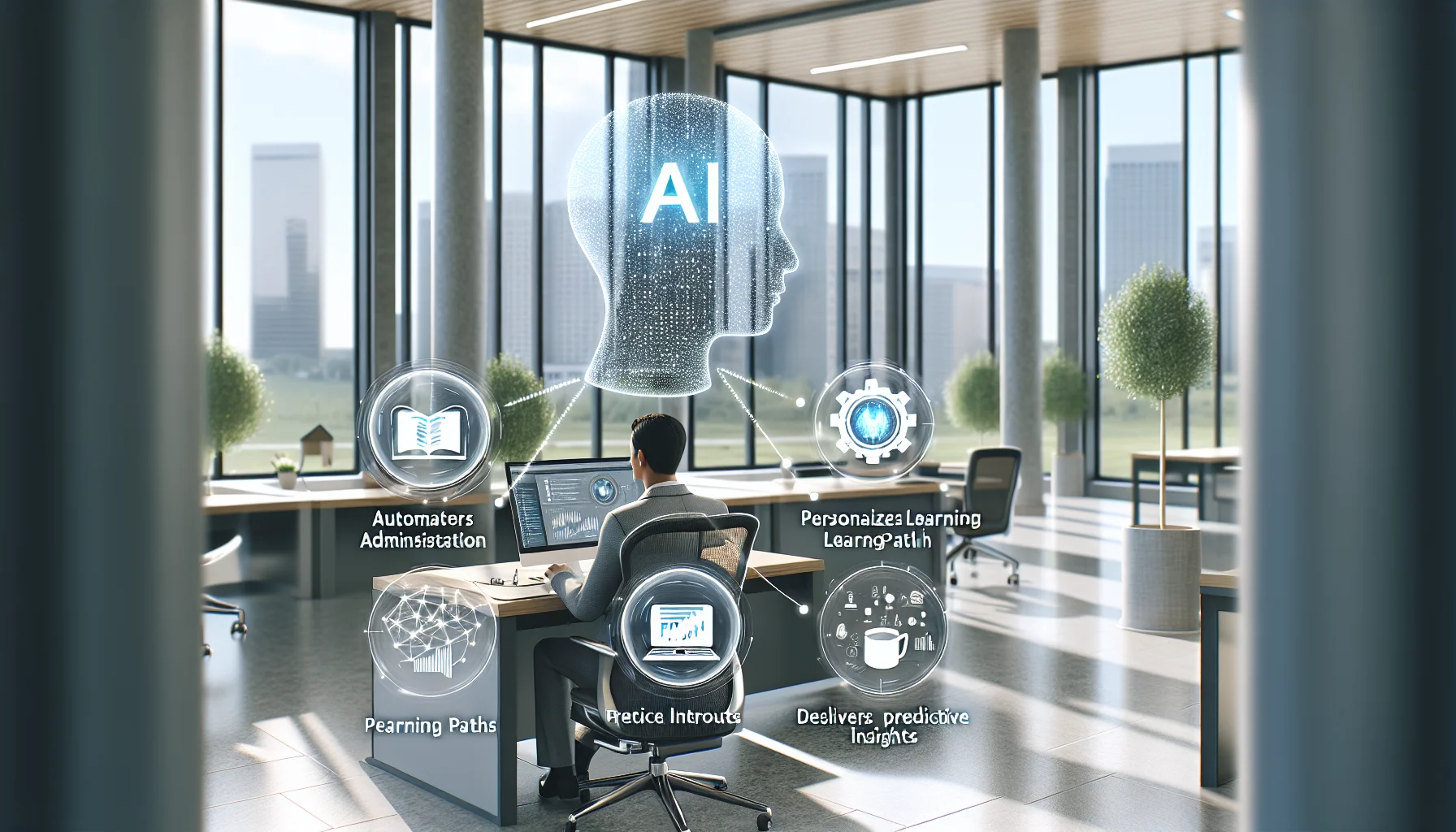
AI in LMS automates administration, personalizes learning paths, and delivers predictive insights to improve completion and skill transfer. This article explains adaptive learning mechanics, concrete AI features, a four-step implementation framework, measurement metrics, and governance practices to pilot safely and demonstrate ROI for learning programs.
 L&D
L&DDecember 21, 2025
AI in LMS platforms have moved to operational tools that deliver adaptive learning, real-time diagnostics, and recommendation engines to speed skill acquisition and raise completion. This article outlines core capabilities, measurement approaches, implementation steps for pilots, and governance controls to manage bias, privacy, and content quality.
 L&D
L&DDecember 21, 2025
This article explains how AI in LMS personalizes learning through content tagging, learner modeling, recommendation engines, and adaptive assessment. It provides a three‑phase rollout (pilot, scale, optimize), measurement tiers (micro/meso/macro), common pitfalls, and a practical 90-day pilot plan for L&D teams to validate and scale personalization.
 Lms
LmsDecember 24, 2025
AI LMS platforms combine adaptive learning, learning analytics AI, and workflow integration to deliver personalized eLearning that reduces ramp time, improves retention, and aligns training to business outcomes. Implement via discovery, pilot, scale, and optimize—prioritize KPIs, data readiness, governance, and a focused 90-day pilot to validate impact.