


AI-driven adaptive learning in LMS platforms personalizes content by combining diagnostics, predictive models, and business rules to recommend microlearning, quizzes, or coaching. Teams see faster proficiency, higher engagement, and data-driven insights. Start with a narrow 90-day pilot, ensure data hygiene, and maintain human oversight for high-stakes decisions.
AI in LMS ecosystems is transforming how organizations deliver training, assess progress, and measure impact. In our experience, blending adaptive learning with smart automation elevates retention, reduces time-to-competency, and increases measurable ROI. This article explains practical ways to implement AI in LMS, highlights proven use cases, and gives step-by-step guidance teams can apply immediately.
We focus on evidence-based methods, common pitfalls, and concrete examples so learning leaders can move beyond theory to operational results with AI in LMS solutions.
Adaptive learning systems make content delivery responsive to individual performance, motivation, and context. Rather than forcing every learner down the same path, modern LMS platforms use algorithms to present the next best activity, assessment, or microlearning unit.
This shift is about more than convenience. Studies show adaptive approaches boost knowledge retention and improve completion rates by tailoring pacing and difficulty. When you pair this with AI in LMS analytics, you gain a continuous feedback loop that informs content design and learner support.
Personalized learning LMS capabilities provide three immediate advantages: faster upskilling, reduced remediation, and richer performance insights. Organizations see shorter time-to-proficiency and better alignment between training and business KPIs when adaptive systems are implemented thoughtfully.
An effective adaptive stack combines content, learner modeling, assessment engines, and orchestration layers. Each part must interoperate so the system can detect knowledge gaps and prescribe the appropriate intervention in real time.
Key components include a content taxonomy, competency maps, behavior-tracking instrumentation, and the machine learning models that power recommendations.
Machine learning in training generally uses item-response and sequence models to predict mastery and next-best actions. These models analyze response patterns, time-on-task, and contextual signals (role, prior experience) to adapt sequences and assessments.
When integrated with an LMS, these models turn raw interaction logs into personalized learning plans, which is one of the most practical applications of AI in LMS today.
The decision process combines diagnostics, predictive modeling, and policies set by L&D. First, diagnostics identify immediate errors or misunderstandings. Next, predictive models estimate mastery likelihood and forecast which interventions will succeed. Finally, business rules (compliance needs, role requirements) filter options.
AI in LMS uses these layers to recommend microlearning, adaptive quizzes, or coach interventions—ensuring learning is timely and efficient.
Common high-value signals include: assessment accuracy, time-to-answer, retention intervals, and prior role-relevant experience. Combining these with performance data from work systems enhances model precision and reduces false positives.
Use cases range from compliance refreshers to complex sales enablement and onboarding. The most impactful deployments focus on measurable business outcomes rather than novelty. Here are three practical scenarios where AI in LMS drives clear value:
Some of the most efficient L&D teams we work with use platforms like Upscend to automate this entire workflow without sacrificing quality. That approach illustrates how teams combine content orchestration, assessment data, and automation to scale adaptive learning while preserving governance.
Example 1: A financial-services firm reduced mandatory training time by 30% by using AI in LMS to identify employees who already demonstrated mastery and delivering targeted refreshers only where needed.
Example 2: A software company improved feature adoption by embedding short adaptive simulations that respond to in-app behavior; trainees received just-in-time practice mapped to actual product usage.
Adopting AI in LMS sounds attractive, but teams often stumble on data quality, model governance, and change management. Without clean data and clearly defined success metrics, recommendations will be noisy and mistrusted by learners.
Another common issue is over-automation: removing human judgment from critical learning decisions can erode learner trust and miss nuanced development needs.
We've found that teams that combine iterative pilots, stakeholder alignment, and transparent model explanations achieve adoption faster and with fewer reversals.
Measuring the effect of AI in LMS requires combining learning metrics (completion, mastery, recall) with business outcomes (production metrics, sales conversions, error rates). Create a measurement plan that links learning interventions to operational KPIs.
Continuous optimization follows a simple loop: measure, analyze, iterate. Use A/B tests to validate model-driven pathways and expand what works.
Track short-term and long-term indicators. Short-term: time-to-complete, mastery rates, drop-off points. Long-term: performance improvements, retention, and promotion rates. Dashboards should surface cohorts, content effectiveness, and model confidence scores to enable fast decisions.
AI in LMS becomes strategic when analytics inform content investment—shifting resources to modules that move the needle on business objectives.
Adopting AI in LMS combined with adaptive learning systems offers a high-leverage path to personalized, efficient training. To move from pilot to scale, focus on clean data, aligned KPIs, human oversight, and iterative testing.
Start with a narrow, high-impact use case, instrument it for measurement, and expand based on evidence. Execution matters more than features—teams that pair discipline with a learner-centered design see the best outcomes.
Next steps:
Implement these steps to unlock the measurable benefits of adaptive learning and ensure your LMS delivers personalized development at scale.
Call to action: If you’re ready to pilot adaptive learning, start by mapping a high-impact workflow and measuring a single KPI for 90 days—then iterate based on the data you collect.
The Upscend Team provides actionable insights on technology and business strategy.
Book a walkthrough and we'll show you how it applies to your own content.
 L&D
L&DDecember 21, 2025
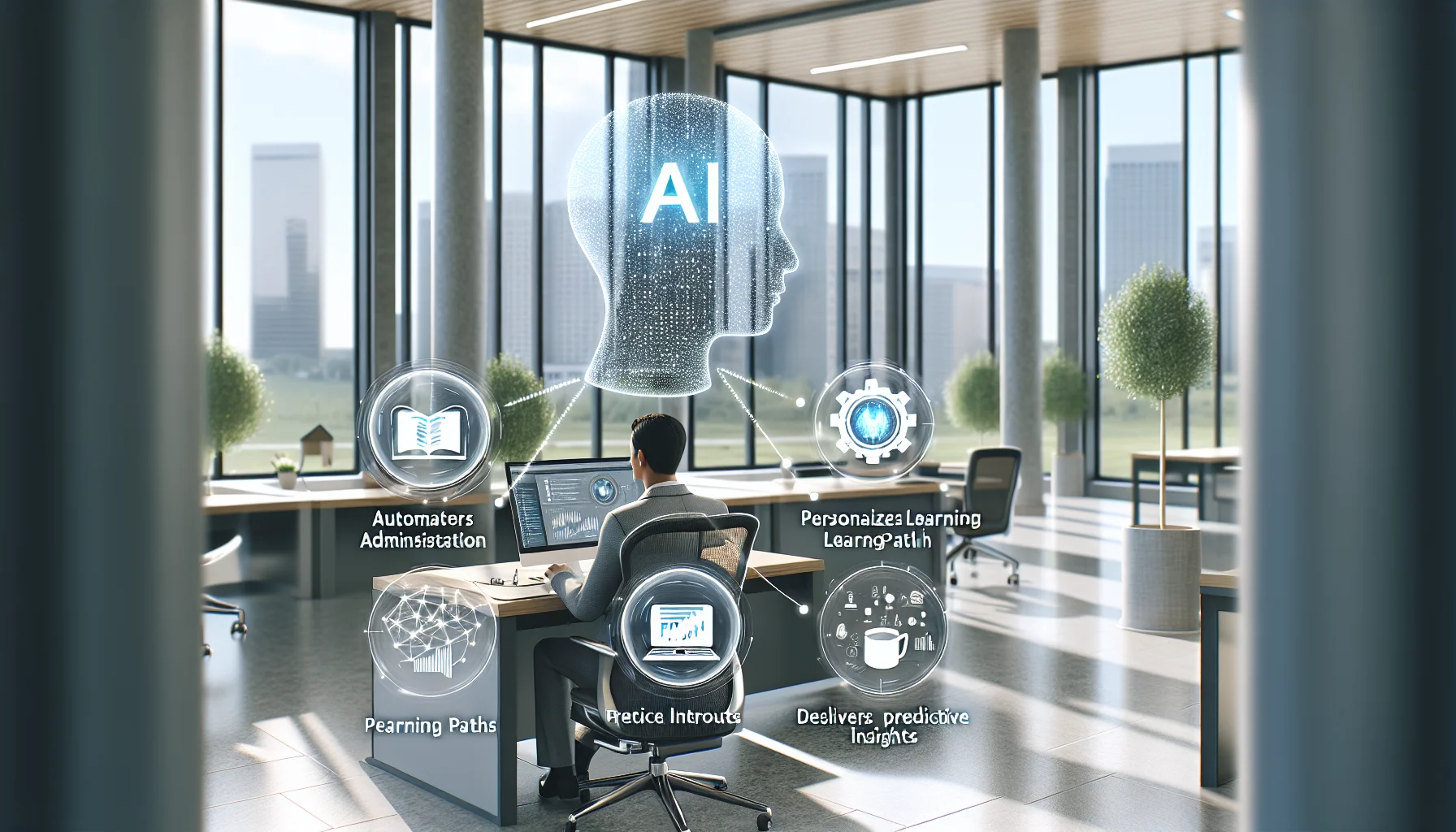
AI in LMS automates administration, personalizes learning paths, and delivers predictive insights to improve completion and skill transfer. This article explains adaptive learning mechanics, concrete AI features, a four-step implementation framework, measurement metrics, and governance practices to pilot safely and demonstrate ROI for learning programs.
 L&D
L&DDecember 21, 2025
AI in LMS combines learning analytics, recommendation engines, and adaptive assessments to create personalized learning paths, detect skills gaps, and boost outcomes. Implement responsibly: ensure data readiness, run a focused pilot, use explainable models, and monitor bias. Case studies show completion rising from 62% to 85% and certification pass rates from 70% to 91%.
 General
December 23, 2025
AI in LMS combines recommendation engines, auto-tagging, auto-assessment, and on-demand content generation to reduce admin work and accelerate skill development. Start with lifecycle automation and short pilots, measure time-to-competency and completion rates, and enforce governance for bias, transparency, and auditability to scale personalized learning effectively.
 Lms
LmsDecember 24, 2025
AI LMS platforms combine adaptive learning, learning analytics AI, and workflow integration to deliver personalized eLearning that reduces ramp time, improves retention, and aligns training to business outcomes. Implement via discovery, pilot, scale, and optimize—prioritize KPIs, data readiness, governance, and a focused 90-day pilot to validate impact.