


This article explains how ai personalization lms uses adaptive learning algorithms and recommendation engines to tailor content, increase engagement, and shorten time-to-competency. It outlines practical design steps, implementation checklists, common pitfalls with mitigations, and a measurement framework. Readers get immediate actions—pilot, tagging standard, and a KPI-linked dashboard—to start testing.
ai personalization lms is reshaping how organizations deliver training and how learners engage with content. In our experience, the difference between a static LMS and one that leverages AI-driven personalization is not incremental—it changes completion, retention, and application of skills.
This article explains the mechanisms behind ai personalization lms, shows practical implementation steps, and presents examples, pitfalls, and measurement frameworks you can use immediately.
Adoption of online learning has matured past simple content delivery. Learners expect relevance, speed, and measurable impact. Systems that apply adaptive learning algorithms and fine-grained learner models deliver on those expectations by tailoring content to abilities and goals.
Studies show personalized learning can increase engagement by double-digit percentages and reduce time-to-competency. From compliance modules to leadership development, the value of ai personalization lms is evident in reduced friction and better outcomes.
Key drivers for immediate investment:
At its core, ai personalization lms combines learner data, content metadata, and algorithms to deliver the right learning at the right time. The two most common technical approaches are adaptive learning algorithms and a recommendation engine lms.
Adaptive learning algorithms continuously assess learner performance and adjust difficulty, pacing, and remediation. They rely on mastery models, item-response theory, and increasingly, reinforcement learning to optimize pathways.
In our experience, effective adaptive systems reduce redundant content exposure and surface gaps earlier, which shortens remediation cycles and improves learner confidence.
A recommendation engine lms uses collaborative and content-based filtering—plus contextual signals like role, deadlines, and performance reviews—to suggest modules, articles, or mentors.
These engines make personalization scalable across thousands of users and content items, turning passive catalogs into dynamic learning ecosystems.
Creating personalized learning paths requires a blend of instructional design, data strategy, and engineering discipline. Begin with clear objectives: define the competencies, assessments, and success metrics you care about.
Steps we've applied successfully:
Understanding how ai personalizes learning in lms means looking at the workflow from registration to performance review. AI can automate learner segmentation, suggest next steps after each assessment, and flag employees for manager coaching.
We found that starting with simple hooks—recommendations in the dashboard and nudges in email—yields quick wins while you refine the underlying models.
There are multiple vendor approaches: some platforms emphasize content curation with a strong recommendation engine lms; others focus on deep adaptive engines that tune assessments.
A turning point for most teams isn’t just creating more content — it’s removing friction. Tools like Upscend help by making analytics and personalization part of the core process, turning engagement signals into actionable course recommendations without heavy engineering overhead.
Examples we’ve seen work well in enterprise deployments:
When building a course recommendation workflow, follow this practical checklist:
AI can underdeliver without disciplined data strategy and governance. Common failure modes include noisy signals, poorly tagged content, and lack of alignment between learning outcomes and algorithmic objectives.
Major pitfalls and mitigations:
Start with transparent data policies and periodic audits. Use synthetic tests and fairness metrics to surface disparate impact, and ensure learners can correct profile data. In our experience, a documented governance playbook prevents most problems before they scale.
Measuring success for ai personalization lms means linking learning activity to business outcomes. Standard metrics include completion rate, time-to-competency, post-learning performance, and retention.
A straightforward measurement framework:
Best practices for analytics:
Adopting ai personalization lms is an iterative journey. Start small, measure rigorously, and scale what demonstrably improves learning outcomes. In practice, that means pairing a clear competency model with lightweight algorithms and strong governance.
Immediate action items you can implement this quarter:
When you combine these steps with careful model monitoring and stakeholder alignment, AI-driven personalization becomes less about technology and more about predictable performance improvement. The next logical step is to pick one learning use case and design a simple experiment: define the hypothesis, select the signals, and measure the impact. That experiment will yield both learnings and leverage for broader rollout.
Call to action: Choose one high-impact learning objective and run a 6–8 week pilot to compare AI-driven personalization against your current approach; capture engagement and performance metrics to inform the next phase.
The Upscend Team provides actionable insights on technology and business strategy.
Book a walkthrough and we'll show you how it applies to your own content.
 L&D
L&DDecember 21, 2025
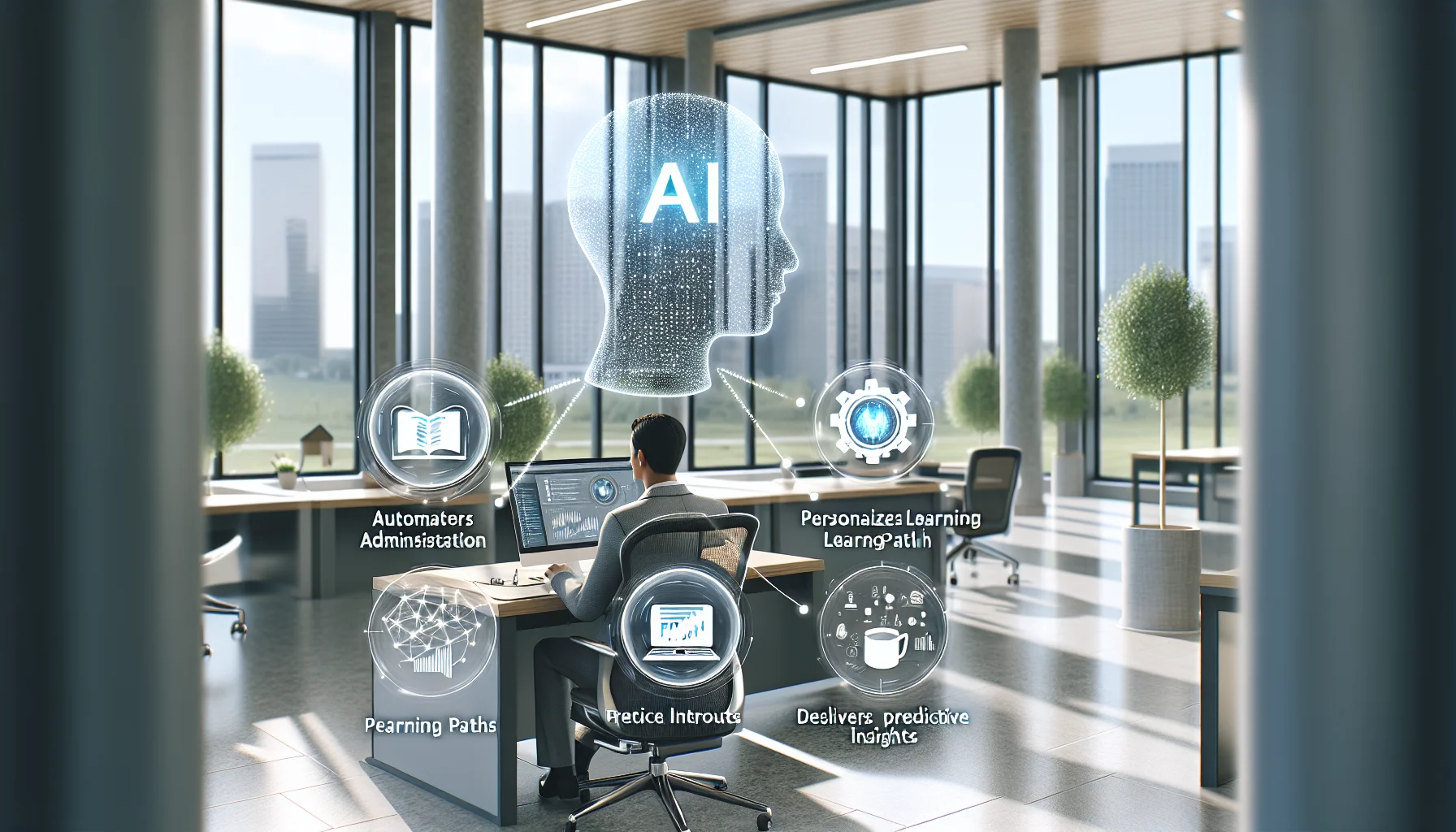
AI in LMS automates administration, personalizes learning paths, and delivers predictive insights to improve completion and skill transfer. This article explains adaptive learning mechanics, concrete AI features, a four-step implementation framework, measurement metrics, and governance practices to pilot safely and demonstrate ROI for learning programs.
 L&D
L&DDecember 21, 2025
AI in LMS combines learning analytics, recommendation engines, and adaptive assessments to create personalized learning paths, detect skills gaps, and boost outcomes. Implement responsibly: ensure data readiness, run a focused pilot, use explainable models, and monitor bias. Case studies show completion rising from 62% to 85% and certification pass rates from 70% to 91%.
 General
December 23, 2025
AI in LMS combines recommendation engines, auto-tagging, auto-assessment, and on-demand content generation to reduce admin work and accelerate skill development. Start with lifecycle automation and short pilots, measure time-to-competency and completion rates, and enforce governance for bias, transparency, and auditability to scale personalized learning effectively.
 Lms
LmsDecember 24, 2025
AI LMS platforms combine adaptive learning, learning analytics AI, and workflow integration to deliver personalized eLearning that reduces ramp time, improves retention, and aligns training to business outcomes. Implement via discovery, pilot, scale, and optimize—prioritize KPIs, data readiness, governance, and a focused 90-day pilot to validate impact.