


This article explains how a multitenancy LMS balances centralized shared services with tenant-specific customization to enable scalable, localized learning across subsidiaries. It covers tenancy models, tenant isolation and security, integration patterns (SSO/HRIS), scaling and monitoring strategies, plus a vendor checklist and a case study showing a 35% TCO reduction.
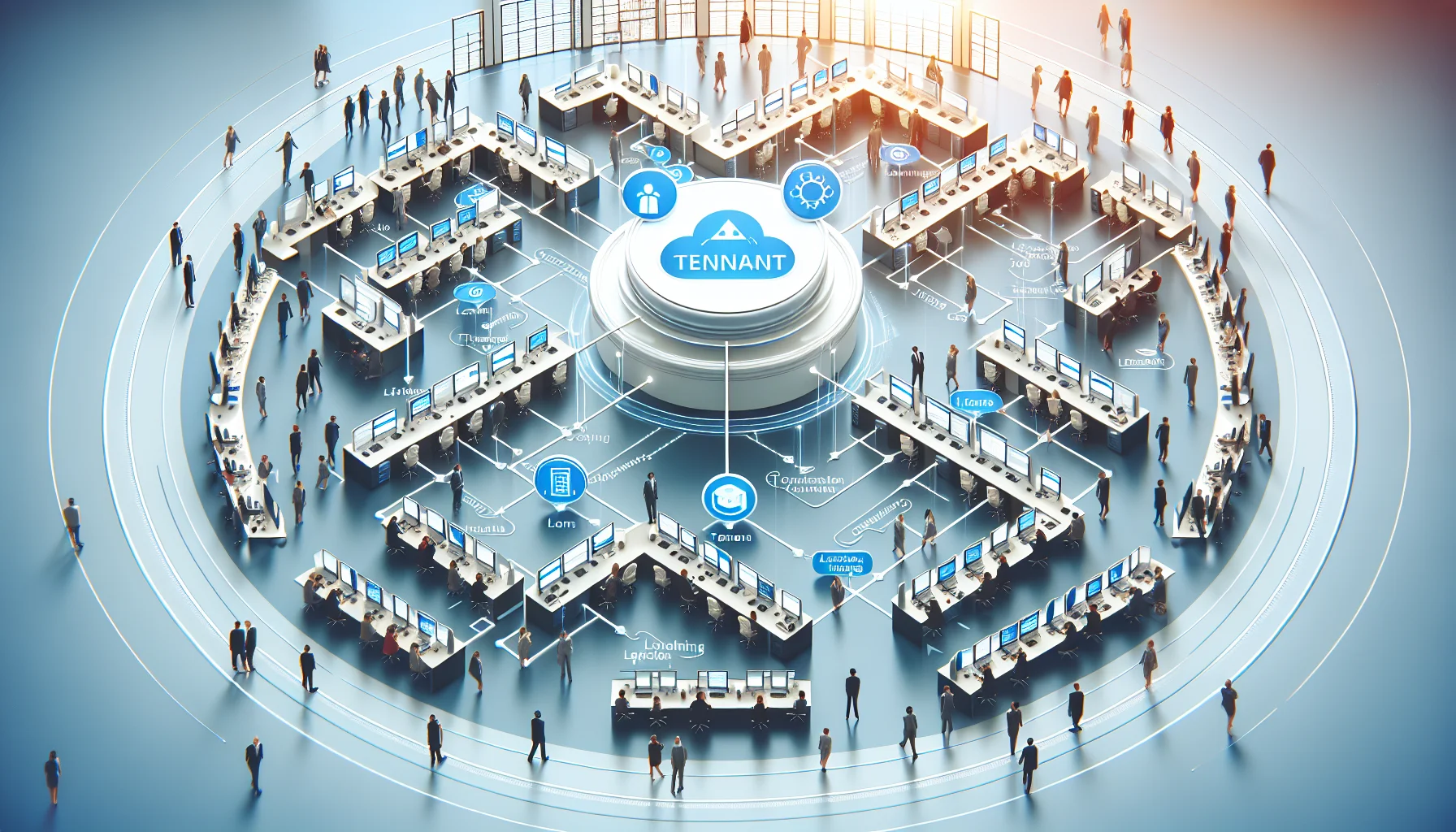
In our experience, a multitenancy LMS is the architectural pattern that lets global L&D programs scale without multiplying platforms. A multitenancy LMS separates policy, branding, data, and administration into tenant-specific views while retaining a centralized set of shared services. This balance is the core of modern enterprise learning: it enables local relevance (localization, compliance, language) and global governance (security, reporting, standards).
This article explains implementation models, tenant isolation strategies, performance and scaling techniques, integration patterns (SSO, HRIS), and a practical vendor checklist and case study for decision-makers evaluating a multi-tenant learning strategy.
A clear taxonomy is the first decision L&D and IT must make. There are two primary patterns: logical multitenancy and physical multitenancy. Logical multitenancy uses shared application instances with row-level or schema-level tenant separation. Physical multitenancy dedicates compute or database resources per tenant while keeping a common deployment pipeline.
From a business perspective, a multitenancy LMS delivers three core benefits:
Logical multitenancy typically stores tenant identifiers in shared tables or separate schemas. It's efficient for hundreds to thousands of tenants where per-tenant peak loads are predictable. Physical multitenancy isolates tenants on separate databases or clusters, which is useful when regulatory or performance needs require full isolation.
Choose a multitenancy LMS when you need repeatable governance across business units, expect strong growth in user count or geographic footprint, or wish to consolidate multiple legacy LMS instances. We've found that organizations with complex localization, decentralized compliance, or frequent M&A activity extract the most value.
Tenant separation is the architectural and operational backbone of a multi-tenant learning environment. Effective separation means data, admin roles, content visibility, and reporting are constrained by tenant boundaries while the core platform enforces global controls.
Key governance controls must include identity, entitlements, data residency, and audit logging. A multitenancy LMS must provide role-based access control (RBAC), tenant-scoped encryption keys where necessary, and separation of PII from learning metadata.
Tenant separation reduces blast radius: misconfiguration or a breach in one tenant should not expose other tenants. Implementations vary:
Encryption-at-rest, field-level encryption for PII, and tenant-specific key management are best practices. Studies show that tenant-aware logging reduces mean time to detection for cross-tenant anomalies.
Two frequent mistakes are over-centralizing control and failing to define tenant SLAs. Over-centralization slows local teams; under-definition creates drift. Define a governance matrix that maps global controls to tenant-level exceptions and maintain a change-control process that includes tenant owners.
A high-functioning multitenancy LMS blends shared services (catalog, analytics, reporting) with tenant-level customization (themes, approval workflows, curricula). The architecture must let you deploy updates centrally while honoring tenant-specific overrides.
Shared services reduce duplication: a single catalog engine can deliver region-specific catalogs via metadata filters; analytics pipelines can compute both global KPIs and tenant dashboards from the same event stream.
Integration patterns are critical for adoption. Typical approaches:
In our experience, platforms that support tenant-level SSO configuration and per-tenant HRIS endpoints shrink integration time from months to weeks.
Some of the most efficient L&D teams we work with use platforms like Upscend to automate this entire workflow without sacrificing quality. This reflects a pattern where mature vendors expose tenant-level integration templates plus global orchestration.
Performance is where the promise of a multitenancy LMS meets reality. To be a truly scalable LMS, the architecture must tolerate spikes (global rollouts, compliance deadlines) and variable tenant behaviors (heavy-video vs low-activity tenants).
Scaling strategies include:
Monitoring must be tenant-aware: track latency, error rates, and resource consumption by tenant. Use quota controls and circuit breakers so one tenant cannot starve shared resources. We recommend SLOs and a runbook that maps incidents to tenant communications and remediation steps.
Enforce quotas on concurrent learners, throttle content ingestion, and isolate heavy analytics jobs to dedicated processing windows or clusters. Tenant-level caching and CDN policies mitigate repeated load from popular courses in specific regions.
Choosing a platform requires a checklist that balances business and technical requirements. Below is a compact vendor comparison checklist you can use in RFPs or stakeholder discussions.
| Evaluation Area | Questions to Ask |
|---|---|
| Multitenancy model | Does the platform support schema-level isolation and dedicated DB options? |
| Customization | Can tenant admins change workflows without vendor intervention? |
| Integrations | Is SSO configurable per tenant and does the vendor provide SCIM connectors? |
Vendor shortlisting should combine feature parity checks with proof-of-concept load tests and a migration plan. Multi-tenant learning management system for global companies requires both architectural promise and evidence from production deployments.
Context: A 50,000-user multinational consolidated five regional LMSs into a single multitenancy LMS over 18 months. The project goals: reduce TCO, speed up localization, and unify reporting.
Implementation highlights:
Outcomes observed after 12 months:
Lessons learned: clear tenant SLAs, tenant-aware monitoring, and early load testing eliminated major surprises. The migration used a phased tenant onboarding approach and reusable tenant templates to accelerate adoption of the multi-tenant learning management system for global companies.
Adopting a multitenancy LMS is not only a technical decision but a strategic one: it aligns global standards with local relevance and reduces fragmentation across regions. A successful rollout depends on choosing the right tenancy model, enforcing tenant-aware governance, and planning integrations and scaling from day one.
Actionable next steps for L&D and IT teams:
Final recommendation: prioritize a platform that provides centralized shared services with robust tenant customization and proven operational controls so you can scale learning globally without losing local agility.
Next step: assemble a cross-functional pilot team (L&D, security, IT ops, and legal) and run a 90-day proof-of-concept that validates tenant isolation, integration patterns, and performance under projected peak loads.
The Upscend Team provides actionable insights on technology and business strategy.
Book a walkthrough and we'll show you how it applies to your own content.
 Institutional Learning
December 23, 2025
This article explains multi-tenant LMS architecture and why it supports scaling training with centralized operations and tenant-level autonomy. It outlines business benefits—lower TCO, faster rollouts, stronger governance—migration checklists, vendor evaluation criteria, and case metrics to guide pilots and procurement decisions for large organizations.
 Institutional Learning
December 23, 2025
Start with a shared, tenant-aware platform and shared schema for learners. Add isolated schemas or dedicated databases for heavy or regulated tenants, and adopt sharding plus per-tenant metrics as you scale. Use tenant-aware middleware, per-tenant monitoring, and phased migrations to reduce risk.
 Lms
LmsDecember 24, 2025
Scaling a telecom LMS requires governance, cloud-native, multi-region architecture, localized technical content and measurable pilots. Use a hybrid governance model, reusable micro-credentials, offline-capable mobile clients and integrations with HR and performance systems. Begin with a 90-day pilot (50–200 learners) tied to an operational KPI to validate ROI and refine the rollout.
 L&D
L&DDecember 24, 2025
Multi-tenancy LMS platforms serve multiple organizations from a single deployment while preserving tenant-specific experiences. This article compares shared-schema, schema-isolation and separate-DB patterns, outlines security/compliance controls, and explains localization levers (Arabic, RTL, branding) plus automated provisioning. CTOs and L&D heads get a checklist and a Gulf pilot workflow to map tenants to architecture tiers.