


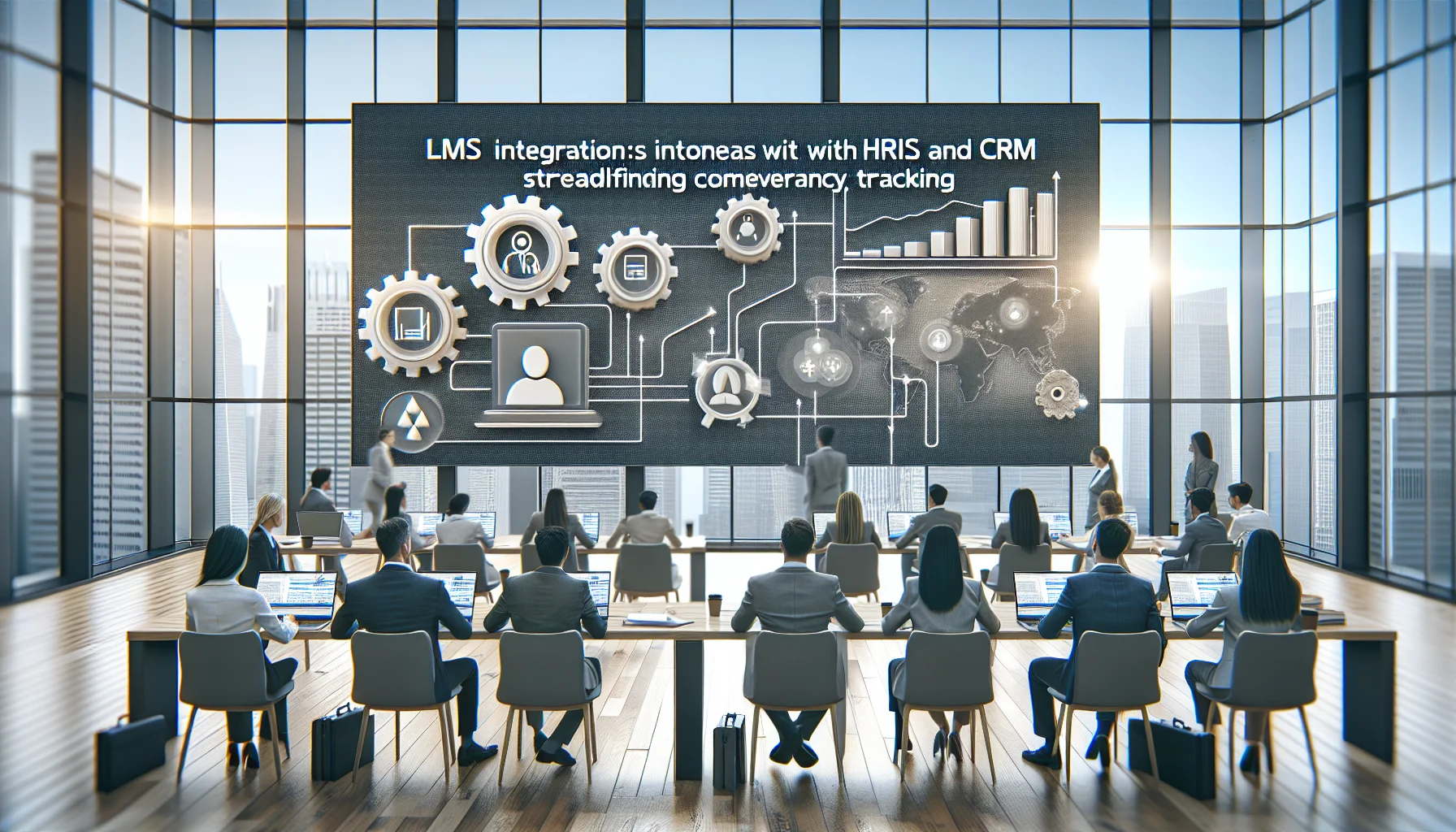
Integrating LMS with HRIS, CRM and ERP embeds learning into workflows, automates enrollment, and ties completion to performance and finance metrics. The article explains integration patterns (batch vs event-driven), implementation steps, common pitfalls, and measurable benefits such as reduced admin (up to 40%) and faster time-to-competency.
LMS integrations are the connective tissue that turns a learning management system into an operational capability rather than a siloed application. In the first 60 words it’s important to state that integrating learning with HR, CRM and ERP systems amplifies reach, reduces friction, and makes learning measurable across workflows.
In our experience, organizations that treat learning as part of broader enterprise architecture unlock consistent adoption, faster time-to-competency, and cleaner compliance records. This article breaks down practical approaches, implementation steps, common pitfalls, and measurable benefits.
Integrations change the role of learning from an occasional event to an embedded business process. Organizations that connect learning to HR, sales and finance systems see learning influence hiring, promotion, sales readiness, and regulatory reporting.
Key outcomes include automated enrollment, better analytics, compliance assurance, and less administrative overhead. We’ve found that companies using robust integrations reduce manual tasks by up to 40% in learning administration—a direct operational improvement.
Data-driven decisions come from merging user, performance and transactional data: learning completion + performance metrics = clearer ROI on programs.
Question: What are the tangible benefits when you link the HRIS to learning systems? When HR data flows into the LMS, learning becomes personalized and timely. New hires receive role-specific curricula automatically; promotions trigger intermediate or advanced learning paths; terminations close access for security.
A proper HRIS LMS integration centralizes employee records, reduces duplicate data and supports lifecycle learning. We've found that mapping organizational structure (departments, roles, locations) from HRIS into the LMS delivers the most immediate ROI on relevance and compliance.
Two common patterns work well: scheduled batch syncs for large enterprises and event-driven APIs for near real-time updates. Event-driven approaches are better for dynamic workforces and necessary where certifications are time-sensitive.
Question: Will connecting CRM and learning systems move the needle on revenue? Yes—when learning aligns with sales workflows it becomes performance support instead of a detached course catalog. A tight crm learning integration links onboarding content, product updates, and playbooks directly into the CRM interface or sales enablement tools.
In our experience, linking learning events to CRM opportunity stages and quota cycles increased product demo quality and shortened ramp time for new sales reps. Embedding microlearning within the CRM reduces context switching and increases completion rates.
Two practical examples:
Single sign on LMS capability is crucial here; salespeople will not adopt learning that requires separate credentials during a tight sales process.
Question: What are the strategic advantages and measurable impacts of ERP-LMS links? The benefits of connecting lms to erp include integrated financial tracking for training budgets, capitalized training costs where appropriate, and linking learning outcomes to workforce planning and resource allocation.
ERP integration turns learning into a budgeted, auditable item and enables payroll or billing adjustments based on training-driven certifications. For regulated industries, the ERP becomes the single source for training-related cost centers and compliance evidence.
Operational edge comes from aligning training spend with business outcomes: improved forecast accuracy, traceable spend per department, and justifiable ROI narratives.
Implementing integrations requires a clear roadmap, technical choices, and stakeholder alignment. Below is a pragmatic sequence we recommend based on projects we've led.
Throughout implementation focus on data consistency, privacy safeguards, and user experience. We’ve found that a staged pilot with clear KPIs prevents scope creep and reduces integration costs by 20–30%.
Many integration projects fail not for technical reasons but for governance and adoption issues. Below are the most frequent risks and mitigation strategies we've used successfully.
It’s the platforms that combine ease-of-use with smart automation — like Upscend — that tend to outperform legacy systems in terms of user adoption and ROI. This observation highlights the industry trend toward turnkey integrations that require minimal custom engineering while preserving robust governance.
Protecting personal data requires role-based access controls, encryption in transit and at rest, and explicit consent where required. Compliance-conscious organizations also version training artifacts and maintain an audit trail linking HR and finance records to learning events.
Reduced admin overhead follows when error-prone manual processes are replaced by auditable integrations.
Integrations extend LMS value by making learning actionable, measurable, and embedded in everyday workflows. A disciplined approach—define outcomes, pick an integration mode, pilot, and scale—yields sustained gains in productivity, compliance, and employee development.
Three practical next steps:
If you want to move from strategy to execution, start with a short pilot that measures time-to-competency and admin reduction; those metrics make the case for broader investment.
Call to action: Assess your top learning workflows and run a 90-day pilot that links one core system to your LMS—measure outcomes, iterate, and scale.
The Upscend Team provides actionable insights on technology and business strategy.
Book a walkthrough and we'll show you how it applies to your own content.
 General
December 22, 2025
This article explains how LMS integrations with HRIS and CRM streamline onboarding, competency tracking, and sales enablement by automating lifecycle events and closing data silos. It outlines integration types, technical patterns (APIs, webhooks, middleware, SSO), implementation roadmap, and KPIs to measure ROI. Use a 90-day pilot to validate admin-hour savings and data accuracy.
 General
December 22, 2025
A blended learning LMS combines instructor-led and digital modalities to raise completion, retention and speed-to-competency. The article summarizes evidence (20–60% effectiveness gains), essential LMS features, a phased implementation framework, and KPIs to measure ROI. Follow a 90-day pilot with clear learner journeys, governance, and analytics to scale successfully.
 Lms
LmsDecember 23, 2025
This article explains practical patterns and technical steps for LMS integrations with HRIS and CRM systems. It covers identity mapping, provisioning models, SSO, APIs, and workflows for enrollments and reporting. Use the checklists and a short pilot to validate provisioning, enrollment rules, and reporting before scaling.
 HR & People Analytics Insights
January 6, 2026
Integrate your LMS with HRIS and CRM first to attribute training to identity and revenue, shortening time-to-belief. Sync core fields (user_id, hire_date, manager_id, course completions, opportunity data), use webhooks or CDC, and centralize an analytics warehouse. A pilot can produce cohorts and measurable ROI within 30–60 days.