


AI and automation convert LMS into adaptive, competency-first platforms by combining semantic content mapping, learner state models, adaptive sequencing, and automated recommendations. Follow a staged roadmap—define outcomes, map competencies, pilot with rule+ML hybrids, then scale. Measure engagement, proficiency, and model drift to iterate and govern personalization responsibly.
LMS AI features are transforming how organizations design learning journeys, allocate resources, and measure impact. In our experience, combining automation with intelligent models shifts learning management systems from static repositories into dynamic, learner-centered platforms.
This article synthesizes research, practitioner insights, and concrete implementation patterns to explain AI driven learning, personalized learning paths, and practical automated recommendations that improve outcomes. Expect frameworks, step-by-step guidance, and common pitfalls to avoid.
Organizations face three persistent challenges: low engagement, uneven competency attainment, and limited insight into learning impact. LMS AI features address those by automating routine tasks and surfacing tailored content, freeing educators to focus on high-value interventions.
Studies show that platforms with adaptive recommendations increase completion and retention. According to industry research, systems that use predictive analytics reduce dropout risk by identifying at-risk learners early. We've found that even modest AI-driven rules — when combined with clear competency models — produce measurable improvements in time-to-proficiency.
AI driven learning solves inefficiencies (manual curation), relevance gaps (one-size-fits-all curricula), and measurement blind spots (limited behavioral signals). It automates friction points while personalizing the learning flow.
Personalized learning paths increase relevance and motivation by aligning content to skill gaps and learner preferences. Adaptive sequencing reduces redundancy and shortens time spent on known concepts, making learning more efficient.
To design effective personalization, prioritize these core capabilities: content tagging and semantic search, learner modeling, adaptive sequencing, and predictive analytics. Each capability feeds into a closed-loop system that refines recommendations over time.
Below is a concise breakdown of the most impactful functions.
Foundational features include reliable data pipelines (activity, assessment, and external HR data), a competency framework, and feedback loops. Without accurate input data, prediction and adaptation are brittle. In our experience, investing early in data quality yields outsized benefits.
Practical solutions apply AI to three stages: intake (diagnostics), adaptation (real-time personalization), and outcomes (measurement and remediation). By structuring interventions this way, teams can prioritize easy wins and then scale to complex adaptive behaviors.
Consider two concrete examples that illustrate different maturity levels:
A pattern we've noticed across industries is that vendors who combine competency-based metadata with predictive modeling produce the clearest lift in learner performance. Modern LMS platforms — such as Upscend — are evolving to support AI-powered analytics and personalized learning journeys based on competency data, not just completions. This evolution demonstrates an industry shift toward competency-first personalization and explains why early adopters see faster skills acquisition.
Effective strategies blend collaborative filtering (what peers found useful), content metadata (skill tags), and contextual filters (role, location, deadlines). Start with conservative thresholds to avoid over-personalization surprises; increase personalization intensity as confidence grows.
An adaptive learning LMS continuously updates a learner model and changes the sequence, difficulty, or modality of content in response to observed performance. Traditional LMS deliver static courses; adaptive systems deliver tailored learning moments.
Successful deployments follow a staged approach: define outcomes, prepare data, pilot, iterate, and scale. Below is a practical roadmap we've used with enterprise clients.
Each phase includes measurable checkpoints so stakeholders can validate ROI incrementally.
Tooling requirements include a data warehouse, feature store or equivalent, model deployment environment, and an API that the LMS can call for recommendations. In our experience, modular architectures that separate model serving from the LMS UI speed iteration and reduce vendor lock-in.
Implement transparent model explainability, human-in-the-loop controls for high-stakes decisions, and regular audits to detect bias. Maintain a clear privacy policy describing derived inference use and retention periods.
AI projects often fail due to unrealistic expectations, poor data quality, and lack of learning design alignment. Recognizing these risks early reduces wasted effort.
Here are the top pitfalls and practical mitigations we've applied.
Success metrics should map back to business outcomes: improved productivity, reduced time-to-competency, and lower support tickets. Track both proximal metrics (engagement, recommendation click-through rate) and distal metrics (performance improvements, promotion rates).
Set model performance thresholds, schedule retraining cadences, and conduct quarterly reviews with stakeholders. A governance playbook clarifies ownership for data, models, and user experience adjustments.
AI-driven personalization applies across onboarding, compliance, sales training, technical upskilling, and customer education. Each use case has specific constraints and success factors.
Below are high-impact examples and the core mechanisms they use.
| Use case | AI mechanism | Primary benefit |
|---|---|---|
| Employee onboarding | Automated recommendations, micro-journeys | Faster time-to-productivity |
| Sales enablement | Contextual content push, performance prediction | Higher quota attainment |
| Technical certification | Adaptive learning LMS with spaced repetition | Improved mastery and retention |
| Customer education | Personalized learning paths, semantics-based recommendations | Reduced churn, higher product adoption |
We’ve found that onboarding and certification produce the quickest and most measurable ROI because outcomes are tightly defined and cohorts are frequent. Sales training follows closely when behavioral signals (CRM activity) are integrated.
Prioritize by impact and feasibility: low data lift and high impact go first. Use a simple matrix to score use cases on data readiness, expected business value, and implementation complexity.
LMS AI features are no longer experimental; they are practical levers for improving learning relevance, efficiency, and measurable impact. By focusing on competency models, clean data, and iterative pilots, organizations can realize significant gains without over-investing upfront.
Start with a narrow pilot, measure defined outcomes, and expand as models prove reliable. Use the roadmap and mitigation strategies above as an operational playbook to move from theory to production.
Next step: Assemble a cross-functional pilot team, choose one high-impact use case, and run a 90-day pilot that tracks both engagement metrics and performance outcomes. Document findings and prepare to scale in waves.
Call to action: If you’re planning a pilot, create a one-page charter that lists target metrics, data sources, and stakeholder owners; this simple artifact accelerates decision-making and keeps teams aligned.
The Upscend Team provides actionable insights on technology and business strategy.
Book a walkthrough and we'll show you how it applies to your own content.
 L&D
L&DDecember 21, 2025
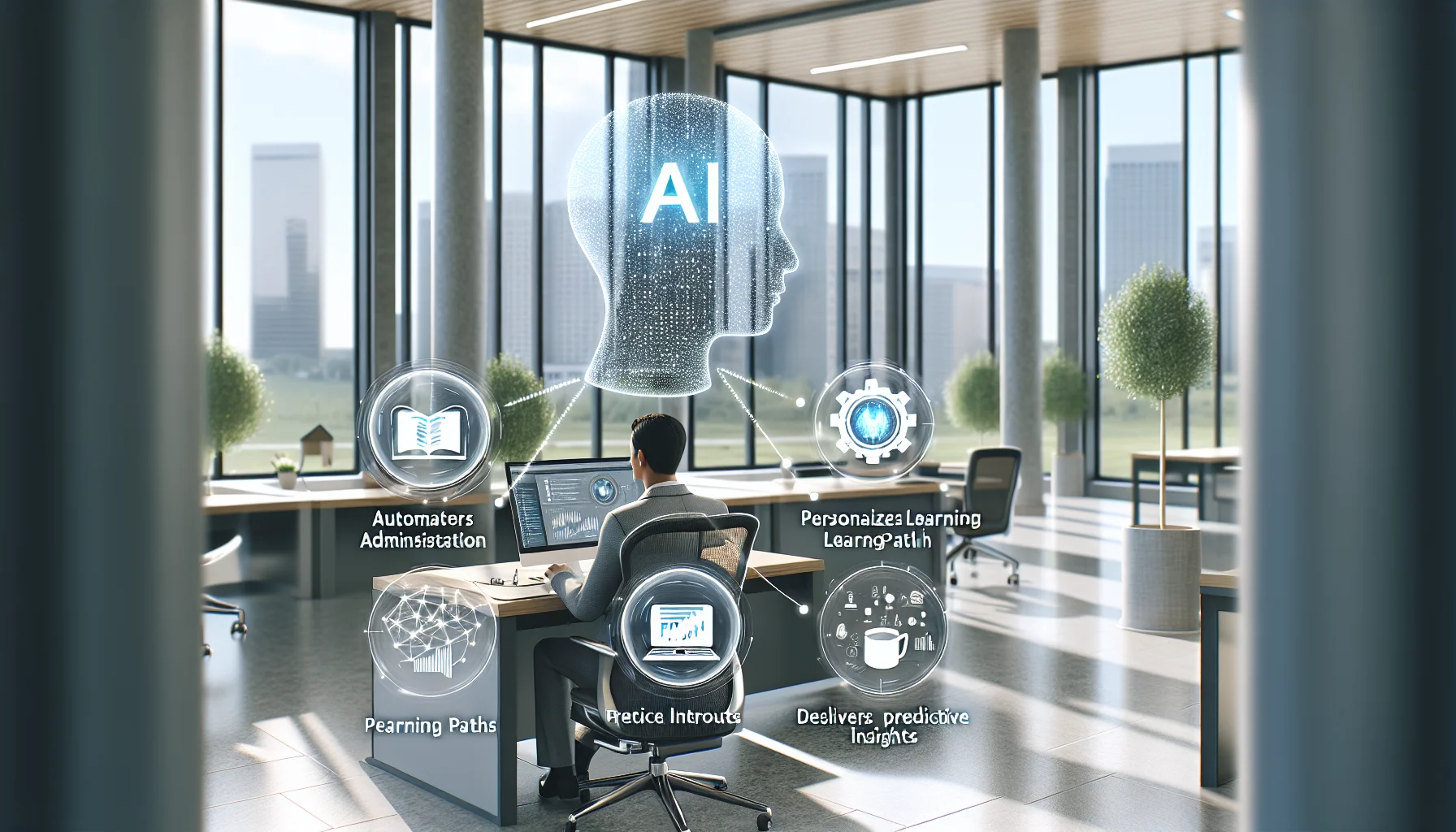
AI in LMS automates administration, personalizes learning paths, and delivers predictive insights to improve completion and skill transfer. This article explains adaptive learning mechanics, concrete AI features, a four-step implementation framework, measurement metrics, and governance practices to pilot safely and demonstrate ROI for learning programs.
 L&D
L&DDecember 21, 2025
AI in LMS combines learning analytics, recommendation engines, and adaptive assessments to create personalized learning paths, detect skills gaps, and boost outcomes. Implement responsibly: ensure data readiness, run a focused pilot, use explainable models, and monitor bias. Case studies show completion rising from 62% to 85% and certification pass rates from 70% to 91%.
 L&D
L&DDecember 21, 2025
This article explains how AI in LMS personalizes learning through content tagging, learner modeling, recommendation engines, and adaptive assessment. It provides a three‑phase rollout (pilot, scale, optimize), measurement tiers (micro/meso/macro), common pitfalls, and a practical 90-day pilot plan for L&D teams to validate and scale personalization.
 Lms
LmsDecember 24, 2025
AI LMS platforms combine adaptive learning, learning analytics AI, and workflow integration to deliver personalized eLearning that reduces ramp time, improves retention, and aligns training to business outcomes. Implement via discovery, pilot, scale, and optimize—prioritize KPIs, data readiness, governance, and a focused 90-day pilot to validate impact.