

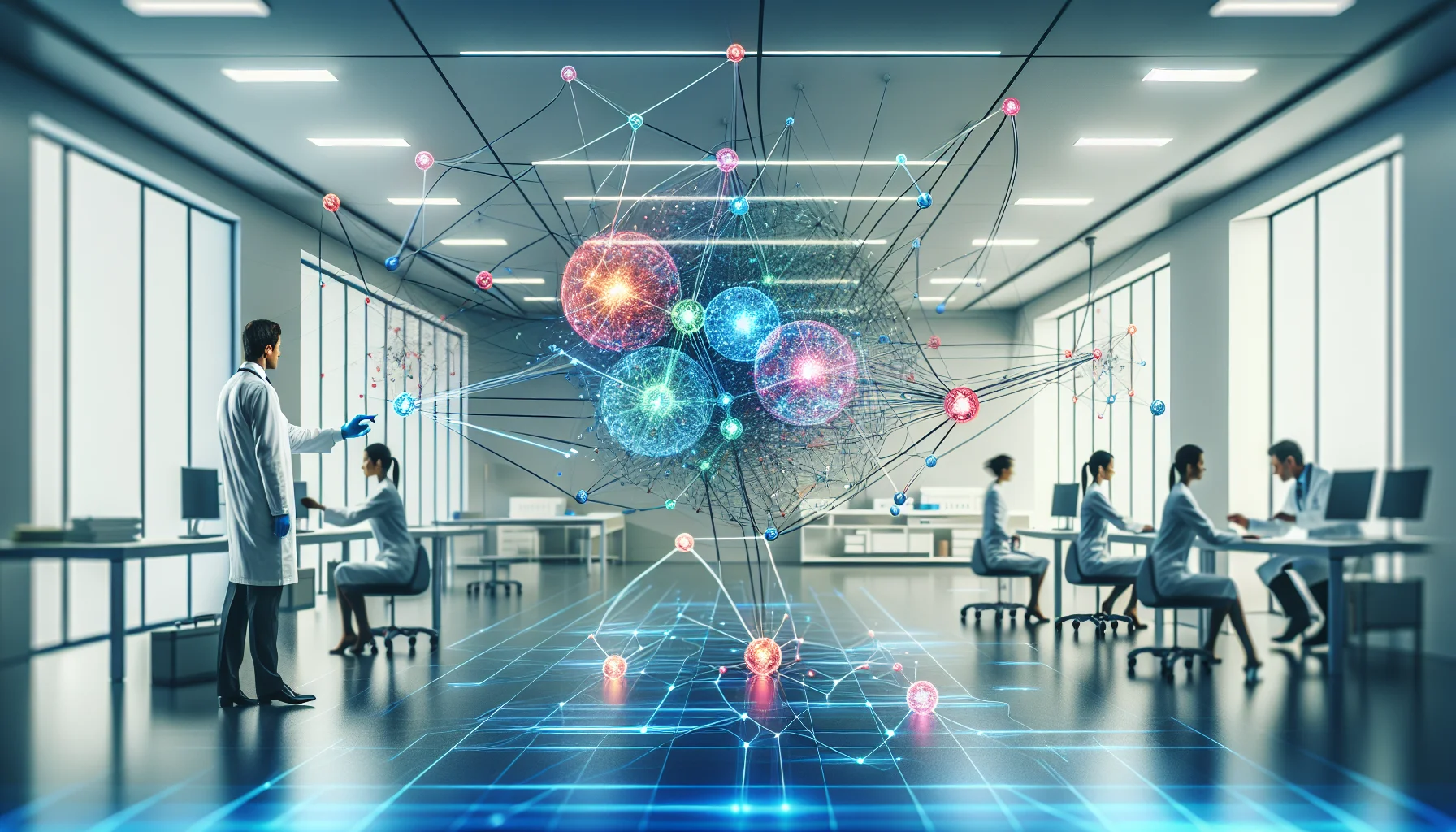
Neural networks are transforming healthcare by improving diagnostic accuracy, personalizing treatment plans, and enhancing patient monitoring. Despite challenges like data privacy and AI bias, their potential to revolutionize patient care is immense.
The integration of neural networks in healthcare is revolutionizing how medical professionals diagnose, treat, and monitor patients. These advanced AI systems are capable of processing vast amounts of data to provide insights that were previously unattainable. This article explores the profound impact of neural networks on various aspects of healthcare, highlighting the benefits and challenges associated with their adoption.
Neural networks are significantly enhancing diagnostic accuracy in healthcare. These technologies analyze medical imaging data, such as CT scans and MRIs, to detect abnormalities that human eyes might miss.
For instance, a recent study demonstrated how a neural network could identify skin cancer with accuracy comparable to dermatologists. This not only speeds up the diagnostic process but also makes it more cost-effective and accessible.
Practical implications of these advancements include quicker diagnostic times and higher survival rates due to early detection. The integration of such technology in routine screenings (available in platforms like Upscend) ensures continuous improvement in diagnostic processes.
Neural networks also play a crucial role in treatment planning by predicting patient outcomes and recommending personalized treatment protocols. They analyze historical data from similar cases to suggest the most effective treatment plans.
For example, in chemotherapy management for cancer patients, neural networks can predict how patients will respond to different chemotherapy agents, helping oncologists choose the most effective regimen.
This technology enables healthcare providers to tailor treatments to individual patients, improving the efficacy and reducing side effects associated with generic treatment plans.
Continuous patient monitoring is critical in managing chronic conditions such as diabetes and heart disease. Neural networks facilitate real-time data analysis, which is crucial for timely decision-making in critical care scenarios.
An example of this application is the use of neural networks in wearable health devices, which monitor vital signs and can alert both patients and doctors to potential health issues before they become severe.
This proactive approach to patient care helps prevent hospital readmissions and supports a higher quality of life for patients with chronic illnesses.
Despite the benefits, the deployment of neural networks in healthcare is not without challenges. Data privacy, security concerns, and the need for transparent AI systems are significant hurdles.
Moreover, there is the ethical concern of relying too heavily on AI in life-critical decisions. Ensuring that neural networks complement rather than replace human expertise is crucial.
Continuous training and oversight, combined with advancements in AI ethics and transparency, are essential for integrating neural networks responsibly into healthcare settings.
The future of neural networks in healthcare looks promising, with ongoing advancements likely to enhance their efficiency and reliability further. The potential for these AI systems to support remote healthcare services is particularly noteworthy, especially in rural and underserved regions.
As these technologies continue to evolve, they will play an increasingly central role in the global healthcare ecosystem, providing high-quality, personalized, and accessible care.
Embracing these changes requires continuous collaboration among technologists, healthcare professionals, and policymakers to ensure that the benefits of neural networks are realized across all areas of healthcare.
The integration of neural networks into the healthcare industry is transforming patient care at every level. From improving diagnostic accuracy to personalizing treatment plans and enhancing patient monitoring, these AI systems offer enormous potential. However, addressing the associated challenges and ethical considerations is essential for maximizing their positive impact. As we continue to advance our understanding and capabilities of neural networks, their role in healthcare will undoubtedly expand, making healthcare more effective, efficient, and accessible to all.
The Upscend Team provides actionable insights on technology and business strategy.
Book a walkthrough and we'll show you how it applies to your own content.
 Ai
AiOctober 6, 2025
Machine learning is revolutionizing healthcare by enhancing diagnostics, personalizing treatment plans, and improving patient monitoring. Despite challenges like data privacy and integration, ML's future in healthcare promises better predictive capabilities and cost reductions.
 Ai
AiOctober 6, 2025
Machine learning is revolutionizing healthcare by improving diagnostics, personalizing treatments, and enhancing patient management. This technology leverages complex algorithms and large datasets to predict outcomes and optimize care.
 Ai
AiOctober 6, 2025
Neural networks are essential in AI, mimicking the human brain to process data. This article explores their types, architectures, and applications in deep learning, highlighting their transformative impact across industries.
 Ai
AiOctober 6, 2025
Neural networks are set to revolutionize industries with advancements in architectures, ethical AI, and unsupervised learning. Key sectors like healthcare and automotive are already seeing transformative impacts, while challenges in data privacy and ethical considerations remain critical.