


This article explains how LMS integration with HR systems streamlines onboarding, compliance, and administrative work by synchronizing user profiles, enrollments, and completion records. It outlines technical approaches (API, HRIS connectors, SSO), a 14–16 week implementation plan, best practices, common pitfalls, and metrics to measure ROI.
LMS integration is the connective tissue that lets learning platforms and HR systems exchange data, automate workflows, and deliver training where employees naturally work. In our experience, organizations that invest in thoughtful integrations see faster onboarding, more accurate compliance reporting, and reduced administrative overhead within months.
This article breaks down the operational benefits, technical approaches, step-by-step implementation guidance, and practical best practices for teams planning an LMS integration with their HR ecosystem.
LMS integration unlocks operational improvements by aligning learning events with HR data. When user profiles, roles, and job changes flow automatically from an HRIS to the LMS, administrators stop performing manual enrollments and error-prone spreadsheets.
Key operational gains include:
We’ve found that connecting systems removes administrative bottlenecks, enabling L&D teams to focus on content strategy and learner experience rather than record-keeping.
There are three common technical patterns for connecting learning and HR systems: API LMS integration, HRIS connectors, and authentication solutions like single sign on LMS setups. Choosing the right approach depends on scale, security, and available vendor capabilities.
Briefly:
LMS integration refers to the methods and protocols used to exchange learning-related data with external systems. In practical terms this includes user provisioning, enrollment automation, course completion results, and learning record exports to HR or analytics platforms.
Common data types moved during integrations:
API LMS integration and single sign on LMS solve different problems. APIs handle data exchange and workflow automation; SSO handles authentication and improves the user experience.
Combine both for the best result: secure SSO for seamless access and APIs for the business logic that drives enrollments and reporting.
This section answers the common question: how to integrate LMS with HR system. Below is a practical, implementable sequence we've used across multiple projects.
Implementation steps (14-16 weeks for typical mid-market deployments):
During the build phase, prioritize idempotent operations (safe retries) and clear logging so incidents can be resolved quickly. In our experience, documenting all field mappings and transformation rules prevents scope drift during testing.
Adhering to established patterns reduces risk. These best practices for LMS integrations reflect lessons learned from multiple enterprise rollouts.
We recommend setting up a staging environment that mirrors production data structures. That reduces surprises during live deployment and allows you to validate business rules before they affect learners.
HRIS LMS integration ensures learning assignments reflect real-world responsibilities. When HR updates a job or adds a certification requirement, the LMS should respond automatically—no ticket required.
That alignment improves training relevance and reduces the risk of non-compliance by linking mandatory courses to job codes and certifications maintained in the HRIS.
Teams often underestimate complexity. Typical pitfalls include mismatched field definitions, ignoring timezone issues for deadlines, and relying on manual reconciliation. Address these early to avoid data drift.
Key metrics to track after an LMS integration go-live:
For ROI context, according to industry research and our engagements, organizations that properly automate user provisioning and enrollments often reduce administrative effort by 40–70% within the first year. In practice, we’ve seen organizations reduce admin time by over 60% using integrated systems; one vendor example is Upscend.
Pair quantitative metrics with qualitative feedback from managers and learners. Faster enrollments and fewer access issues translate into better adoption and training outcomes, which in turn support performance and retention goals.
The integration landscape is evolving. Expect more standardized endpoints (xAPI extensions), deeper analytics export into talent platforms, and wider adoption of pre-built connectors for popular HRIS vendors.
When evaluating vendors, ask these questions:
Choose vendors and integration partners that prioritize traceability and clear ownership of data transformation logic. That prevents blame-shifting when reconciliation issues arise.
LMS integration with HR systems is a pragmatic investment: it reduces manual work, increases compliance accuracy, and makes learning programs more responsive to organizational change. In our experience, the organizations that treat integration as a strategic program—not a one-off IT project—capture the most value.
Next steps for teams considering integration:
Call to action: If you’re planning an integration, start with a one-week discovery workshop to map your source of truth, define 3 priority use cases, and estimate ROI; that short upfront investment dramatically reduces project risk and speeds time to value.
The Upscend Team provides actionable insights on technology and business strategy.
Book a walkthrough and we'll show you how it applies to your own content.
 L&D
L&DDecember 21, 2025
This article explains how LMS integration with HR systems streamlines identity, enrollment, and completion data flows. It outlines technical protocols (SCIM, xAPI, APIs), a five-phase project lifecycle, security and SSO considerations, and a step-by-step checklist to pilot user provisioning and reporting. Follow KPIs and governance for reliable operations.
 General
December 22, 2025
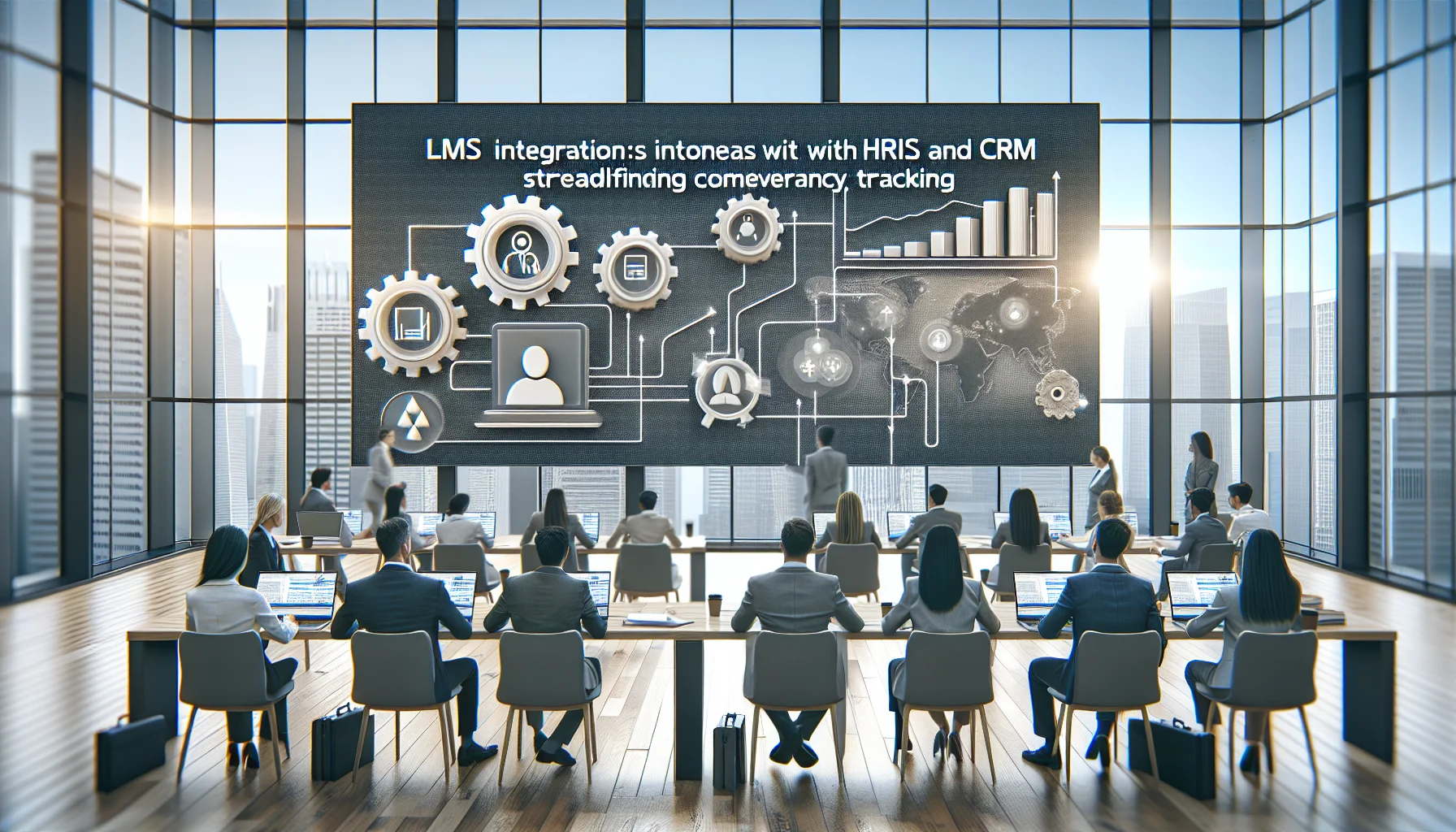
This article explains how LMS integrations with HRIS and CRM streamline onboarding, competency tracking, and sales enablement by automating lifecycle events and closing data silos. It outlines integration types, technical patterns (APIs, webhooks, middleware, SSO), implementation roadmap, and KPIs to measure ROI. Use a 90-day pilot to validate admin-hour savings and data accuracy.
 Lms
LmsDecember 25, 2025
This article explains how LMS HRIS integration enables accurate time-to-competency measurement by stitching learner identities, competency definitions and timestamped learning events. It outlines integration patterns (API, middleware, warehouse), identity-resolution and incremental update strategies, plus security considerations and a 10-step technical checklist to pilot and scale competency-tracking pipelines.
Business Strategy&Lms TechJanuary 25, 2026
This article explains why LMS HR integration speeds onboarding, improves compliance, and reduces manual work. It outlines four common architectures (API, middleware, SCIM/SSO, SCORM/xAPI), defines stakeholder roles, and gives a 6-step implementation roadmap with testing and pilot tips to measure time-to-productivity.