


This article explains how AI in LMS personalizes learning using recommendation engines and adaptive learning systems, and how AI-assisted authoring speeds content creation. It covers ethics, data privacy, vendor differences, and a define–pilot–scale approach. Typical pilot outcomes include 10–30% higher engagement and about a 20% reduction in time-to-competency.
In our experience, AI in LMS platforms is reshaping how organizations deliver training, enabling personalized learning at scale. This article explains practical capabilities, limitations, and responsible approaches so learning leaders can evaluate real opportunities without falling for hype. We’ll cover adaptive learning systems, recommendation engines, content-generation assistance, ethics and bias, data and privacy requirements, and a concise vendor landscape with pilot ideas.
Across industries, mature AI learning platforms are moving beyond novelty features to measurable outcomes: improved completion rates, faster time-to-competency, and reduced content production effort. We draw on multiple enterprise pilots and published studies to show where returns are realistic, common pitfalls, and what implementation teams should budget for in terms of data engineering and governance.
AI in LMS personalizes learning by modeling learner profiles, predicting knowledge gaps, and dynamically adjusting content pathways. We’ve found systems that blend behavioral data (clicks, time on page), assessment results, and role metadata produce the most reliable personalization signals. Two high-level mechanisms dominate:
Understanding how AI personalizes learning in LMS helps set realistic expectations: personalization improves relevance and completion rates when data quality and instructional design align. But it is not a silver bullet — it augments, not replaces, solid pedagogy.
Practical outcomes from pilots often include a 10–30% lift in engagement metrics and a 20% reduction in time-to-competency for targeted cohorts. Those numbers depend heavily on initial content quality and how tightly learning objectives map to assessment signals. When organizations combine instructional design with learner analytics, results are far more consistent than when technical features are deployed in isolation.
Two practical personalization techniques power most modern platforms: recommendation engines and adaptive assessments. Each serves different objectives and requires separate implementation patterns.
Recommendation engines in the context of AI in LMS typically rely on collaborative filtering, content-based filtering, or hybrid models. Collaborative approaches find cohorts with similar behavior; content-based techniques match learners to content attributes. We’ve seen hybrid models yield the best engagement because they combine explicit learner intent with implicit behavior.
Practical considerations include handling the cold-start problem for new learners, weighting recent activity more heavily than old behavior, and surfacing transparency cues (e.g., "Suggested because you completed X"). Examples of AI-driven LMS personalization include curated learning paths for new managers based on prior role performance, or skill-based recommendations for sales reps aligned to product launches.
Adaptive learning systems change the sequence and difficulty of tasks based on ongoing assessment. Practical features include branching scenarios, mastery checks that skip redundant content, and micro-assessments that recalibrate the learner model. Evidence from pilot programs shows adaptive pathways can increase completion rates and mastery scores by measurable margins when paired with timely feedback.
Real-world insight: adaptive pathways that used frequent low-stakes checks increased course completion by 18-30% in several enterprise pilots.
Adaptive approaches also reduce learner frustration by avoiding repetition and accelerating those who demonstrate competence. For technical upskilling, adaptive pathways have enabled organizations to focus coaching time where it matters most—on learners who need human intervention—while automating remedial practice for others.
AI in LMS also assists authors and SMEs by automating repetitive tasks: drafting learning objectives, generating quiz items, and creating summaries or alternative explanations. This accelerates content production and helps scale personalized variants (e.g., role-based versions of a module).
Three common content-generation patterns:
These capabilities reduce authoring time but introduce risks if unchecked. Human review and iterative quality checks are essential to keep content accurate and aligned with learning outcomes. In one client example, an authoring-assistant trial reduced time-to-publish for routine compliance updates by roughly 50%, while maintaining a human review pass to catch nuance and regulatory language. Best practices include mandatory SME approval, test-quadrant sampling of auto-generated quiz items, and a clear rollback process when content quality dips.
AI in LMS can unintentionally reproduce bias present in historical data or design choices. Designing responsible systems requires governance, transparency, and continuous monitoring. Key questions to ask vendors and internal teams:
We recommend an ethics checklist that includes explicit testing for group differences, explanation mechanisms for recommendations, and fallbacks that allow learners to opt out of automated personalization. Models should be audited periodically, especially after significant product or workforce changes.
Mitigation strategies include stratified sampling during testing, thresholding to avoid extreme recommendations, and using counterfactual analysis to detect unintended disparate impact. Document decisions in an AI model register and ensure stakeholders—L&D, HR, legal—review changes before production deployments.
Effective AI in LMS requires a balanced blend of behavioral, assessment, and profile data. Behavioral signals (time on activity, interaction patterns) inform engagement; assessment data determines mastery; HR profile data (role, tenure) provides relevance context. However, more data increases privacy risk.
Collect useful, minimally invasive data: course interactions, assessment responses, voluntary skill tags, and anonymous engagement metrics. Avoid collecting sensitive personal data unless absolutely necessary and consented to.
Privacy best practices:
Technical controls should include encryption at rest and in transit, audit logging, and regularly tested incident response plans. Compliance mappings to GDPR, CCPA, and sector-specific standards (e.g., HIPAA for healthcare training) should be part of vendor due diligence. Transparent learner-facing explanations about what data is used and why increase trust—and participation—in personalization features.
Picking the right vendor for AI in LMS depends on maturity, integration, and compliance needs. Vendors vary on model transparency, built-in analytics, and ease of customization. Below is a concise comparison of representative vendor features to illustrate differences—not an exhaustive list.
| Vendor | Core AI Features | Customization | Privacy Controls |
|---|---|---|---|
| Vendor A | Recommendation engine, auto-quiz | Moderate | Basic role-based access |
| Vendor B | Adaptive pathways, analytics dashboards | High | Advanced consent flows |
| Vendor C | Content generation, microlearning sequencing | Low | Standard encryption |
To ground this, we’ve seen organizations reduce admin time by over 60% using integrated systems like Upscend, freeing up trainers to focus on content and coaching rather than routine tasks. That outcome demonstrates how operational ROI and learning ROI can align when AI features are integrated with existing workflows and governance. When evaluating vendors, request case studies that match your industry and ask for sample datasets to validate model behavior against your user population.
Start small and measure. Successful pilots for AI in LMS generally follow a three-phase approach: define, pilot, scale.
Pilot ideas that produce fast learnings:
Measurement checklist for pilots:
Tip: pair technical metrics with qualitative feedback—surveys and interviews reveal trust and usability issues that metrics alone cannot.
Operational tips: define a 6–12 week timeline, secure one executive sponsor, and include a privacy and legal reviewer from week one. Assign roles for data engineering, SME reviewers, UX testing, and a small pilot admin. Include a simple success criteria dashboard that tracks both learning outcomes and operational KPIs so stakeholders can make an informed go/no-go decision at pilot end.
AI in LMS offers practical gains in personalization, efficiency, and scale when deployed responsibly. We’ve found that the most successful programs combine robust data hygiene, clear governance, human oversight, and realistic pilots focused on measurable outcomes. Responsible adoption balances innovation with ethics and privacy, and it treats AI as an assistive tool for educators, not a replacement.
Key takeaways:
Next step: choose one narrow use case and design a 8–12 week pilot with defined metrics, a control group, and an explicit bias and privacy checklist. That practical experiment will reveal whether AI-driven personalization delivers the learning and business improvements your organization needs.
Call to action: If you’re ready to pilot responsible personalization, assemble a cross-functional team (L&D, IT, legal) and run a scoped experiment focused on measurable learner outcomes and privacy safeguards. Document your learnings, iterate, and use them to build a repeatable playbook for wider adoption of personalized learning powered by AI in LMS.
The Upscend Team provides actionable insights on technology and business strategy.
Book a walkthrough and we'll show you how it applies to your own content.
 L&D
L&DDecember 21, 2025
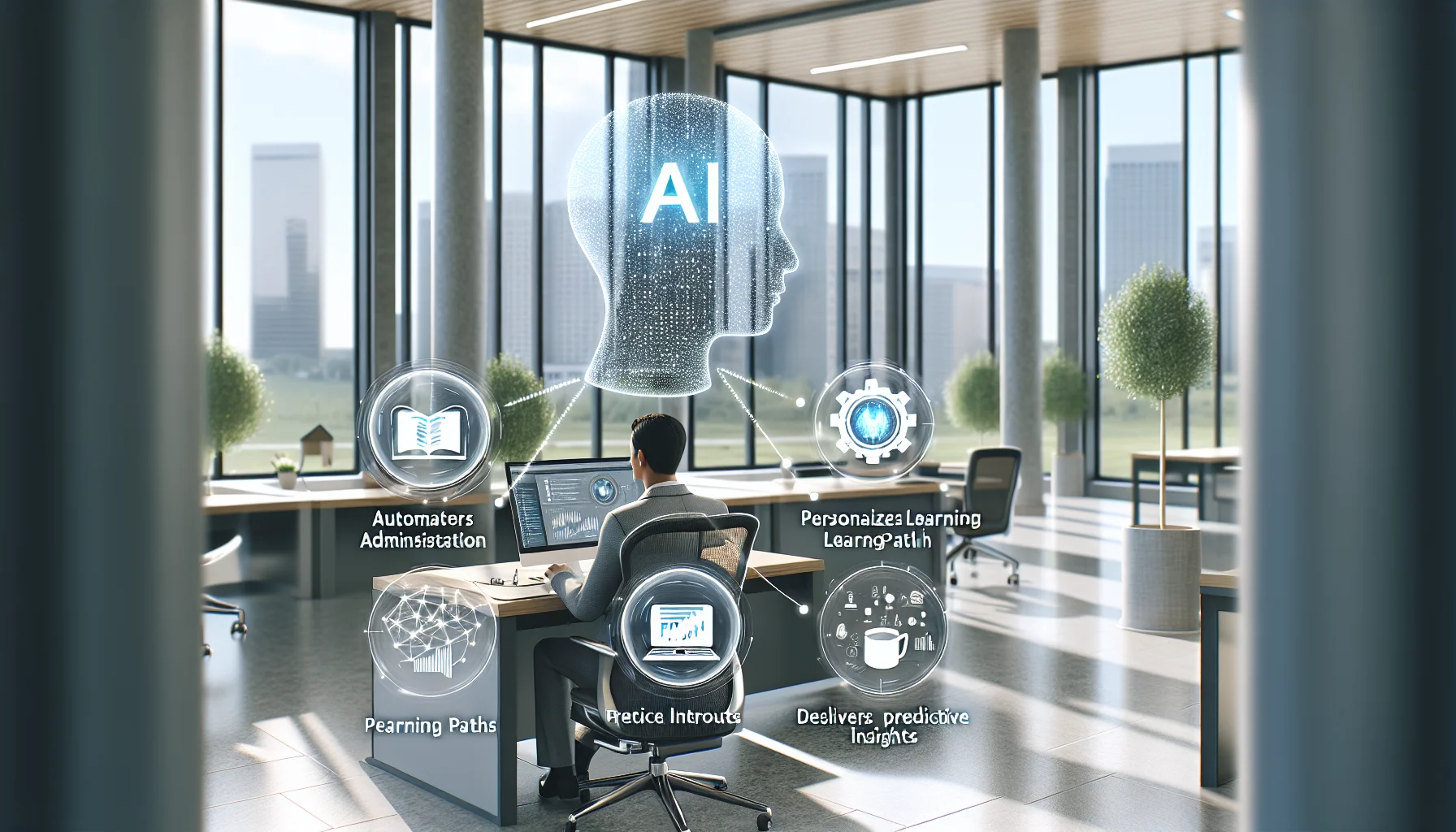
AI in LMS automates administration, personalizes learning paths, and delivers predictive insights to improve completion and skill transfer. This article explains adaptive learning mechanics, concrete AI features, a four-step implementation framework, measurement metrics, and governance practices to pilot safely and demonstrate ROI for learning programs.
 L&D
L&DDecember 21, 2025
AI in LMS combines learning analytics, recommendation engines, and adaptive assessments to create personalized learning paths, detect skills gaps, and boost outcomes. Implement responsibly: ensure data readiness, run a focused pilot, use explainable models, and monitor bias. Case studies show completion rising from 62% to 85% and certification pass rates from 70% to 91%.
 L&D
L&DDecember 21, 2025
This article explains how AI in LMS personalizes learning through content tagging, learner modeling, recommendation engines, and adaptive assessment. It provides a three‑phase rollout (pilot, scale, optimize), measurement tiers (micro/meso/macro), common pitfalls, and a practical 90-day pilot plan for L&D teams to validate and scale personalization.
 Lms
LmsDecember 23, 2025
This article explains how ai personalization lms uses adaptive learning algorithms and recommendation engines to tailor content, increase engagement, and shorten time-to-competency. It outlines practical design steps, implementation checklists, common pitfalls with mitigations, and a measurement framework. Readers get immediate actions—pilot, tagging standard, and a KPI-linked dashboard—to start testing.