

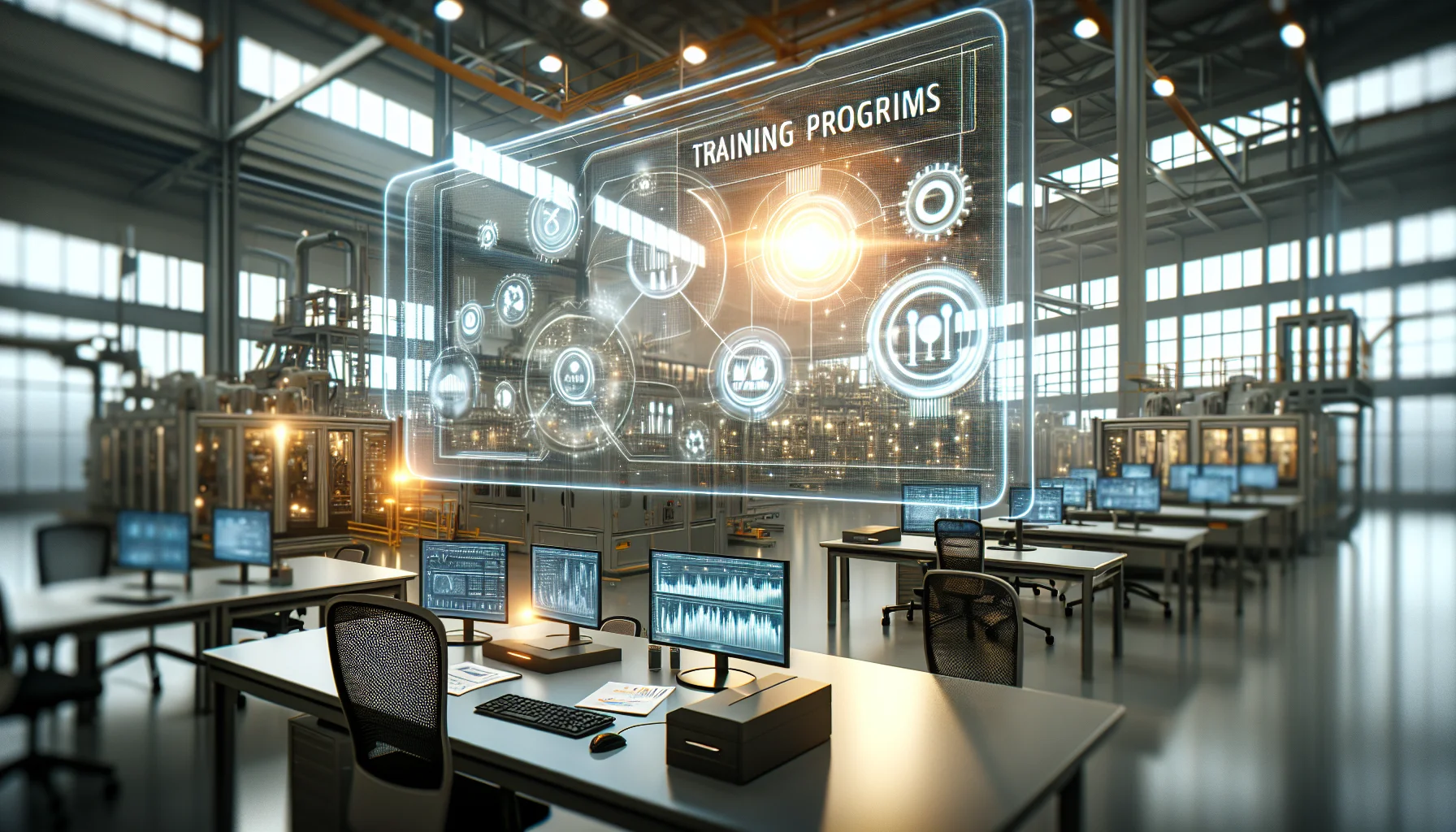
This article explains which training programs benefit most from real-time analytics in manufacturing, why immediacy improves learning transfer, and how to design data-driven upskilling. It outlines implementation steps, KPIs, examples (misfeeds down 42%, rework down 18%), and common pitfalls to avoid when scaling pilots.
Effective training programs powered by structured feedback and measurable outcomes transform workforce performance on the shop floor. In our experience, the best programs combine operational context, bite-sized learning, and continuous measurement so that instructors and managers can act on signals as they appear. This article reviews which training programs perform best when they are real-time analytics guided, outlines a practical implementation framework, and offers examples and common pitfalls to avoid.
When training intersects with production, timing is everything. Real-time analytics convert machine telemetries, operator interactions, and quality metrics into actionable learning signals. A pattern we've noticed is that latency in feedback erodes learning transfer; by contrast, immediate insights make reinforcement and remediation timely and specific. This is why data-driven upskilling for manufacturing is gaining traction across mid-size and large plants.
Real-time systems surface three critical categories of information that shape effective training programs: operator error trends, process drift, and equipment anomalies. Each signal maps to a targeted intervention — a microlearning module, a proctor-led coaching session, or a simulation exercise — reducing time-to-correct and preventing recurrence.
Real-time analytics narrow the gap between observed performance and corrective action. Instead of monthly training cycles, teams can deploy interventions within a single shift. That immediacy results in improved safety metrics, reduced scrap, and higher line availability — measurable outcomes that justify investment in analytics-enabled learning.
Not all training programs benefit equally from real-time guidance. Programs that require immediate feedback, frequent repetition, or context-specific decision-making show the largest gains. Key winners include upskilling programs for machine operators, safety reinforcement modules, and troubleshooting curricula that mirror actual fault conditions.
Three program types repeatedly outperform others when informed by live data:
Simulation training recreates the contextual cues operators face; microlearning reduces cognitive load and fits within production rhythms; coaching closes the loop with human judgment. In combination, these training programs make behavior change measurable and sustainable.
Designing training programs for analytics-guided delivery requires aligning learning objectives with sensor data and human workflows. Start by mapping the competency model to observable metrics: what sensor readings, operator actions, or quality flags indicate mastery or failure?
Follow a repeatable framework to convert signals into learning pathways:
In practice, we recommend a phased rollout. Pilot with a single line and one competence area, iterate on content triggers and thresholds, then scale across shifts. Use A/B testing to determine whether microinterventions or longer coaching sessions yield faster learning curves for a given skill. This iterative design minimizes disruption and ensures the best training programs informed by analytics are the ones that actually fit your plant's rhythm.
Concrete examples help translate theory into practice. A food-packaging line used analytics to detect pattern-based misfeeds; triggered microlearning on machine setup reduced misfeeds by 42% in two months. A heavy-equipment assembly cell combined simulation sessions with live torque and alignment data, cutting rework by 18%. These outcomes show how manufacturing training tied to live signals drives operational ROI.
For scheduling and delivery, many teams use centralized learning platforms that accept streaming inputs and map events to content repositories (available in platforms like Upscend). These integrations let learning managers define rules that push short modules to operators' tablets or to supervisors' dashboards when anomalies occur.
One pragmatic model is a tiered troubleshooting program: Level 1 microlessons for immediate corrective steps, Level 2 guided simulations for recurring faults, and Level 3 proctor-led certification for root-cause analysis. Real-time analytics determine which level a particular incident requires, ensuring the right intensity of intervention and conserving training resources.
Implementing analytics-guided training programs is not without challenges. A pattern we've found is over-automation of triggers that create alert fatigue, and underinvestment in content quality that makes interventions ineffective. Both reduce trust in the system and lower compliance.
Key pitfalls and mitigation strategies:
Technical integration with MES, SCADA, and LMS must be planned alongside governance. Define who accesses operator-level data and for what purposes. Studies show that transparent policies and joint supervisor-operator reviews of analytics results increase acceptance and improve program effectiveness.
Measurement is the backbone of any data-driven upskilling for manufacturing program. Choose KPIs that link learning to business outcomes: downtime reduction, defect rate, mean time to recovery (MTTR), and competency retention. Establish baseline metrics before interventions so improvements are attributable.
Recommended dashboard metrics include:
Use a structured feedback loop: capture event → trigger training → assess immediate performance → evaluate retention after 30–90 days → refine content and trigger thresholds. This cycle institutionalizes learning and ensures the best training programs informed by analytics evolve with changing equipment and process conditions.
When done correctly, analytics-guided training programs shorten the time from observed problem to effective remediation, reduce rework, and build operator competence that endures. The strongest programs combine simulation-based practice, microlearning at the point-of-need, and a governance model that protects data and builds trust.
Start small: pilot one competency on one line, instrument the critical signals, and measure both operational and learning KPIs. Iterate content and triggers based on real-world performance, then scale successful patterns across the plant. Over time, these practices create a resilient workforce capable of responding to variability with confidence.
Call to action: Identify one recurring shop-floor problem you want to reduce by 20% in six months and design a pilot training programs workflow around it — map signals, create a two-step intervention, and define success metrics to measure impact.
The Upscend Team provides actionable insights on technology and business strategy.
Book a walkthrough and we'll show you how it applies to your own content.
 Institutional Learning
December 24, 2025
This article explains how real-time analytics can power continuous apprenticeship in advanced manufacturing by linking learning objectives to operational KPIs. It covers dashboard designs, core KPIs, case evidence (28% rework reduction; 22% faster certification), and a five-step pilot roadmap to assess readiness, protect privacy, and scale programs.
 Institutional Learning
December 24, 2025
Real-time analytics gives manufacturers near-instant visibility into candidate flows, exposing stage-specific biases and sourcing gaps. By tracking conversion rates, time-to-offer, and assessment score distributions, teams can run pilots, deploy alerts, and redesign assessments to boost diversity. Governance, training, and linking hiring to retention sustain long-term equitable hiring outcomes.
 Institutional Learning
December 24, 2025
This article shows how real-time analytics accelerate rapid reskilling during production shifts by prioritizing learners, delivering agile micro-training, and verifying competence through cross-training analytics. It outlines a step-by-step workflow—assess, deliver, validate—metrics to monitor, and a checklist for quick deployment to restore capacity with minimal downtime.
Business Strategy&Lms TechJanuary 25, 2026
Real-time learning analytics ingests learner events continuously to enable low-latency personalization, remediation, and reporting. The article contrasts streaming vs batch, outlines a five-layer learning analytics pipeline (ingestion, transport, processing, storage, serving), and provides feature-engineering strategies, model choices, cost trade-offs, and a phased implementation timeline for pilots.