

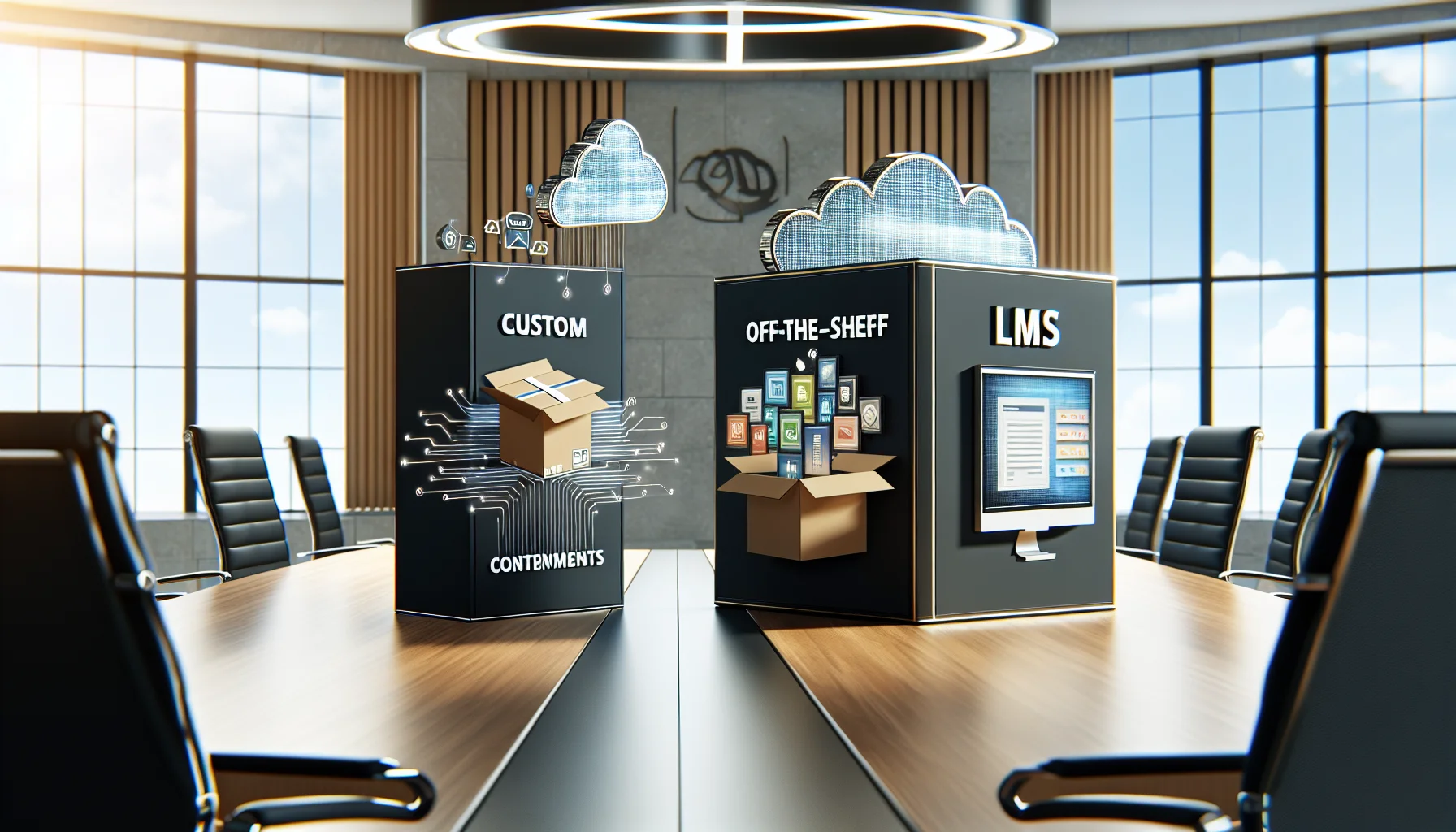
This article provides a practical framework to evaluate custom vs off-the-shelf LMS content by scoring cost, time-to-deploy, audience specificity, and compliance. It includes break-even examples, two mini case studies, and a hybrid checklist so teams can run a 60–90 day pilot and choose the right approach.
Deciding between custom vs off-the-shelf LMS content is one of the most common strategic choices learning teams face. In our experience, the right answer depends less on a binary preference and more on a structured evaluation of cost, time, audience needs, regulatory constraints, and long-term scalability. This article gives a practical decision framework, ROI break-even examples, two mini case studies, and a hybrid checklist so teams can confidently choose between custom LMS courses and off-the-shelf wellness training.
We’ll cover when to make bespoke mental health programs versus when to choose packaged emotional intelligence curricula, plus implementation tips that preserve brand voice and ensure scalability.
A consistent framework removes emotion from the custom vs off-the-shelf LMS content debate. We've found teams make better decisions when they score options against four dimensions: cost, time-to-deploy, audience specificity, and legal or localization requirements. Use the short checklist below to start every procurement or design conversation.
Score each dimension from 1–5 for both build and buy. For example, if compliance is critical, custom LMS courses will usually score higher. If the organization needs fast deployment, off-the-shelf wellness training will typically win.
Practical tip: create a 2x2 priority matrix (speed vs. specificity) to visualize the recommendation. That makes conversations with stakeholders and procurement concrete and repeatable.
Cost modeling clarifies long-term value. Below are simplified examples that show when building custom content becomes financially sensible. These are illustrative; adapt with real vendor quotes and internal cost rates.
Example assumptions: custom build one 60-minute course costs $60,000 to develop, annual maintenance $6,000; off-the-shelf license $20 per user/year. Target audience: 2,000 employees.
| Metric | Custom | Off-the-shelf |
|---|---|---|
| Year 1 cost | $60,000 | $40,000 |
| Annual cost (years 2+) | $6,000 | $40,000 |
| Break-even point | Custom breaks even when cumulative off-the-shelf spend exceeds custom + maintenance — in this scenario ~2 years | |
That table shows a common pattern: with medium-to-large audiences, custom content pays off quickly. But if your target audience is fewer than 500 users, or you have multiple one-off topics, off-the-shelf wellness training often remains the lower-cost option.
To calculate break-even, include all development costs, platform integration, localization, and expected refresh intervals. Compare these to license fees times user count. Don’t forget hidden costs like LMS admin time, reporting, and learning curve costs. In our experience, including a 15–25% overhead for integration provides a realistic buffer.
Ask three critical questions to determine if you should build: Is the content unique to your business model? Are there regulatory or legal constraints? Will brand voice or role-specific scenarios materially affect learner outcomes? If you answer yes to any, custom is likely better.
We advise building when:
Example: If your sales team uses a proprietary CRM with unique workflows, generic customer service modules won’t deliver the same performance gains. A custom mental health course that references internal EAP processes is another case where bespoke development reduces risk and increases impact—this is a frequent answer to when to build custom LMS mental health courses.
Build decisions should also consider longevity. If a course will be core to employee journeys for 3+ years and will be updated annually, the investment often yields a favorable ROI.
Off-the-shelf wellness training is appropriate when you need fast deployment, broadly accepted best practices, or low per-user cost. Many vendors provide well-researched modules on stress management, resilience, and emotional intelligence that suit large, diverse audiences.
Choose off-the-shelf when your objectives are generic (e.g., baseline EI awareness), audience size is large, and you prioritize immediate availability over customization. These packages often include assessments and standardized reporting that meet broad HR needs.
We’ve found that blending an off-the-shelf core with a few company-specific add-ons delivers fast wins while preserving some customization. That split approach reduces time-to-value and manages budgetary constraints.
In the next section we present a hybrid checklist designed for teams who need both speed and specificity.
Most organizations land in the middle: they need the rapid availability of off-the-shelf wellness training but also some tailored scenarios, language, or reporting. Here’s a practical checklist to implement a hybrid model effectively.
Implementation tips: Keep voice and branding coherent by adding a short custom introduction to off-the-shelf modules, and use your LMS to deliver unified reporting and completion tracking. The turning point for most teams isn’t just creating more content — it’s removing friction. Tools like Upscend help by making analytics and personalization part of the core process, letting teams stitch custom modules and off-the-shelf assets into a single learner experience.
Two short, real-world scenarios demonstrate the trade-offs.
A global bank needed a custom LMS courses program for frontline staff handling distressed customers. Regulatory oversight required bank-specific scripting and data-handling guidance. We recommended build: developers and subject-matter experts created targeted micro-learning, scenario simulators, and region-aware legal snippets. The bank reached break-even in 24 months thanks to improved retention and reduced compliance incidents. Key gains: brand voice alignment and measurable behavior change.
A mid-sized tech company wanted to raise baseline emotional intelligence across 1,200 staff on a tight timeline. They selected an accredited off-the-shelf wellness training suite with built-in assessments and manager toolkits. Deployment completed in three weeks, and HR used vendor analytics for a baseline pulse. The firm later added two short custom scenarios for engineering managers — a low-cost hybrid move that preserved speed while meeting a specific need.
Choosing between custom vs off-the-shelf LMS content is not a one-time judgement but a recurring strategy aligned to audience, budget, and compliance. Use the decision framework above to score options; run a simple break-even analysis for ROI clarity; and consider a hybrid approach where it reduces risk and accelerates time-to-value.
We've found that teams who document their scoring criteria and test one pilot (either a custom micro-module or a bundled course) can scale confidently. The next step is to run a 60–90 day pilot using the checklist above, measure engagement and outcomes, then decide whether to scale the custom solution, standard modules, or a blend of both.
Call to action: Use the decision framework and ROI table in this article to run a pilot evaluation within 30 days — pick a topic, score build vs buy, and measure results against a 90-day engagement target.
The Upscend Team provides actionable insights on technology and business strategy.
Book a walkthrough and we'll show you how it applies to your own content.
 General
December 22, 2025
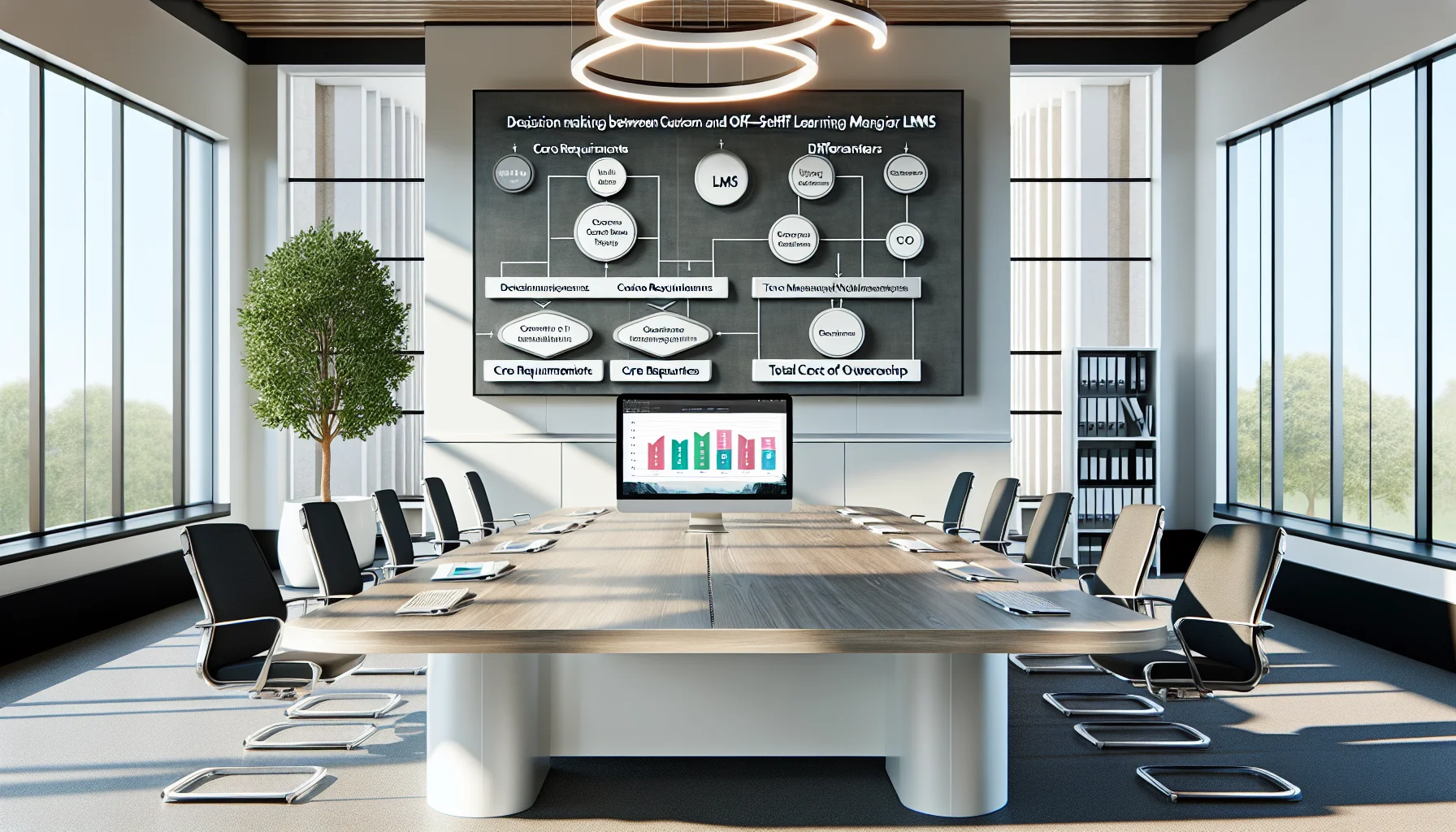
Map requirements into core versus differentiators, score business impact, and run a five-year TCO to decide build vs buy. Buy for speed and standard needs; build only when functionality drives competitive differentiation and you have sustained engineering capacity. Consider hybrid approaches to limit bespoke code and maintenance risk.
 Business Strategy&Lms Tech
December 31, 2025
This article explains how an LXP content strategy differs from an LMS by prioritizing discoverability, modular micro-assets, and UGC governance. It provides a sourcing matrix, tagging templates, lifecycle states, and a phased 6-8 week pilot roadmap. Readers will learn taxonomy best practices, moderation workflows, and KPIs to measure adoption.
 Business Strategy&Lms Tech
January 25, 2026
This article compares off-the-shelf vs custom compliance for LMS programs across cost, time-to-deploy, legal accuracy, brand engagement, scalability and updateability. It provides a decision matrix, 3-year TCO example, vendor negotiation tips, and a hybrid mini-case to help HR decide whether to buy off-the-shelf compliance courses or build custom training.
 Business Strategy&Lms Tech
January 26, 2026
Use a five-filter framework (budget, timeline, integrations, compliance, scalability) and a 10-criteria side-by-side comparison to decide between off-the-shelf and custom LMS. Score needs (1–5 per filter) — totals >18 typically indicate custom; <12 favor commercial LMS. Run a rapid pilot and an architectural spike before committing.