

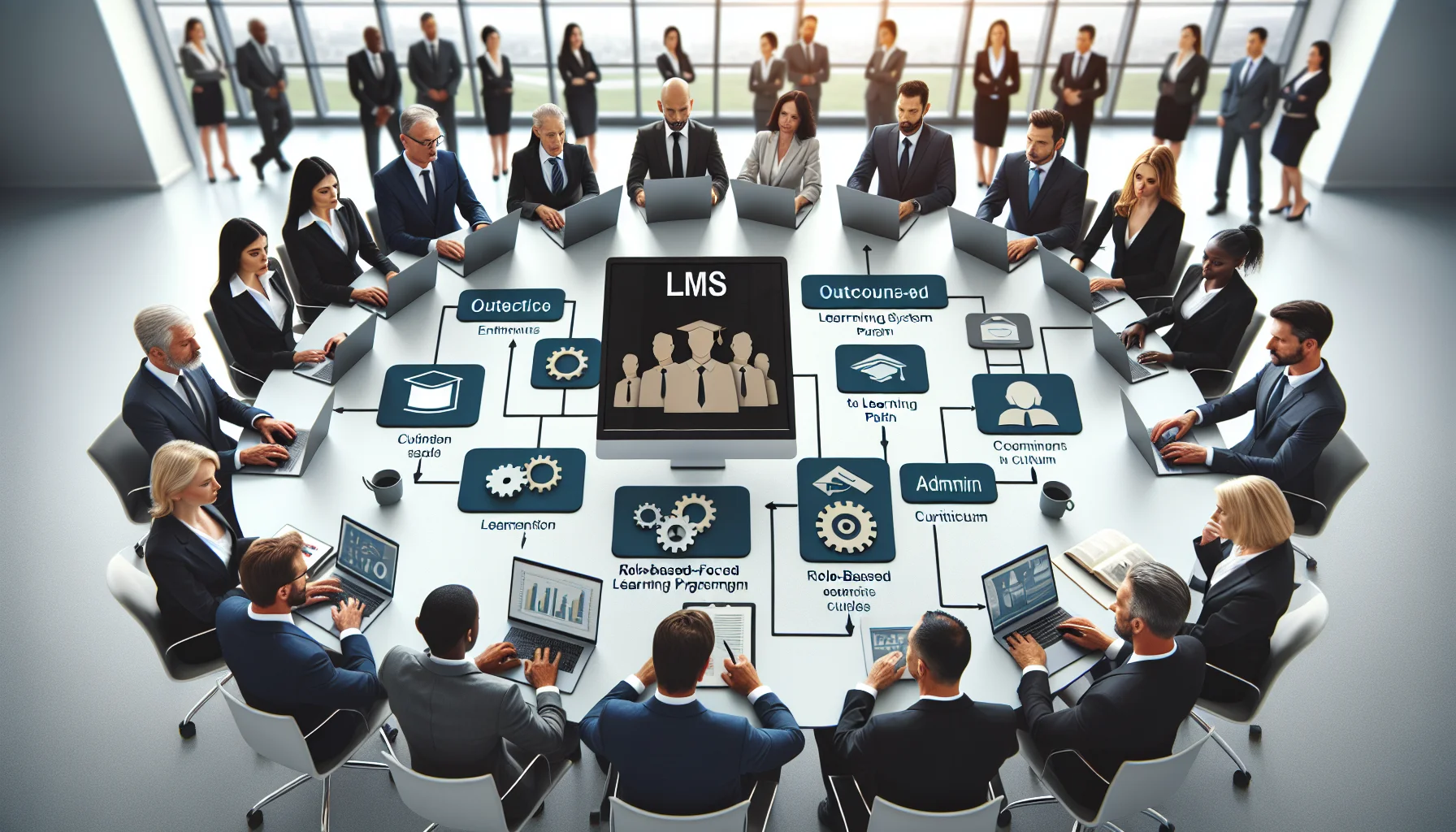
This executive guide explains how to use a personalized learning lms to engage candidates, validate skills, and shorten ramp time. It covers pre-hire track design, content tagging and adaptive architecture, key metrics, candidate journey examples, and a 30–90 day pilot checklist to deliver measurable hiring improvements.
personalized learning lms is rapidly becoming a strategic differentiator in recruiting. In our experience, forward-thinking talent teams use a personalized learning lms to convert passive applicants into engaged candidates, accelerate time-to-productivity, and surface talent that traditional screenings miss. This guide explains how to design and position personalized learning lms experiences—pre-hire learning tracks, role-based micro-credentials, and skill assessments—so executives can evaluate feasibility and get fast wins.
Recruiting suffers from two predictable pain points: a one-size-fits-all sourcing model that fails to differentiate candidate potential, and a lack of pre-hire engagement that leads to ghosting and low offer acceptance. A personalized learning lms shifts the metric from CV fit to demonstrated learning momentum and competency progression.
Benefits include:
We've found that combining short, role-specific learning with adaptive assessments reduces hiring friction and increases diversity of hire—because candidates without pedigree but with learning agility can shine. In controlled pilots, companies report a 15–25% increase in interview-to-offer conversion when candidates complete pre-hire pathways. If you want to use adaptive learning to attract candidates, position the pathway as a growth opportunity rather than a gate: emphasize learning outcomes, time commitment, and what the badge signals to hiring managers.
Designing effective pre-hire tracks requires clarity on outcomes and minimal candidate friction. A practical structure uses three layers: awareness, assessment, and endorsement.
Each pathway should include:
Use learning pathways lms design patterns: short videos, scenario-based tasks, and optional stretch content. For senior roles, include a case-study lab that simulates on-the-job decisions. For volume roles, prioritize speed and low cognitive load. Practical tips: timebox modules to predictable increments, provide offline reading for deeper context, and ensure accessibility (captions, mobile-first layout) so the pathway reaches more diverse applicants.
Map micro-credentials to hiring rubrics. If a role requires "data literacy," create a micro-credential that tests the exact tasks new hires will perform. When recruiters see a candidate with that badge, it reduces time-to-hire and increases confidence during interviews. Establish pass/fail thresholds that correlate with on-the-job success—use historical performance data where available to set realistic cutoffs. Communicate what a badge represents within interview scorecards so hiring managers interpret credentials consistently.
Technically, a recruitment-focused personalized learning lms must support modular content, dynamic learner profiles, and event-driven orchestration.
Key components:
Content tagging is foundational. Tag each asset with a taxonomy (skill, behavior, job task, complexity). That allows the platform to create targeted tracks—turning one library into thousands of unique candidate journeys. Consider privacy and security: ensure data sharing between your ATS and personalized learning lms follows consent rules and retains minimal candidate PII. Integration points to prioritize: single sign-on, ATS webhooks for status updates, and analytics exports for HRIS alignment.
Yes. Adaptive engines adjust content difficulty and sequencing based on candidate responses. For recruitment use, prioritize adaptive assessments that shorten as confidence grows—candidates see fewer redundant items and higher-quality recommendations appear faster. This reduces dropout and highlights learning momentum. Where available, use explainable ML rules so recruiters understand why a pathway was recommended; transparency boosts trust across talent and hiring teams.
| Component | Recruitment Role | Why it matters |
|---|---|---|
| Content Tagging | HR + L&D | Enables reusable, composable learning pathways |
| Learner Profile | Recruiters | Provides evidence-based shortlisting |
| Adaptive Engine | Hiring Managers | Improves candidate experience and test validity |
Choose a small set of leading and lagging metrics. Leading metrics predict downstream hiring success; lagging metrics confirm business impact.
Leading metrics:
Lagging metrics:
A pattern we've noticed: platforms that combine credentialing with ATS signals reduce time-to-hire by 20–30% on average. As a benchmark, aim for an engagement rate above 40% on invited candidates in the first pilot, and a completion-to-offer rate lift of at least 10% relative to baseline. Case study: a retail tech firm piloted a 90-minute pathway for customer support reps and saw time-to-productivity drop from 8 weeks to 5 weeks for credentialed hires.
Design metrics around behaviors you can change: engagement, completion, and demonstrable skill—those are levers that recruiting and hiring managers control.
Below are two hypothetical candidate learning journeys demonstrating how to position learning as a recruitment magnet. Each journey shows content mix, expected time, and success signals.
Target: candidates from bootcamps or self-taught backgrounds.
Content mix: 60% hands-on tasks, 20% short video explanations, 20% scenario quizzes. Success signals: completion of kata, passing adaptive assessment, and badge earned within 48 hours. Practical tip: offer an option to retake or request a human review to reduce false negatives and keep promising candidates in the funnel.
Target: professionals making a role switch or scaling product skills.
Content mix: 40% scenario labs, 30% guided templates, 30% reflection + artifact. Success signals: quality of submitted artifact, assessment rubric score, and endorsement by hiring manager. For specialist roles, offer asynchronous interview slots for candidates who earn the badge—this creates a clear pathway from credential to interview.
Executives need practical next steps and awareness of common traps. Below are quick wins you can implement within 30–90 days, and a shortlist of pitfalls to avoid.
Rollout checklist:
In our experience, starting small with clear measurement and iterating monthly yields better adoption than a big-bang approach. Make sure hiring managers participate in rubric creation; their buy-in is the most important success factor. Consider a rolling roadmap: month 1 pilot, month 2 expand to two roles, month 3 integrate with hiring dashboards and HRIS.
Personalized learning paths are more than a talent brand play: they are a tactical tool for sorting, engaging, and validating candidates prior to hire. A well-architected personalized learning lms—one that leverages adaptive learning recruitment principles, robust content tagging, and meaningful micro-credentials—reduces hiring risk and accelerates ramp time.
Key takeaways:
If you're an executive ready to pilot personalized learning paths for recruitment, start by selecting one high-impact role and building a minimal viable pathway that takes candidates no more than two hours to complete. Track engagement and credential conversion in the first 90 days and convene hiring managers to validate the rubric. That simple loop delivers clear ROI and creates a repeatable model for scaling a personalized learning lms program across the organization.
Call to action: Identify one role to pilot this quarter and assemble a cross-functional team (talent acquisition, L&D, hiring manager) to launch a 60–90 day MVP that includes tagged content, an adaptive assessment, and a micro-credential. By using candidate learning journeys and the right learning pathways lms patterns, you can use adaptive learning to attract candidates and build personalized learning paths for recruitment that matter.
The Upscend Team provides actionable insights on technology and business strategy.
Book a walkthrough and we'll show you how it applies to your own content.
 Business Strategy&Lms Tech
December 31, 2025
Combining behavioral signals and performance data enables adaptive learning paths, targeted recommendations, and timely nudges that improve completion and conversion. Start with a unified learner profile, rule-based guardrails, and staged A/B tests, then iterate to ML-driven recommenders. The article covers data sources, experiments, ethics, tech stack, case studies, and a 90-day rollout plan.
 Business Strategy&Lms Tech
January 21, 2026
This article explains how LMS for hiring reorganizes onboarding into competency-based learning paths, microlearning, and assessments to shorten ramp time and increase retention. It outlines pragmatic implementation steps, sample 8–12 week role-specific learning paths, and a tiered KPI model to connect learning activity to business outcomes.
 Business Strategy&Lms Tech
January 25, 2026
This guide explains how to treat your learning platform as a visible talent brand to attract candidates, speed onboarding and improve retention. It provides a 90‑day pilot plan, core features, KPI framework, vendor checklist and a simple ROI model so TA and L&D teams can test measurable learning-brand plays on constrained budgets.
 Business Strategy&Lms Tech
January 25, 2026
This article provides a 90-day, week-by-week playbook to use an LMS to attract candidates: build short public learning trials, issue micro-certifications, map badges into your ATS, and run targeted outreach. It covers required integrations, content formats, outreach cadences, KPIs, and common pitfalls to convert learners into hires faster.