


Integration between LMS and HRIS automates user provisioning, creates a single source of truth, and enables consolidated reporting. Implement API/SCIM or scheduled ETL, map immutable identifiers, enforce SSO, and build governance. Follow a phased six-week rollout with cross-functional ownership, data quality checks, and GDPR-aligned retention controls.
LMS HRIS integration is the backbone of efficient learning operations for modern organizations. In our experience, connecting the learning management system to the HRIS reduces manual work, creates a single source of truth for learner data, and powers more insightful reporting. This article explains why integration matters, the technical and organizational best practices for integrating LMS with HRIS systems, common pain points, and a concrete implementation timeline you can use.
Below you’ll find practical guidance on how to sync user data between HRIS and LMS, ways to automate user provisioning, and steps to protect personal data while achieving reliable, repeatable processes.
At scale, L&D teams that skip LMS HRIS integration spend hours on manual tasks: creating accounts, assigning cohorts, and reconciling completion records. A reliable integration replaces repetitive admin work with automated processes, giving learning teams time to focus on design and outcomes.
Three core benefits drive adoption: automation of user provisioning and enrollment, a single source of truth for workforce data, and consolidated reporting that links training to HR metrics like role, location, and tenure. These benefits help L&D show impact and reduce compliance risk.
Automation eliminates touchpoints where errors creep in. With synchronized data you can map completions to performance or retention metrics. In audits, accurate records flow directly from the HRIS through the LMS, simplifying compliance and accreditation.
Beyond efficiency, integration creates consistency: job changes, terminations, and promotions flow through one system and are reflected in learner access and skill paths immediately.
Technical design determines whether an integration is resilient or brittle. Start with a clear data model and an agreed-upon integration pattern — API-first, SCIM-based provisioning, or scheduled ETL — and document each field, constraint, and transformation.
Key practices include data mapping, the right frequency of sync, robust error handling, and single sign-on. Use the checklist and examples below to avoid common traps.
How to sync user data between HRIS and LMS depends on scale and security needs. For mid-size and up, real-time or near-real-time API/SCIM provisioning is best: it ensures immediate access changes and minimizes orphaned accounts. For smaller orgs, nightly batch syncs can be acceptable if SLAs are defined.
Make sure unique identifiers (employee ID, email) are immutable and used as the canonical key. Implement delta synchronization to transfer only changed records — this reduces processing and speeds reconciliation.
Technology alone doesn't solve integration problems. Governance, clear ownership, and documented processes are critical. We've found the most successful teams include L&D, HRIS, IT, and security in the planning phase and maintain a cross-functional integration board for ongoing issues.
Define roles and permissions in writing: who approves field mappings, who owns the service account, who responds to incidents, and who signs off on changes. Use a change-control process for schema updates to prevent unexpected breakages.
Ownership usually sits with a cross-functional team led by either HR operations or L&D depending on organizational priorities. For learning-heavy organizations, L&D often leads while HRIS/IT provide technical stewardship.
Ensure a named integrator or platform owner manages the pipeline and a business owner handles policy decisions. Maintain a runbook that covers routine tasks and escalation steps.
Protecting personal data is non-negotiable. Integration must enforce the principle of least privilege and minimize personal data transfer. Encrypt data in transit and at rest, log access, and regularly review service account permissions.
For GDPR compliance, document lawful basis for processing, retention periods, and deletion workflows. Implement data minimization by syncing only fields required for learning assignments and reporting.
Some of the most efficient L&D teams we work with use platforms like Upscend to automate this entire workflow without sacrificing quality. They leverage configurable transformation pipelines to filter sensitive fields while maintaining the metadata needed for business reporting, which illustrates how automation tools can address compliance and maintain data hygiene.
Three recurring pain points derail integrations: mismatched field mappings, inconsistent HR data, and maintenance overhead. Tackling these up-front saves time and prevents churn in downstream systems.
Address mapping early, implement data quality checks, and automate maintenance tasks where feasible. Below is a practical checklist to use during design and testing.
A phased implementation reduces risk. Below is a six-week baseline timeline for a typical LMS HRIS integration. Adjust durations for enterprise complexity and regulatory reviews.
Assign clear owners for each phase and maintain a shared project board to track progress and blockers.
| Week | Activity | Owner |
|---|---|---|
| Week 1 | Discovery & data mapping workshop — identify fields, keys, and transformations | HRIS Lead, L&D Lead, Integration Engineer |
| Week 2 | Design API/SCIM endpoints, define auth and SSO approach | IT/Security, Integration Engineer |
| Week 3 | Develop connectors and transformation scripts; build test harness | Integration Engineer |
| Week 4 | End-to-end testing with selected pilot population; address mapping issues | QA, HRIS Lead, L&D Pilot Owner |
| Week 5 | Security review, GDPR checks, and SSO validation | Security, Legal, IT |
| Week 6 | Production rollout, monitoring, and post-launch review | Integration Engineer, L&D Ops |
Successful projects align skills to tasks. Below is a concise RACI-style mapping to keep accountability clear during rollout and maintenance.
LMS HRIS integration is a strategic capability: it reduces manual work, enforces a single source of truth, and unlocks richer reporting to show learning impact. Start with clear data mapping, choose a provisioning pattern that matches your scale, and build governance into the process so the integration remains reliable over time.
Common pitfalls — field mismatches, dirty HR data, and weak change control — are avoidable with the checklists and timeline above. Implement SSO and audit controls early, and automate reconciliation to keep maintenance overhead low.
If you want a practical next step, run a focused two-day discovery to map your core fields, define SLAs, and build a minimum viable connector. That discovery typically surfaces the 20% of issues that cause 80% of downstream problems and gives you a clear path to production.
Call to action: Schedule a cross-functional discovery session this month to produce a data mapping document and an integration runbook you can use for rollout and future audits.
The Upscend Team provides actionable insights on technology and business strategy.
Book a walkthrough and we'll show you how it applies to your own content.
 L&D
L&DDecember 21, 2025
This article explains how LMS integration with HR systems streamlines identity, enrollment, and completion data flows. It outlines technical protocols (SCIM, xAPI, APIs), a five-phase project lifecycle, security and SSO considerations, and a step-by-step checklist to pilot user provisioning and reporting. Follow KPIs and governance for reliable operations.
 General
December 23, 2025
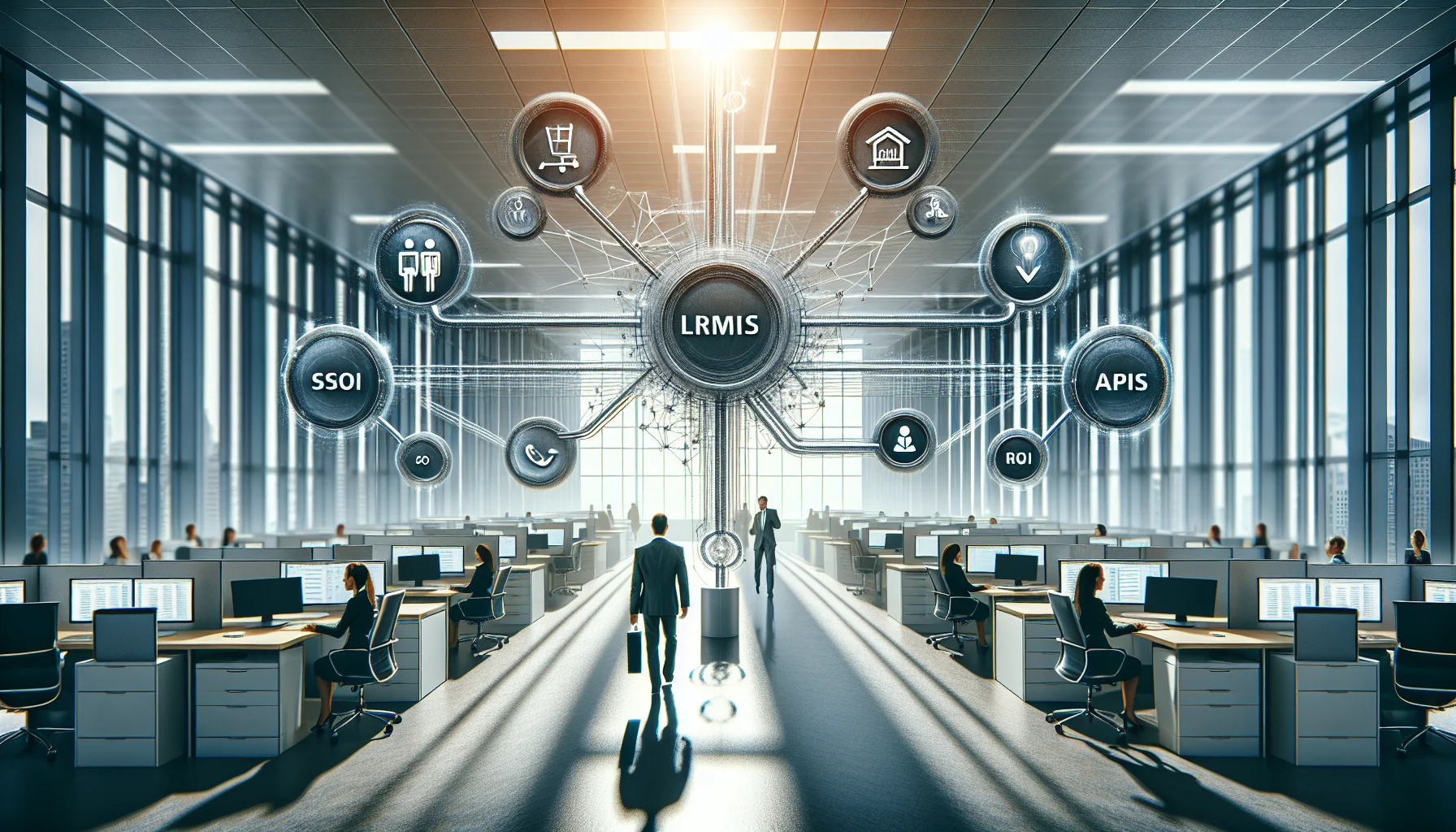
Integrated LMS connections to HRIS, SSO, SCIM and APIs automate provisioning, improve security, and enable unified reporting. This article covers integration types, technical standards, implementation steps (Discovery→Design→Prototype→Scale→Operate), mitigation of common failures, and case examples (Workday, SAP, Salesforce) with a practical pilot checklist to accelerate time-to-value.
 Business Strategy&Lms Tech
January 4, 2026
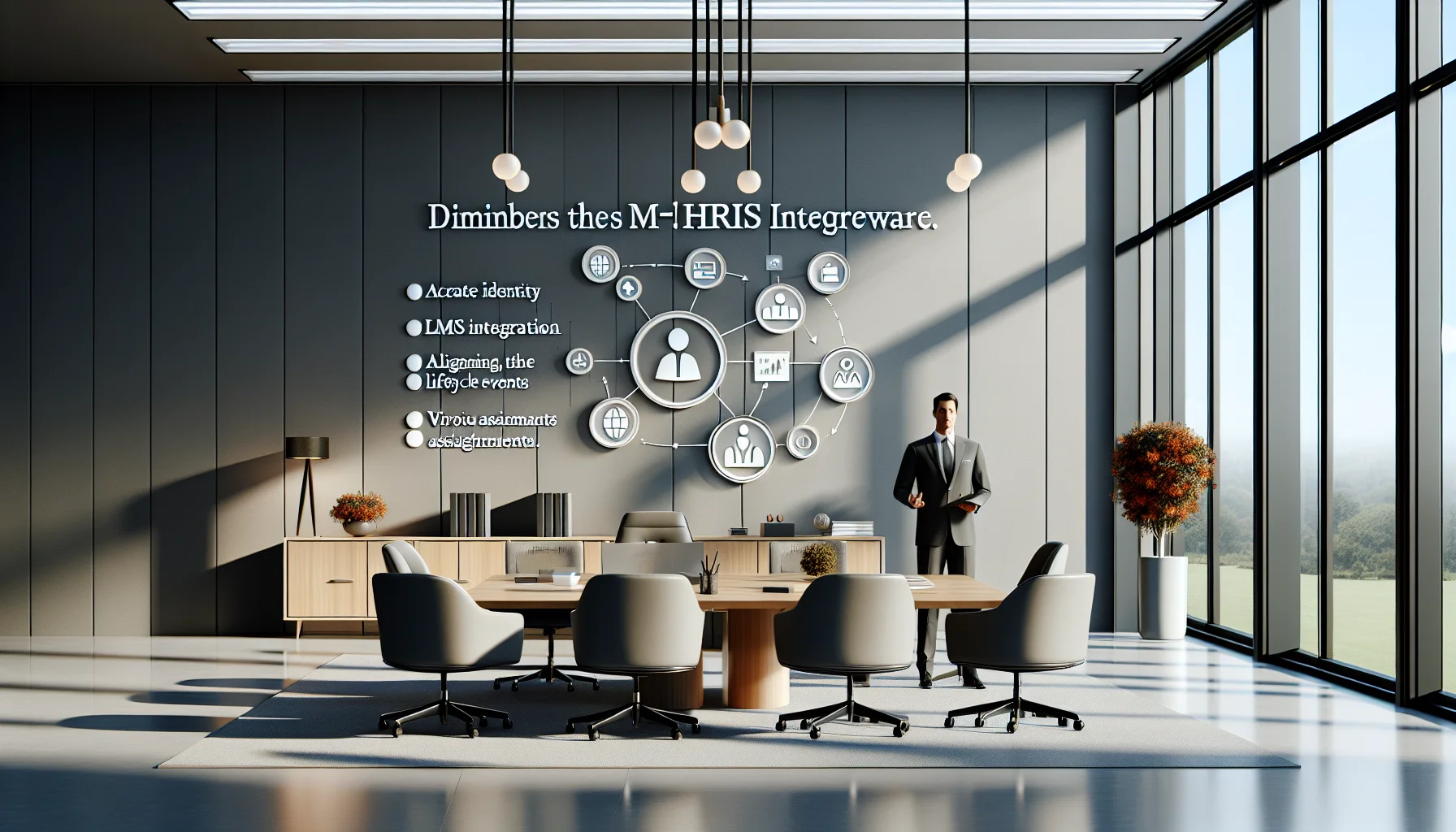
Accurate HR-LMS integration stops shelfware by aligning identity, lifecycle events, and assignment rules. Event-driven HRIS syncs enable automated enrollments, role-based entitlements, and timely notifications, reducing enrollment lag and improving compliance reporting. Follow a canonical user schema, secure data flows, and reconciliation tests to maintain reliable sync and measurable completion gains.
 Business Strategy&Lms Tech
January 25, 2026
This guide explains how to integrate LMS HRIS for compliance by prioritizing SSO and SCIM-based provisioning, mapping roles, and automating transcript sync and recertification. Follow a phased plan (discovery, pilot, rollout) and enforce standards (SAML, xAPI) to reduce admin time, improve auditability, and cut remediation risk.