


This practical VR headset buying guide helps L&D leaders match use case, budget, and device lifecycle to headset class, management, and procurement. It includes a comparison of standalone, tethered, and mobile headsets, a procurement checklist, deployment logistics, sample pilot budgets, vendor shortlist, and negotiation tips to control TCO.
vr headset buying guide — this article gives a practical, procurement-focused roadmap for L&D leaders who need to buy vr headsets for training and integrate them into an LMS rollout. In our experience, decisions succeed when teams align use case, budget, and device lifecycle early. Below you'll find a compact decision framework, a clear comparison of headset classes, a procurement checklist, deployment logistics, sample pilot budgets, vendor shortlist, and negotiation tips to shorten procurement cycles and control total cost of ownership.
Decide by use case first. Ask whether content is high-fidelity simulation, collaborative meetings, or lightweight microlearning. Each use case drives hardware class and management needs. A simple rule: choose the least complex device that satisfies fidelity and tracking requirements.
Map total cost drivers: hardware, content delivery, device management, accessories, and refresh cycles. We're often asked whether to favor lower upfront cost or lower operational cost; prioritize lifecycle cost for enterprise rollouts.
Start with three simple steps: (1) list top two learning objectives, (2) set a budget band for acquisition and annual ops, (3) define an expected device lifecycle (18–36 months for most enterprise headsets). This quick rubric forms the backbone of a practical vr headset buying guide.
Choosing between standalone, tethered, and mobile VR is the most common decision. Below is a compact comparison to help you decide which hardware class to procure.
| Class | Strengths | Weaknesses | Best fit |
|---|---|---|---|
| Standalone | Easy deployment, built-in tracking, integrated Wi‑Fi | Lower GPU than tethered, battery management | Most corporate training pilots |
| Tethered | Highest fidelity, complex simulations | Requires PCs, higher setup cost | Sophisticated simulations and research |
| Mobile | Lowest cost, simple 360 video | Fragmented devices, inconsistent tracking | Basic awareness and compliance training |
When you evaluate models, compare these metrics: resolution per eye, field of view, comfort/weight, tracking type (inside-out vs external), and management features (MDM/enterprise console).
A repeatable procurement checklist reduces surprises. Treat procurement as a bundled service: devices, management, accessories, and service level agreements.
Use the checklist below for RFPs or purchase orders; the list reflects common contract blind spots we've seen in enterprise vr headset procurement.
We’ve found teams often forget accessory compatibility (proprietary chargers) and underestimate accessory spend. Also verify software licensing: some headsets bundle enterprise features behind separate SKUs.
Plan for a 10–20% accessory and consumable buffer to avoid mid-pilot shortfalls.
Deployment is where projects succeed or fail. A tight operational plan includes asset tagging, sanitization protocols, charging infrastructure, transport cases, and insurance coverage. This is often more work than procurement itself.
Asset management: Tag devices with serial, user assignment, and lifecycle status. Pair tagging with a device inventory system or MDM to track usage and firmware state.
Some of the most efficient L&D teams we work with use platforms like Upscend to automate this entire workflow without sacrificing quality. This approach—combining an MDM, inventory system, and automated scheduling—reduces device downtime and helps procurement plan replacements.
When stakeholders ask how many vr headsets to buy for a pilot program, the correct answer depends on frequency and availability of shared devices. Below are pragmatic scenarios built from real rollouts.
Buy 6–8 standalone headsets. Budget band: $3k–$8k including spare batteries, cases, and basic MDM. Rationale: 6 devices let you run 3 simultaneous sessions with rotation and a spare for RMA.
Buy 20–30 headsets. Budget band: $15k–$45k. Include charging carts, sanitation kits, and an enterprise MDM license. Plan for 10–20% extra devices as spares.
Buy 80–120 headsets distributed across sites. Budget band: $80k–$250k depending on model and management features. Negotiate multi-year refresh and volume discounts.
Shortlist vendors across hardware makers, resellers, and service partners. Typical hardware vendors include mainstream headset manufacturers, certified resellers, and specialized enterprise integrators. Service partners provide MDM, content packaging, and training for admins.
| Type | Role | What to ask for |
|---|---|---|
| OEM | Device supply & firmware | Enterprise SKUs, bulk warranty, beta firmware access |
| Reseller | Procurement & logistics | Drop-shipping, kitting, asset tagging |
| Integrator | Deployment & MDM | APIs, scheduling automation, onsite support |
Address the three frequent pain points directly:
Use this vr headset buying guide as a practical checklist when preparing an RFP or procurement plan. Start with use case and lifecycle, then match the headset class and management tools. Budget for accessories and operations—these often exceed 20% of the initial spend. In our experience, pilots succeed when procurement, IT, and L&D agree on refresh cycles, MDM requirements, and sanitization standards before the first device ships.
Key takeaways:
If you want a practical next step: draft a 1-page RFP with your top use cases, expected concurrent users, and a target lifecycle, then run that RFP against 3 vendors (OEM, reseller, integrator) to compare bundled pricing and lead times. That approach yields a fast, defensible answer to where to buy VR headsets for training and how to scale from pilot to production.
Next step: prepare your RFP using the checklist above and schedule vendor demos focused on management tooling and sanitation workflows.
The Upscend Team provides actionable insights on technology and business strategy.
Book a walkthrough and we'll show you how it applies to your own content.
 The Agentic Ai & Technical Frontier
January 4, 2026
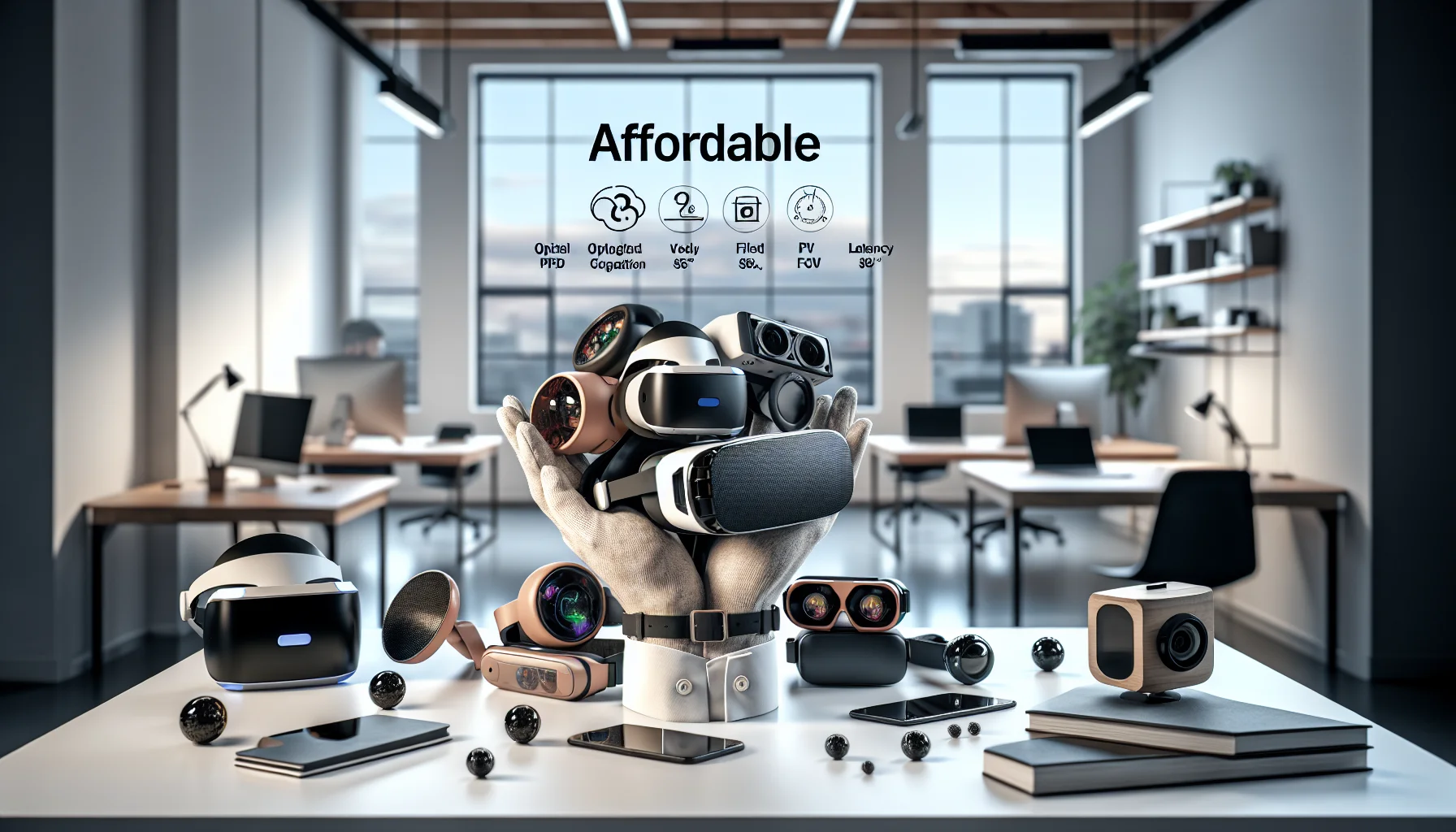
Choose affordable VR headsets by matching training goals to measurable optics: prioritize pixel density and optics for fine-motor work and FOV/tracking for spatial drills. We compare six practical models (Meta Quest 3, Pico 4, HP Reverb G2, Vive Pro 2, Quest 2) and give benchmarking, enterprise, and procurement guidance. Run pilots before scaling.
 The Agentic Ai & Technical Frontier
January 4, 2026
Assess affordable VR headsets for training by scoring optical fidelity (PPD), FOV and latency, plus ergonomics and enterprise tools. Pilot 10–20 units with real content, measure PPD/FOV in-context, and factor sanitation, warranties, and TCO. Match headsets to fine-motor or spatial training profiles before scaling.
 Business Strategy&Lms Tech
January 25, 2026
This article explains how HR teams should select and procure MR/VR headsets for onboarding, compliance, and soft-skill training. It compares common models and price tiers, outlines procurement channels, device-management best practices, warranty needs, and three pilot configurations (small, mid, enterprise) to reduce rollout risk and operational overhead.
HrFebruary 3, 2026
This article explains how to choose the best VR headsets for onboarding by prioritizing durability, admin controls, sanitization, and predictable TCO. It compares standalone, tethered, and mixed-reality devices, outlines sanitation and multi-user policies, and provides a procurement checklist plus pilot recommendations to validate vendor SLAs and admin tooling.