


This article explains how gamification spaced repetition combines AI-triggered schedules with motivation design to increase learner engagement and retention. It recommends evidence-based mechanics (badges, streaks, leaderboards, micro-rewards), measurement strategies, and quick A/B tests. Start with one mechanic, instrument recall quality, and evaluate by retention across spaced intervals.
In our experience, gamification spaced repetition can transform routine review into a compelling learning loop. AI-triggered schedules handle timing, but engagement depends on behavioral design: clear goals, feedback, and micro-incentives. This article explains why learner engagement rises when proven game mechanics align with spaced schedules, offers evidence-based tactics, provides A/B test ideas, and shows sample implementations for different audiences.
We focus on practical, research-aligned steps and common pitfalls to avoid superficial gamification. Expect actionable checklists and rapid A/B experiments you can run in weeks.
AI optimizes review timing to maximize retention, but timing alone doesn't guarantee repeat use. Motivation design is the missing link: learners must care enough to show up when the algorithm asks them to review. When done right, gamification spaced repetition amplifies the algorithm's effect by increasing frequency and quality of retrieval practice.
A pattern we've noticed: small, consistent wins convert passive users into active reviewers. Studies show that immediate feedback and tangible progress markers increase practice adherence by 20–40% in learning platforms. The mechanism is straightforward—game elements change perceived costs and benefits of recall tasks, turning delayed rewards into a stream of micro-reinforcements.
Gamification spaced repetition is the design practice of layering game mechanics on top of an algorithmic spacing schedule to boost participation, accuracy, and long-term retention. The schedule dictates when to ask; gamification shapes why learners respond. Combining both addresses cognitive and motivational barriers simultaneously.
Not all game mechanics are equal. Focus on mechanics with evidence of sustained behavior change. The following list prioritizes durable engagement over novelty:
Each mechanic interacts with spaced schedules differently. For example, streaks pair naturally with daily short reviews, while badges map to spaced mastery thresholds (e.g., 90% retention across three spaced intervals).
Mechanics like badges and micro-rewards change the reinforcement schedule. When the algorithm schedules a review, a badge progress bar or a point popup provides an immediate reward signal, closing the feedback loop that spacing alone leaves open. This game mechanics + schedule coupling increases both attendance and retrieval intensity: learners are more likely to attempt a hard retrieval when a clear reward is visible.
Below are practical implementations and the behavior each pattern targets. Use them as modular components rather than a one-size-fits-all system.
Some of the most efficient L&D teams we work with use platforms like Upscend to automate this entire workflow without sacrificing quality, combining adaptive schedules with tailored motivation design and analytics.
Best gamification ideas for spaced repetition programs often reuse the same principles: reward frequency, visible progress, social recognition, and uncertainty (variable rewards) balanced against predictability for habit formation.
To know what works in your context, run short, focused A/B tests. In our experience, rapid experiments reveal large differences across audiences. Measure both behavioral metrics and learning outcomes.
Track both short-term engagement (DAU, completion rate) and long-term learning (retention at spaced intervals). Use mixed-effects models to control for learner differences and run experiments long enough to capture spaced intervals—typically 3–8 weeks.
Prioritize:
Design must match motivation. Below are two concise, implementable designs—one for sales reps, one for students.
Sales teams respond strongly to social proof and performance-linked rewards; keep competitions fair by grouping peers by role and tenure.
Students value competence signals and clear pathways to mastery; avoid extrinsic rewards that undermine intrinsic motivation for learning complex material.
Many implementations fall into predictable traps. Address these to prevent demotivation:
Implementation tips:
Implementation checklist: integrate gamification logic into the scheduling pipeline, ensure analytics capture recall quality, and design notifications to surface both schedule and reward states.
When thoughtfully combined, gamification spaced repetition and AI scheduling create a synergy: algorithmic timing optimizes memory; well-designed game mechanics optimize motivation. A pattern we've found is that modest, well-measured game elements (badges, streaks, targeted leaderboards, micro-rewards) reliably increase both participation and retention when they reward meaningful behaviors.
Start small: pick one mechanic, define clear learning-linked success metrics, run a short A/B test, and iterate. Track both short-term engagement and long-term retention to avoid chasing vanity metrics. Remember that motivation design must respect learner autonomy—use social elements wisely and prioritize competence signals over competition.
To move from theory to practice, run the experiments listed above over a 6–8 week cycle and use effect sizes on retention as your primary decision criterion. If you want a compact checklist to get started, here’s a three-step plan:
Call to action: Pick one mechanic from this article and run a focused A/B test this month—collect engagement and retention data for at least three spaced intervals, then iterate based on effect size and qualitative feedback.
The Upscend Team provides actionable insights on technology and business strategy.
Book a walkthrough and we'll show you how it applies to your own content.
 L&D
L&DDecember 21, 2025
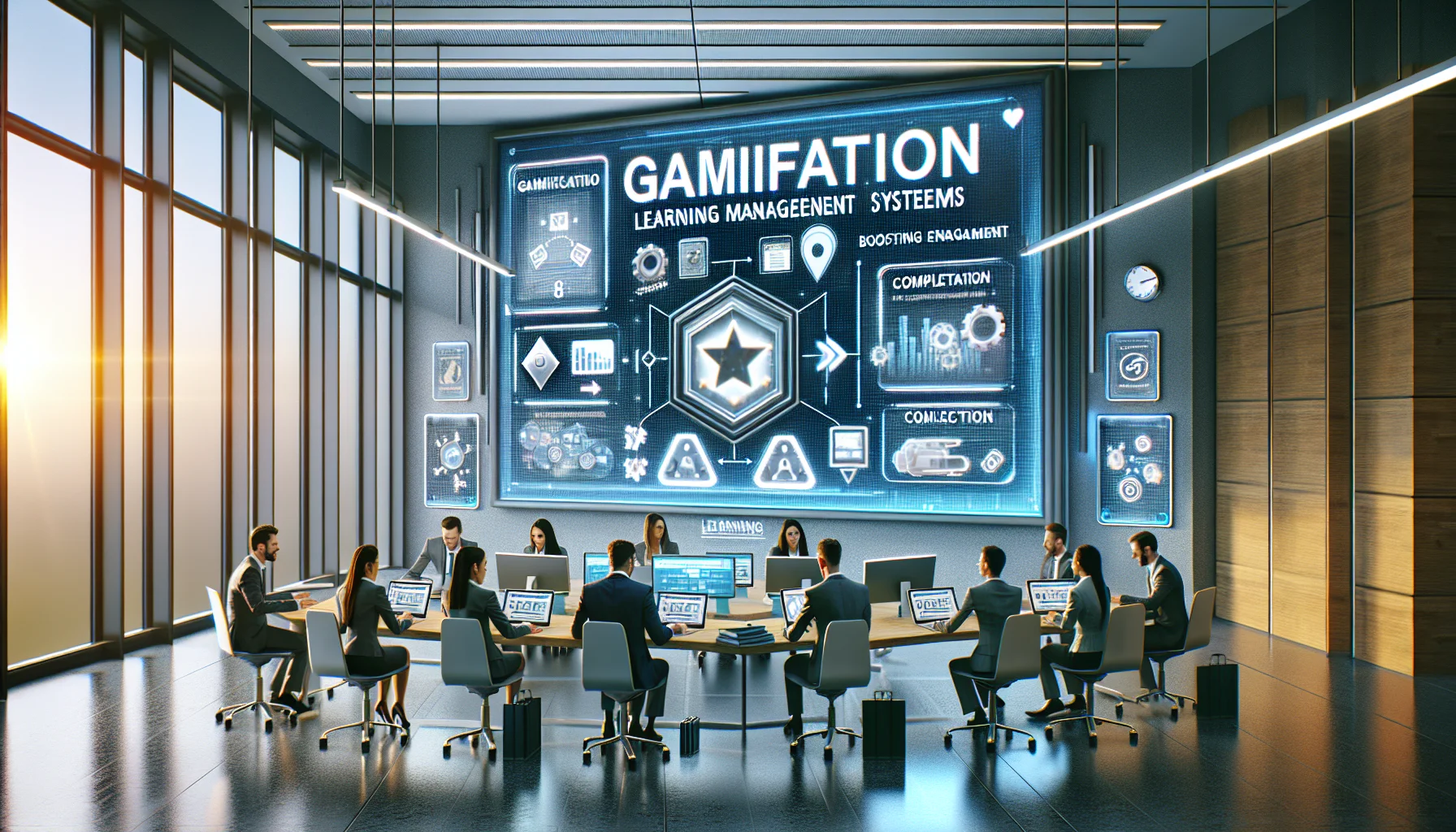
LMS gamification applies game mechanics—points, badges, leaderboards, progress bars—to increase completion, accelerate skill acquisition, and sustain attention. This article explains why gamification works, practical design patterns, an implementation checklist, common pitfalls, two corporate case studies, and measurement methods to link learning to business outcomes.
 L&D
L&DDecember 21, 2025
This article explains why gamification in LMS raises engagement, completion, and retention when aligned with instructional design. It outlines effective game mechanics — badges and leaderboards, progress bars, timed challenges — and provides a 6-8 week pilot checklist, measurement tactics, and common pitfalls to avoid. Use metrics to verify learning transfer.
 Psychology & Behavioral Science
January 12, 2026
Adaptive spaced repetition improves recall by timing reviews to each learner's forgetting curve, maximizing reinforcement while minimizing wasted reviews. The article compares SM-2, Bayesian, and reinforcement-learning approaches, explains personalization inputs and engineering patterns, and offers practical evaluation and governance advice for deploying adaptive schedulers.
 Business Strategy&Lms Tech
January 25, 2026
This article explains seven gamification mechanics—progress bars, streaks, leaderboards, badges, levels, timed challenges, and social challenges—that raise engagement and course completion. For each it gives psychology, implementation tips, LMS examples, metrics to track, mini cases and common downsides, plus a testing framework for measurement.