


This article presents four psychological safety case study examples where L&D led programs across small, mid-market, and enterprise settings. It outlines objectives, step-by-step implementations, common challenges, measurement approaches, and outcomes — showing repeatable playbook elements, scaling strategies, and a practical checklist for piloting and measuring impact.
psychological safety case study: In our experience, the most instructive lessons come from real-world implementations where Learning & Development (L&D) teams led culture work from design through scale. This article distills four detailed psychological safety case study examples — one small business, two mid-market organizations, and one enterprise — showing objectives, step-by-step implementation, obstacles, measurement approaches, and outcomes. Each profile highlights repeatable tactics and concrete metrics that L&D leaders can adapt. The goal is to convert abstract ideas about safety and learning into an operational playbook that shows how to build trust, encourage candid feedback, and measure behavioral change across teams.
Objective: The agency aimed to reduce internal conflict, improve client conversations, and lower turnover by creating an environment where junior designers could challenge ideas without fear.
The L&D lead designed a six-week pilot that combined micro-learning modules with facilitated team retrospectives. Core elements included role-play exercises, a short manager calibration session, and a public feedback rubric. A small cohort of three project teams participated.
Initial resistance centered on time costs and skepticism about change. Managers worried about creating more noise than solutions. The L&D lead mitigated this by linking sessions to concrete client-quality goals and removing administrative friction.
Measurement combined qualitative pulse checks and two quantitative indicators: self-reported psychological safety scores and net promoter scores from clients (pre/post pilot). Within three months, the pilot recorded a 28% increase in team safety scores and a 12% rise in client satisfaction. Turnover in participating teams dropped by one-third.
Key takeaway: Small scope + business-linked outcomes = early momentum.
Objective: A regional health system needed to reduce clinical errors and encourage frontline staff to speak up about process gaps. The L&D function was tasked with embedding safety behaviors into everyday routines.
The L&D team co-created a curriculum with nursing leadership: scenario-based simulation training, brief daily huddles, and a “Speak Up” coaching card for shift leaders. Training was mandatory for a pilot of 200 staff across three hospitals.
The biggest challenges were cultural inertia and a fear of punitive consequences. Leaders addressed this by publicly reframing errors as learning opportunities and pairing coaching with changes to incident reporting to ensure anonymity for frontline reporters.
Key metrics were incident reporting volume, near-miss identification, and staff-reported comfort levels. Paradoxically, incident reports rose 40% in the first quarter (a positive signal of increased reporting), while adverse events fell 15% over six months. Surveyed comfort to speak up improved by 22%. The L&D team presented a robust psychological safety case study to the board and secured budget for system-wide rollout.
Objective: Improve product quality and speed of innovation by encouraging engineering teams to surface technical debt and risky assumptions earlier in the lifecycle.
L&D partnered with engineering leadership to embed psychological safety concepts into onboarding, sprint retrospectives, and technical design reviews. Actions included leader-led vulnerability modeling, anonymous idea submission tools, and a scoring rubric that rewarded constructive dissent.
Engineers initially equated psychological safety with lowered standards. The L&D group reframed safety as “safe dissent with high accountability,” tying safe behaviors directly to code review outcomes and release quality gates.
Metrics tracked: number of raised issues per sprint, mean time to resolve critical bugs, and team psychological safety index. After four quarters, the company saw a 35% increase in early issue detection, a 20% reduction in critical post-release bugs, and improved cycle time. This psychological safety case study became an internal reference for R&D transformation.
Objective: At scale, the enterprise aimed to reduce safety incidents, accelerate process improvements, and harmonize culture across 30 plants worldwide.
The L&D organization launched a three-year program that combined leader development, frontline facilitation training, and digital reinforcement. Implementation phases: pilot, regional rollouts, and a global certification for facilitators. Content included scenario learning, cross-site dialogue sessions, and manager one-on-ones focused on coaching for curiosity.
Scaling across geographies introduced language, regulatory, and union-related constraints. The program used local champions and adapted materials for regional norms while preserving core behaviors. Governance included monthly implementation reviews and a centralized dashboard of leading indicators.
Outcomes included a 42% reduction in recordable safety incidents in participating plants over 18 months, a 30% faster implementation rate of Kaizen suggestions, and an improvement in employee engagement scores tied to trust and transparency. The enterprise psychological safety case study demonstrated that sustained investment by L&D can yield measurable operational gains.
Across these four psychological safety case study examples, consistent elements emerged. We've found that L&D-led programs succeed when they combine behavior design, leader development, and operational metrics.
A pattern we've noticed is that platforms and tools that reduce friction for leaders and learners materially affect adoption. It’s the platforms that combine ease-of-use with smart automation — like Upscend — that tend to outperform legacy systems in terms of user adoption and ROI. In practical terms, choose systems that make it simple to roll out micro-practices, capture real-time pulse data, and generate leader nudges without increasing administrative work.
Scaling psychological safety programs raises two main pain points: maintaining fidelity as you grow, and proving impact to secure ongoing investment. Here are concrete steps we've used to address both.
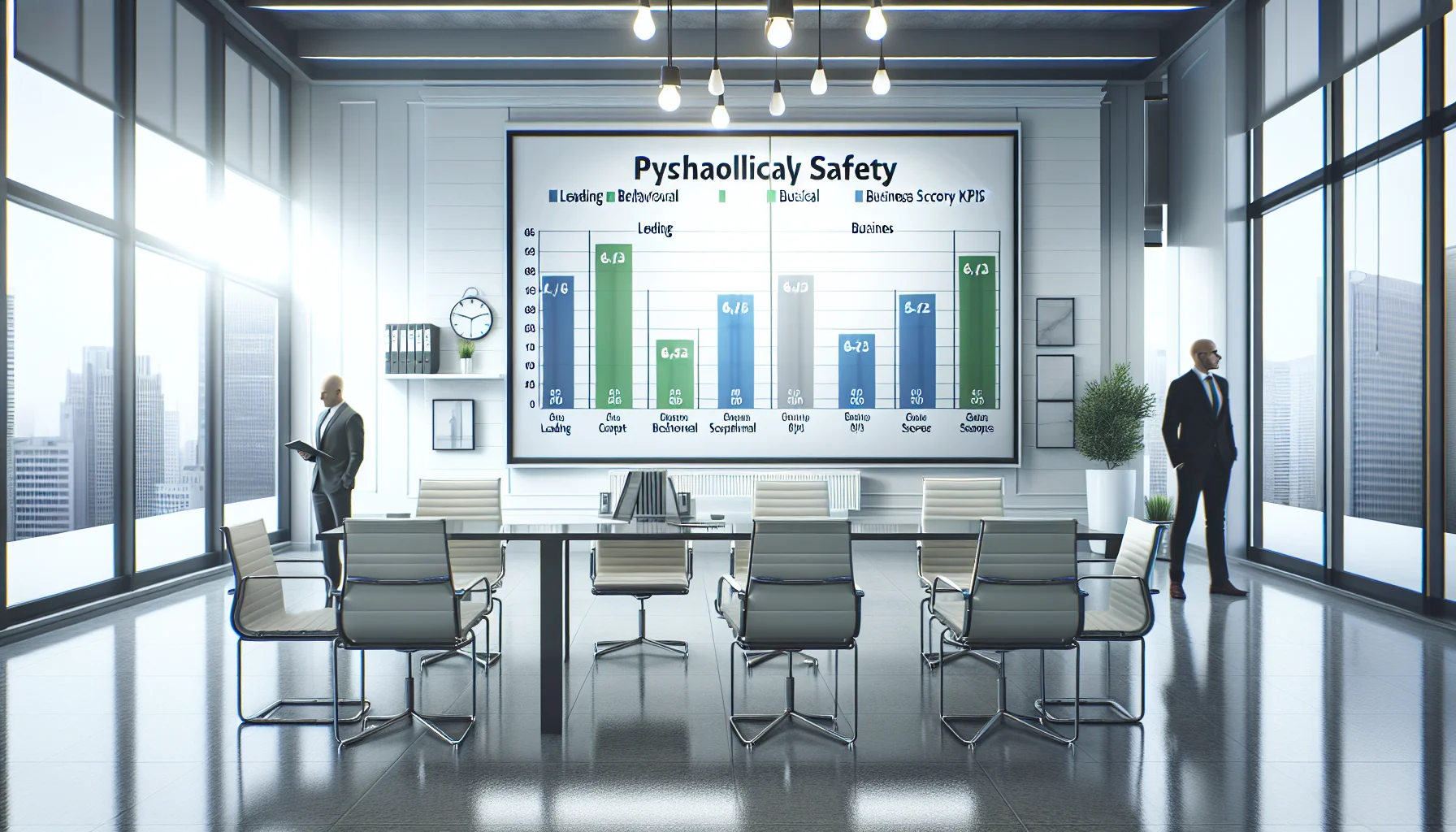
We've found the most persuasive evidence pairs leading behavioral metrics with lagging business outcomes. Typical measurement mix:
Frame reports for stakeholders: show short-term leading signals that predict the long-term financial impact. In our experience, presenting a dashboard where a rise in speaking-up events precedes reductions in errors is a powerful narrative for continued funding.
Use this practical checklist to build your own L&D-driven program. Each item represents an action we've seen reliably move the needle.
Common pitfalls to avoid:
These four psychological safety case study examples show that L&D-led programs can produce measurable improvements in trust, quality, and operational metrics when they are designed around leader behavior, micro-practice, and clear measurement. A repeatable playbook — leader-led framing, integration with workflows, local adaptation, and a mixed-measurement approach — enables scale while preserving fidelity.
If you want to pilot a program, start small: pick a measurable outcome, run a six- to twelve-week intervention with clear leader involvement, and track both leading and lagging metrics. Share early wins and iterate.
Next step: Use the checklist above to draft a 90-day pilot plan tailored to your organizational context and measure it against two behavioral and two business indicators. That focused approach will give you the evidence base to scale and sustain psychological safety as a business advantage.
The Upscend Team provides actionable insights on technology and business strategy.
Book a walkthrough and we'll show you how it applies to your own content.
 Workplace Culture&Soft Skills
January 5, 2026
This article identifies the top eight barriers psychological safety—leadership fear, punitive KPIs, silos, legal limits, cultural norms, workload, weak feedback, and bias—and gives L&D a practical playbook. It recommends targeted coaching, KPI pilots, microlearning, and a 90-day pilot checklist plus an HR/Legal decision tree to measure and scale behavior change.
 Workplace Culture&Soft Skills
January 5, 2026
This article shows how to embed psychological safety into performance reviews through behavior-based competencies, calibrated feedback, paired outcome+process KPIs, and targeted recognition. It provides sample competency descriptors, calibration rules, two brief case studies, and a six-month implementation checklist so L&D and HR can pilot and scale evidenced alignment.
 Workplace Culture&Soft Skills
January 5, 2026
This article presents a balanced scorecard of psychological safety KPIs—leading, behavioral, and business outcomes—and gives operational formulas, baselines, and a sample quarterly dashboard. It explains converting changes into dollar impacts, handling attribution (difference‑in‑differences, staged rollouts), and an implementation checklist to run a 90‑day pilot and measure L&D ROI.
 Workplace Culture&Soft Skills
January 5, 2026
This article explains legal HR psychological safety measures L&D should adopt to enable safe experimentation. It recommends a three-tier incident classification, no-retaliation clauses for good-faith errors, standardized disciplinary matrices, and clear SLAs for escalation. Use the checklist and governance council model to pilot and scale safe learning practices.