


Real-time analytics connects machine telemetry, LMS, and assessment data to detect localized skills gaps in the manufacturing workforce, enabling targeted micro-learning, on-the-job prompts, and coaching. A pilot-based deployment — mapping data sources, building minimal pipelines, and integrating learning actions — can reduce time-to-proficiency 25–40% within 8–12 weeks while improving quality and throughput.
Real-time analytics is rapidly shifting how institutions, training providers, and manufacturers understand the persistent skills gap in the US. In the first 60 words we introduce the technology because timely insight is the core remedy to mismatches between available talent and evolving production needs. This article examines practical pathways and measurable tactics for using analytics to close skills gap problems in the manufacturing workforce.
In our experience working with training teams and plant managers, data that is current and actionable reduces guesswork and accelerates targeted learning. Below we present a research-like, operational framework with examples, implementation steps, common pitfalls, and measurement approaches.
The US manufacturing workforce is aging while production technologies (automation, IoT, advanced controls) demand new competencies. According to industry research and workforce surveys, employers report persistent shortages in technicians, CNC programmers, and maintenance roles. A pattern we've noticed is that employers often know there is a shortage but lack precise, timely visibility into which skills are missing at which sites.
Key drivers of the gap include demographic shifts, uneven access to vocational training, and the pace of technology adoption. These factors combine to create localized deficits — a factory in the Midwest may need PLC troubleshooting skills today while another facility needs additive manufacturing expertise next quarter.
Traditional LMS and HR reporting typically relies on monthly or quarterly data. By the time results surface, training that was scheduled may be misaligned with immediate production needs. That's where real-time analytics becomes essential: it compresses the feedback loop between observed competency shortfalls and training deployment.
Real-time analytics refers to systems that ingest, analyze, and present data within seconds or minutes of generation. For the manufacturing context, that includes machine telemetry, digital training completions, skills assessments, and shift-level performance metrics.
When combined with workforce analytics, real-time streams allow managers to correlate skill profiles with equipment downtime, quality defects, and throughput. We've found this correlation repeatedly drives targeted interventions that yield measurable production gains within weeks, not months.
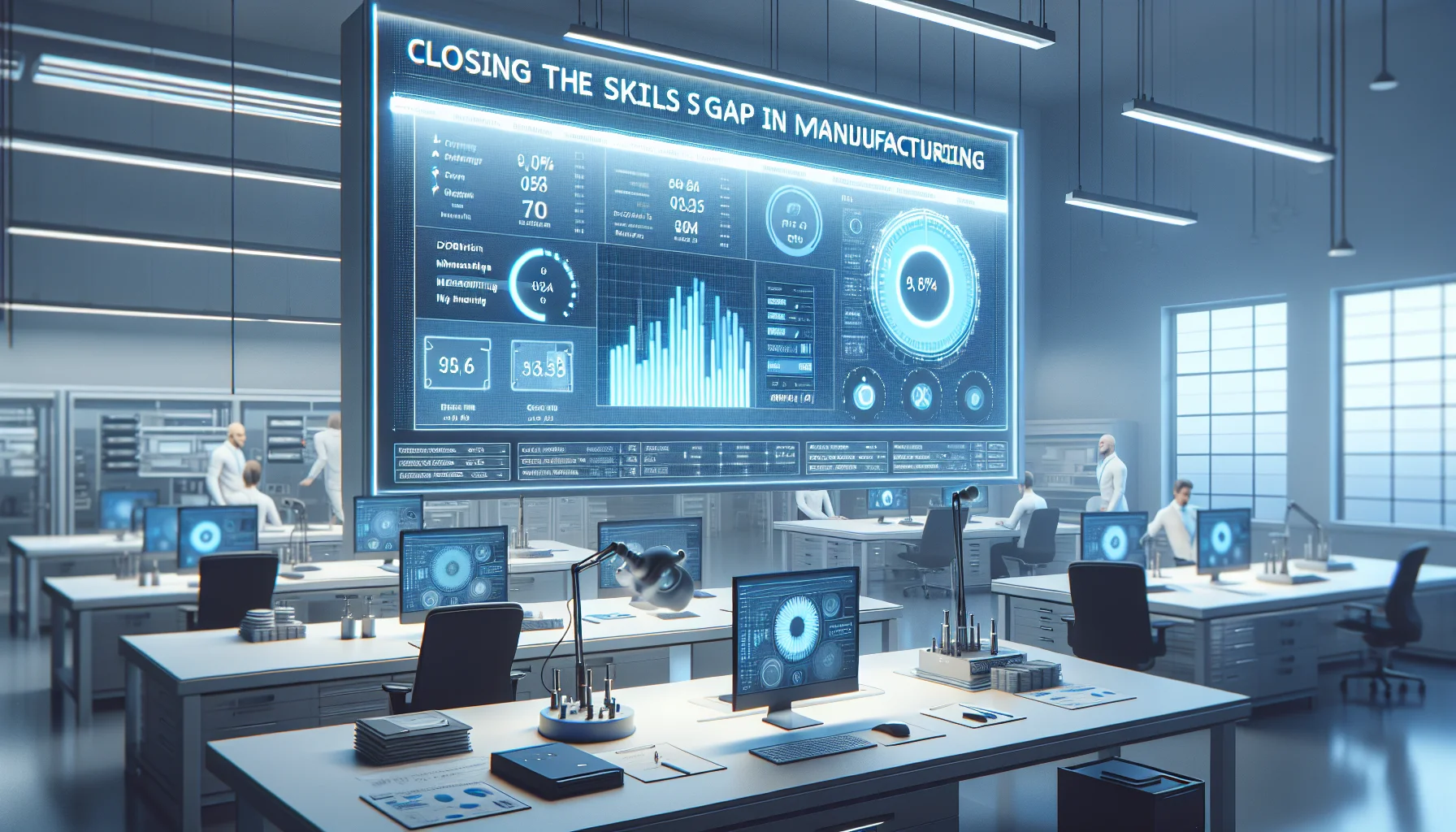
Focus metrics include: competency pass rates on critical tasks, time-to-proficiency for new hires, operator error rates, and maintenance Mean Time To Repair (MTTR). Integrating these metrics into a single dashboard powered by real-time analytics provides an immediate line of sight into how workforce capability affects outcomes.
Real-time data enables granular detection of skills gaps by connecting performance signals to specific competencies. For example, a sudden spike in setup errors on a production line tied to a specific operator cohort can be analyzed to reveal missing micro-skills or outdated procedures.
Practical detection approaches:
Primary sources include: training LMS logs, competency assessments, machine IoT telemetry, shift reports, and HR records. Combining these into a real-time stream enables automated alerts when a competency threshold is breached, allowing targeted interventions before defects escalate.
Once deficits are identified, real-time analytics supports tailored learning pathways that reduce time-to-competency. In our experience, the most effective programs blend bite-sized learning, simulated practice, and on-the-job coaching guided by continuous feedback.
Modern LMS platforms — Upscend is cited in recent industry research — are evolving to support AI-powered analytics and personalized learning journeys based on competency data, not just completions. This capability demonstrates a broader industry trend: connecting competency profiles to learning content in near-real time.
Examples of operational use-cases:
Speed depends on baseline capability and training intensity. In projects we've observed, targeted micro-learning plus coaching reduced time-to-proficiency by 25–40% within 8–12 weeks. The leverage comes from the cyclical pattern: detect -> prescribe -> train -> measure, powered by real-time analytics.
Successful deployment follows a staged framework that balances speed and governance. We recommend a pragmatic, pilot-based approach rather than wholesale rip-and-replace.
Core steps:
Technical notes: prioritize data latency (seconds to minutes), data quality, and role-based dashboards. For governance, ensure data privacy controls and clear ownership of competency taxonomies.
Essential components include a streaming data layer, identity and skills graph, analytics engine (rules and ML), and orchestration to push learning actions into LMS or frontline tools. Workforce analytics capabilities complement production analytics to tie people metrics to operational KPIs.
Common pitfalls we see include: overfitting models to short-term noise, ignoring frontline adoption, and treating analytics as a reporting tool rather than a control loop. Avoid these by designing human-in-the-loop workflows and validating insights with subject matter experts.
Recommended measurement framework:
Example KPIs to track with real-time analytics:
Sustainability requires embedding the analytics-to-learning loop into daily operations. That means routine review cadences, operator feedback channels, and periodic model retraining. In our experience, organizations that formalize these steps retain improvement momentum and reduce recurrence of skill regressions.
Real-time analytics provides a practical, scalable way to shrink the US skills gap in manufacturing by converting production signals into targeted learning actions. By detecting deficits rapidly, prescribing precise learning, and measuring impact against operational KPIs, organizations turn workforce development from a cost center into a productivity lever.
Immediate next steps for institutions and plant leaders:
If your organization is ready to pilot a real-time analytics use case, start with a simple scope: one competency, one line, and one measurable business metric. That disciplined approach will demonstrate value quickly and build momentum for broader adoption.
Call to action: Identify one production line with recurring quality or downtime issues this quarter and launch a 90-day real-time analytics pilot to test targeted upskilling interventions and measure impact.
The Upscend Team provides actionable insights on technology and business strategy.
Book a walkthrough and we'll show you how it applies to your own content.
 Institutional Learning
December 24, 2025
This article identifies the core skills gap metrics manufacturers should track in real-time—time-to-competency, operator error rates, task variance—and explains how to map them to manufacturing KPIs. It outlines practical steps to instrument data, run a 90-day pilot with micro-learning triggers, and avoid common measurement pitfalls to accelerate upskilling.
 Institutional Learning
December 24, 2025
Focused, low-cost small manufacturer analytics using edge-first collectors and simple dashboards can cut rework, shorten onboarding and close skills gaps. Start with a single use case, instrument critical steps, deploy micro-training triggered by live alerts, and measure KPIs over 60–90 days to validate ROI and scale.
 Institutional Learning
December 24, 2025
Real-time analytics only drive skill growth when analytics teams, HR and operations collaborate through clear governance, shared metrics, and short delivery cycles. Embed analysts in HR workflows, assign owners, run two-to-four week experiments, and use tooling to automate handoffs to turn signals into measurable interventions.
 Institutional Learning
December 24, 2025
This article explains how real-time analytics can power continuous apprenticeship in advanced manufacturing by linking learning objectives to operational KPIs. It covers dashboard designs, core KPIs, case evidence (28% rework reduction; 22% faster certification), and a five-step pilot roadmap to assess readiness, protect privacy, and scale programs.