


This article shows how to design LMS assessments that validate skills rather than just completion by using competency-aligned tasks, clear rubrics, and mixed modalities like simulations, projects, and portfolios. It outlines formative-to-summative sequencing, assessor calibration, analytics, and governance, plus a checklist to pilot and scale competency-based assessment.
LMS assessments are too often reduced to completion badges or percentage scores in reports. In our experience, that focus misses the most important outcome: demonstrated ability. This article reframes assessment design from a completion mindset to a competency mindset, showing concrete steps, examples, and governance practices that make learning measurable and defensible.
We draw on practitioner patterns, industry research, and tested frameworks to show how to shift from "did they finish?" to "can they do?" The goal is a practical guide you can apply to corporate training, higher education, or technical upskilling programs.
Completion metrics and pass/fail scores are useful for operational reporting, but they are weak proxies for skill. A learner can click through modules and pass a basic quiz without demonstrating integration of knowledge, decision-making under pressure, or practical application. Strong skill validation requires observable performance and evidence across contexts.
According to industry research, organizations that rely solely on completion data show inflated confidence in learner capability. We've found three consistent gaps:
Closing these gaps requires designing assessments that produce actionable evidence of behavior, not just scores. That starts with aligning assessments to observable performance criteria and workplace tasks.
When you design assessments in an LMS to measure skills, start with clear competency statements and observable behaviors. A useful template is: "Given X, the learner will perform Y to standard Z under conditions C." In our experience, this template focuses writers on measurable outcomes instead of content coverage.
Practical steps to implement this approach:
How to design assessments in an LMS to measure skills also means thinking about fidelity (how closely tasks mirror real work), scoring reliability, and scalability. Use pilot studies with subject-matter experts to iterate rubrics and converge on inter-rater agreement before full roll-out.
Rubrics must capture observable actions and decision points. A three-level rubric (developing, competent, exemplary) with explicit criteria and examples improves consistency. In our experience, attaching exemplar artifacts to each level reduces scorer variance and speeds assessor training.
Combine authentic tasks with automated scoring where possible. For example, scenario-based branching quizzes can test decision-making at scale, while capstone projects or recorded role-plays provide high-fidelity evidence that assessors or peers review.
To validate skills, diversify assessment types within your LMS. Relying on a single modality creates blind spots; using multiple evidence sources strengthens validity. Below are high-impact formats we've implemented and measured.
Designers should select a mix of automated and human-reviewed items. For regulatory or safety-critical roles, prioritize observed performance and portfolios. For knowledge-intensive roles, adaptive proficiency testing and scenario networks provide robust measures.
Examples we recommend: capstone projects evaluated by panels, timed simulations with branching outcomes, and micro-credential banks that require multiple artifacts from varied contexts. Each type produces different evidence useful for credentialing and internal mobility.
Effective validation uses both formative assessments and summative assessments in a deliberate sequence. Formative checks guide learning and identify gaps early; summative demonstrations certify readiness. Treat them as parts of a single assessment system rather than isolated events.
Implementation pattern we use:
Formative data should feed into a learning record that informs when a learner is ready for summative evaluation. That record can include detailed feedback, reattempt logs, and improvement trajectories — all crucial for defensible decisions about competence.
Frequency depends on complexity. For complex skills, short weekly formative tasks with quick feedback work best. For procedural skills, micro-practice with immediate corrective feedback improves retention and transfer.
Practical implementation requires three coordinated capabilities: reliable assessment design, assessor training, and analytics that convert evidence into decisions. A robust analytics layer helps you move from raw scores to profiles that represent skill across dimensions.
Modern LMS platforms — Upscend — are evolving to support AI-powered analytics and personalized learning journeys based on competency data, not just completions. This trend illustrates how platform-level features can automate evidence aggregation, surface skill gaps, and trigger targeted pathways.
Key governance controls we recommend:
For analytics, track these metrics beyond pass rates: distribution of rubric scores, repeated-attempt patterns, time-to-mastery, and cross-context performance. Use thresholds that combine multiple evidence points before certifying competence (e.g., two successful observed performances plus project score ≥ standard).
Shifting from completion-focused reporting to robust skill validation is achievable with thoughtful design, mixed assessment types, and governance. In our experience, organizations that adopt a competency-centered approach see stronger performance in on-the-job measures and more defensible credentialing decisions.
Action checklist to implement now:
If you want to move from measuring completion to validating capability, start with a single role and redeploy one course as a competency-driven lane. Measure outcomes, iterate, then scale. That stepwise approach reduces risk and builds organizational confidence in your assessment system.
Call to action: Choose one critical role and redesign its assessment pathway this quarter using the frameworks above—map competencies, pilot mixed-format assessments, and set governance rules to ensure the evidence truly reflects skill.
The Upscend Team provides actionable insights on technology and business strategy.
Book a walkthrough and we'll show you how it applies to your own content.
 General
December 22, 2025
This article identifies the core compliance LMS capabilities — immutable audit trails, role-based access, configurable certification lifecycles, automated recertification, and exportable reports — that make training audit-ready. It provides implementation checklists, reporting recommendations, and a simple vendor-evaluation framework to pilot and choose the best LMS for regulated environments.
 General
December 22, 2025
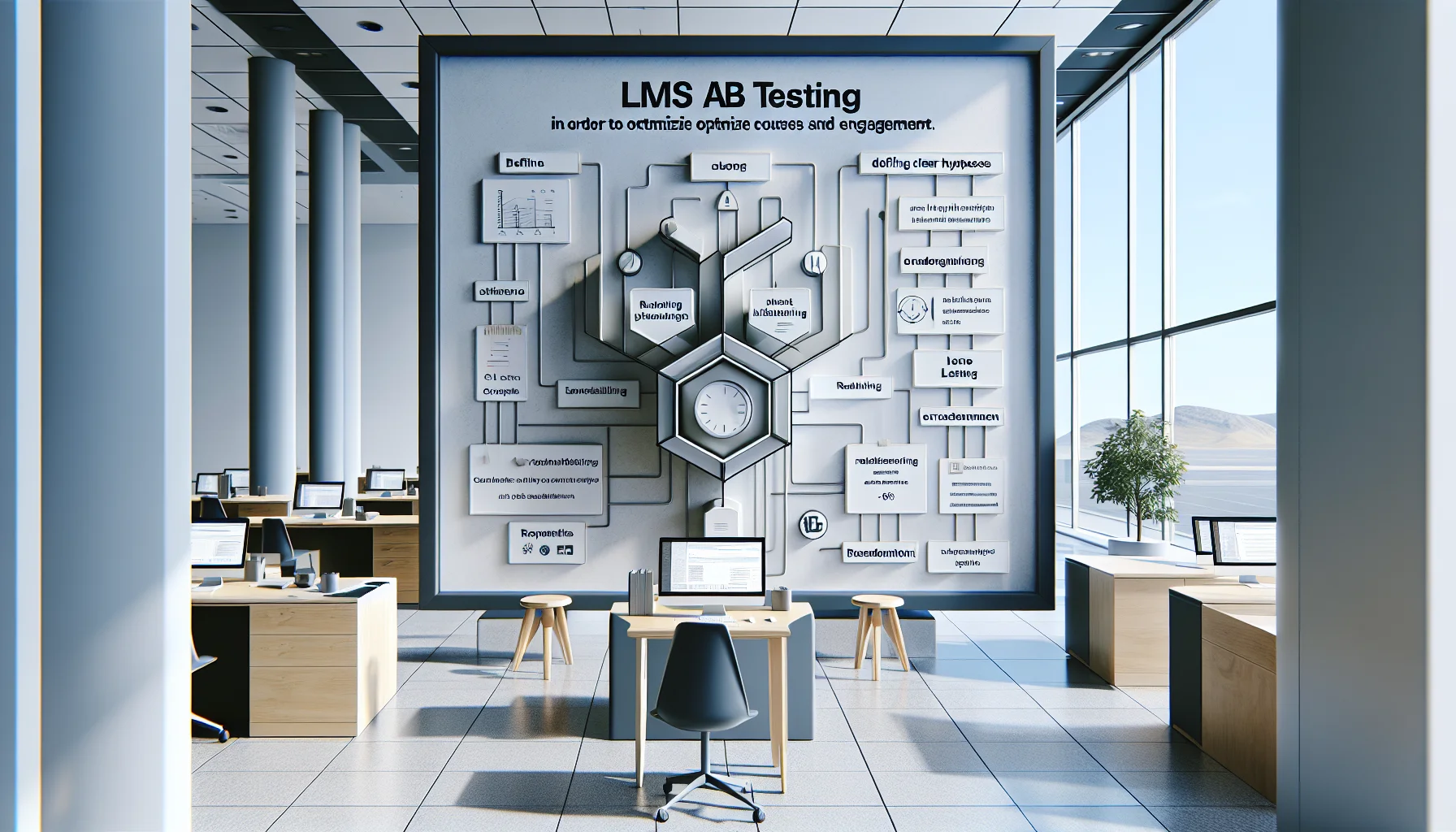
Actionable steps for running LMS A/B testing: define clear hypotheses, randomize assignment, and track primary metrics like completion and retention. The article explains sample-size rules, analysis checks, implementation options (native LMS or API/LTI), and offers practical test ideas and a checklist to avoid common pitfalls.
 Lms
LmsDecember 23, 2025
LMS analytics provide the data to turn opinion into actionable insight. This article explains which key LMS metrics to track, how to set 90-day baselines and SMART goals, which data sources to integrate, and a step-by-step measurement framework. Use small pilots and repeatable ETL to iterate toward measurable business impact.
 Lms
LmsDecember 23, 2025
Competency-based LMS shifts training from hours to demonstrated outcomes by mapping role outcomes to competencies, defining observable proficiency levels, and validating skills through mixed evidence. The article outlines framework design, LMS tagging and assessment rules, reporting dashboards, and a phased rollout—pilot, manager enablement, and governance—to scale validated competencies.