


This article provides a pragmatic HR‑L&D playbook to detect and act on LMS engagement red flags. It defines clear thresholds, roles for detection/triage/intervention/measurement, escalation flows, RACI and RTM templates, and shared KPIs. Run a short 8–12 week pilot and use 30/60/90 metrics to validate outcomes.
L&D HR collaboration must be operational, not aspirational. In our experience, teams that wait for quarterly reviews miss the narrow window where a small engagement drop becomes a retention problem. This article lays out a practical, implementable HR-L&D playbook for spotting red flags in your LMS, deciding who acts, and measuring outcomes.
Below you'll find an operational playbook with roles and responsibilities, escalation flows, shared KPIs, sample RACI, joint RTM templates, pilot design, and two collaboration models. The guidance is framed around cross-functional alignment and targeted learning interventions so you can move from insight to impact fast.
L&D HR collaboration short-circuits blame cycles. When an LMS shows declining engagement in a team, swift coordination prevents disengagement from cascading into performance or attrition issues. Studies show early intervention reduces voluntary turnover by a measurable percent in many firms; our experience suggests rapid triage improves outcomes more than additional content creation alone.
Key patterns we've noticed: engagement dips are often localized (team, manager, or cohort-specific) and correlate with operational changes—reorgs, new leaders, or product shifts. Early detection requires a shared definition of a red flag and a shared playbook to act.
Not every metric needs an all-hands response. Define thresholds that combine behavior and impact.
Two perennial issues block action: siloed budgets and differing priorities. L&D focuses on capability; HR on retention and compliance. That tension requires an agreed escalation path so budget questions don't halt time-sensitive interventions.
A practical HR-L&D playbook defines who does what, when. In our deployments we separate detection, triage, intervention, and measurement into clear owner steps to avoid ambiguity.
Below is a compact operational flow with roles and responsibilities.
1) Alert → 2) Triage within 48 hours → 3) Intervention plan within 5 business days → 4) Monitor 30/60/90. Document every step.
| Role | Primary Actions | Escalation Point |
|---|---|---|
| L&D Data Lead | Monitor LMS metrics, send alerts | Escalate to HRBP if team-level decline persists 2 weeks |
| HR Business Partner (HRBP) | Contextualize with people data, coordinate manager outreach | Escalate to People Analytics and L&D Director for systemic trends |
| People Analytics | Validate signals, run cohort analyses | Trigger strategy review if cross-team impact detected |
Below is a compact sample RACI for LMS engagement incidents.
| Activity | Responsible | Accountable | Consulted | Informed |
|---|---|---|---|---|
| Detect engagement drop | L&D Data Lead | L&D Director | People Analytics | HRBP, Manager |
| Triage & diagnose | HRBP | HR Head | L&D Designer, Manager | People Ops |
| Design intervention | L&D Designer | L&D Director | HRBP, Manager | Participant Cohort |
| Measure impact | People Analytics | People Analytics Head | L&D | Leadership |
Choosing between a centralized or decentralized approach depends on scale, culture, and governance. Both models work with strong L&D HR collaboration; the difference is where decision authority sits.
Centralized model: one center of excellence owns playbooks, content, and analytics. Decentralized model: HRBPs and L&D partners embedded in lines of business act with local autonomy.
| Aspect | Centralized | Decentralized |
|---|---|---|
| Speed of local response | Slower | Faster |
| Consistency | High | Variable |
| Governance & budget | Central | Local |
In our experience, mid-size firms benefit from a hybrid: centralized analytics and playbooks with decentralized execution. That balance retains consistency while keeping response times short.
Design a pilot to validate the chosen model. A typical pilot runs 8–12 weeks, focuses on 2–3 teams, and measures completion, manager engagement, and retention signals.
When refining a model, look at tools and automation to reduce handoffs. The turning point for most teams isn’t just creating more content — it’s removing friction. Tools like Upscend help by making analytics and personalization part of the core process, speeding diagnosis so teams can focus on targeted interventions rather than manual reporting.
A joint RTM template converts an LMS alert into actions. Keep it short and data-rich so the manager and HRBP can act within days, not weeks. Learning interventions must be prioritized by impact and ease of deployment.
Basic RTM template fields:
Workflow A (manager-led): Manager outreach → 15-minute pulse → assign micro-learning module → follow-up 14 days.
Workflow B (HR-L&D joint): HRBP conducts context call → L&D delivers cohort micro-bootcamp → People Analytics measures effect at 30/60 days.
Shared KPIs keep teams aligned. A small set of well-defined measures works better than a long list. Choose leading and lagging indicators that map to business outcomes.
Sample dashboard components for the board of directors: engagement heatmap by team, red-flag count and resolution rate, 90-day retention trend for flagged cohorts, and ROI estimate for learning interventions. According to industry research, boards increasingly expect people analytics to include learning impact tied to retention and revenue metrics.
Shared KPIs require data hygiene. In our experience, the most common measurement pitfall is inconsistent user identifiers across HRIS and LMS. Fixing that single issue often doubles your ability to run precise cohort analysis.
Meeting cadences should be lightweight and outcome-focused to sustain L&D HR collaboration. Avoid monthly tactical meetings that rehash old decisions.
Recommended meeting cadence:
Start with a small, measurable hypothesis: e.g., "A two-hour micro-bootcamp + manager checklist will increase module completion by 25% and reduce 60-day attrition by 10% for Product team X." Define population, control group, timeline (8–12 weeks), and measurement plan. Use the RACI and RTM templates above to run the pilot like a mini-project.
Strong L&D HR collaboration is a repeatable capability: detect, triage, intervene, measure. Start by agreeing thresholds, assigning owners, and running a short pilot using the RACI and RTM templates above. Keep KPIs tight and make measurement non-negotiable.
Two immediate actions to take this week:
Done consistently, these steps turn your LMS into an early-warning system that protects retention and accelerates capability-building. For help turning these playbooks into operational processes, consider piloting the templates and workflows described here and measure results within 90 days.
Call to action: Schedule a 30-day pilot to test one of the RTM workflows above and track impact using the shared KPI set; begin with a single team and scale using the RACI and meeting cadence outlined.
The Upscend Team provides actionable insights on technology and business strategy.
Book a walkthrough and we'll show you how it applies to your own content.
 HR & People Analytics Insights
January 6, 2026
A sudden drop in LMS engagement is a reliable early warning of potential employee quitting, driven by disengagement, workload and role misfit. Track reduced logins, skipped courses, fewer quiz attempts and social disengagement; use baseline normalization, composite scores and contextual filters to set monitoring and intervention thresholds.
 HR & People Analytics Insights
January 6, 2026
This article gives a practical decision framework—Detect → Triage → Trigger → Rollout—for deciding when to intervene after LMS engagement drops. It defines engagement thresholds, timing rules (immediate, one-week, one-month), manager scripts, and measurement methods (A/B tests, control groups, KPI lift) to ensure proportionate, scalable interventions.
 HR & People Analytics Insights
January 6, 2026
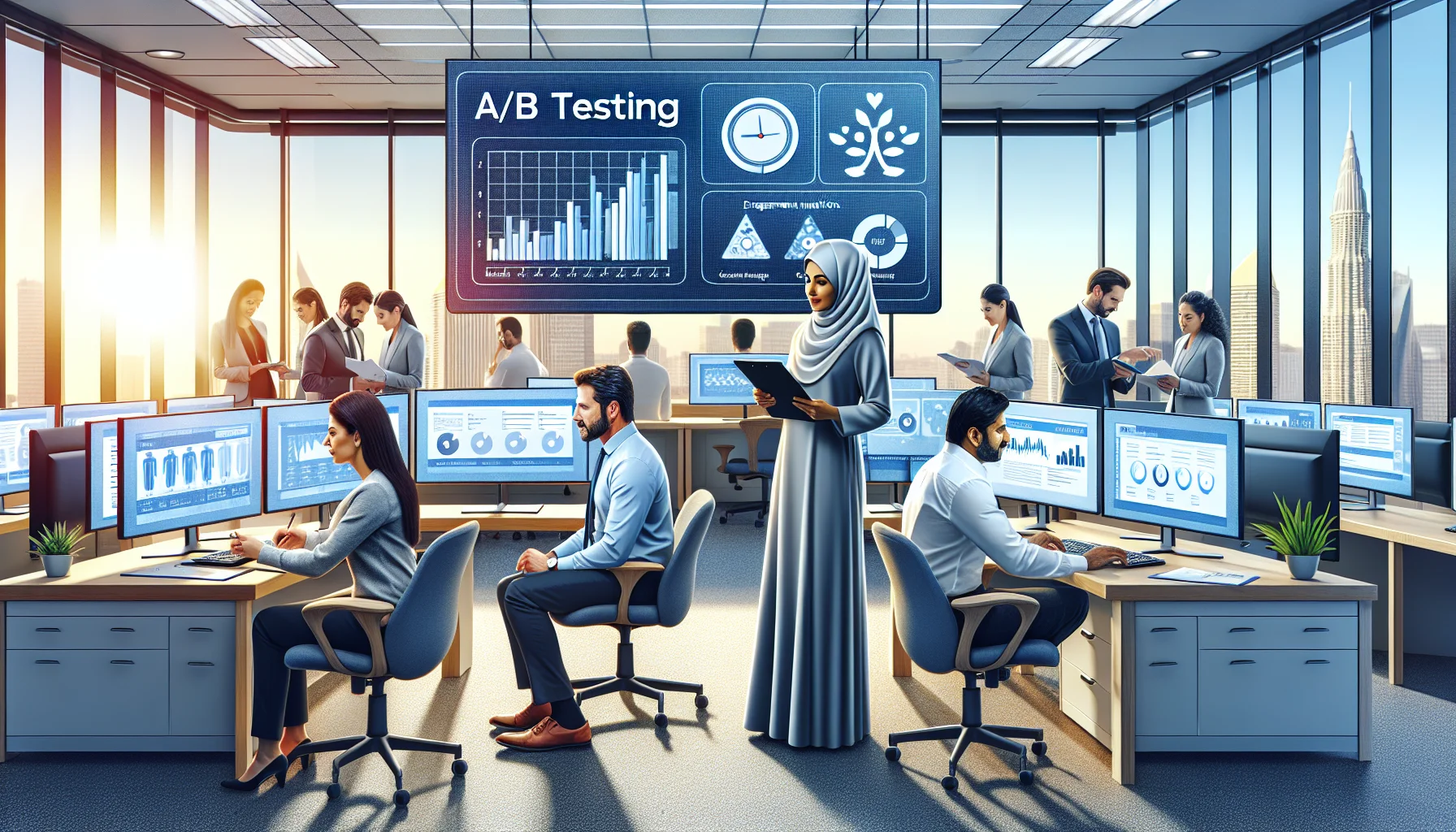
This article presents a practical playbook to A/B test engagement interventions after LMS engagement drops: define treatment and control, choose short-term and 12-week retention outcomes, and pre-specify an ITT analysis with uplift modeling. It recommends cluster randomization by manager when spillovers exist and includes a 12-week pilot with sample-size examples.
 Lms
LmsJanuary 20, 2026
This pillar guide explains how LMS engagement drops—measurable declines in logins, completions, time-on-task, and social interactions—predict employee burnout and turnover. It covers data sources, quality checks, trend/cohort/survival models, and a practical alert playbook with ethical controls and manager scripts for early, human-centered interventions.