

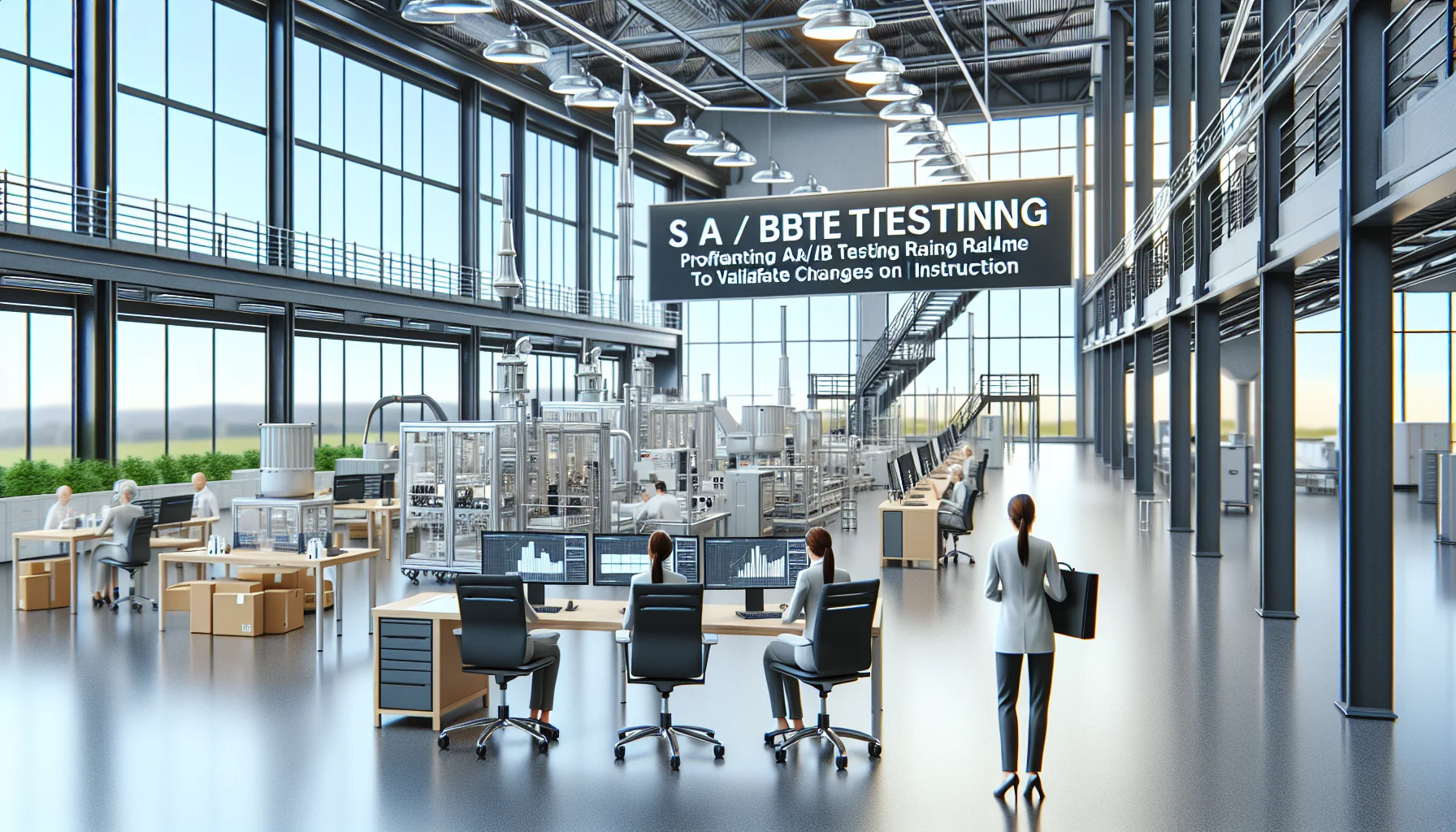
Running A/B tests training with real-time feedback lets manufacturers validate instructional changes quickly and link learning to production KPIs. Define hypotheses, randomize cohorts, collect leading and lagging metrics from LMS and MES, and analyze with pre-specified thresholds. Start small, pilot short cycles, then scale successful variants.
A/B tests training is rapidly becoming a cornerstone practice for manufacturers that want measurable improvements in frontline competence and process compliance. In our experience, manufacturers who move beyond static curricula to iterative experiments see faster gains in retention and error reduction. This article explains why teams should run A/B tests training, what to measure, how to implement experiments using real-time feedback, and practical frameworks for manufacturing environments.
We’ll use examples from shop floor programs, LMS pilots, and microlearning deployments to show how training optimization through A/B testing produces tangible gains in safety, throughput, and operator confidence.
Manufacturing learning programs often default to one-size-fits-all modules. Running controlled variations lets L&D teams see what content, sequence, or modality actually changes behavior. When you run A/B tests training, you replace assumptions with evidence.
Key rationales include reducing time-to-competency, lowering rework rates, and aligning learning investments to measurable production KPIs. Studies show that targeted instructional changes can improve task accuracy by double digits when validated through iterative testing rather than intuition.
In our experience, three outcome classes respond fastest to iterative testing: procedural accuracy, safety compliance, and decision-making under time pressure. When A/B tests training isolates a variable — a shorter video vs. a checklist, interactive assessment vs. written test — operators’ real-world performance often diverges enough to justify program scale-up.
Good experiments depend on good measures. If you plan to run A/B tests training you must define leading and lagging indicators up front. Leading indicators give you quick signals; lagging indicators confirm business impact.
Leading metrics include quiz pass rates, time-on-module, error rates in simulated tasks, and immediate learner feedback. Lagging metrics are defect rates, downtime, production yield, and supervisor observations over weeks.
Successful programs integrate micro-surveys into operator terminals and capture performance telemetry from MES and quality systems. Real-time feedback should be low-friction: one-click sentiment, embedded correctness checks, and quick observational checklists that a supervisor can complete in under a minute.
When you run A/B tests training with rigorous design, you create a feedback loop that converts learning hypotheses into proven practice. A pattern we've noticed is that small, well-measured changes—like altering example scenarios to match a cell’s product mix—often outperform wholesale redesigns.
Two practical examples: swapping a 12-minute lecture for two 6-minute micromodules reduced cognitive overload and increased hands-on accuracy; changing assessment timing from end-of-day to immediate post-task doubled short-term recall. These are the kinds of gains that accrue when teams prioritize learning effectiveness through experimentation.
For organizations comparing platforms, while traditional LMS setups often require manual sequencing and lengthy change cycles, some modern tools are built to support dynamic experimentation and role-based sequencing—helping teams run more tests and learn faster. Upscend illustrates this point in practice, offering dynamic sequencing that shortens iteration cycles and supports real-time adjustments without complex manual configuration.
To answer the common question "how A/B testing improves manufacturing training effectiveness," consider three mechanisms: faster hypothesis validation, reduction of implementation risk, and clearer ROI attribution. Simple A/B tests show whether content or delivery matters; they also reveal interaction effects (a video may help novices but not experienced operators).
This section gives a step-by-step framework for running A B tests on training using analytics while minimizing disruption to production schedules. Follow a repeatable cycle: define, randomize, monitor, analyze, and scale.
Define your hypothesis (e.g., a checklist reduces errors faster than a video). Randomize participants at the shift or cell level to avoid contamination. Monitor both immediate signals and downstream KPIs. Analyze with pre-specified acceptance thresholds. Scale only when you see consistent improvement across metrics.
Practical checklists reduce cognitive load and increase repeatability. The following sequence mirrors what we've used in multi-site pilots:
A/B testing in manufacturing has traps: sample contamination, short test windows, and misaligned KPIs. Avoid these by pre-registering tests, using blocking to control for shift effects, and maintaining minimum sample sizes for reliable conclusions.
We’ve found that many failed pilots were due to operational noise — machine maintenance, new product introductions, or incentive changes — that invalidated results. A simple mitigation is to include control variables in the analysis and run sensitivity checks before scaling.
Common errors include: changing multiple variables at once, not randomizing properly, and trusting a single metric. Best practice is to change one independent variable per experiment and to triangulate outcomes with several measures (knowledge checks, task performance, and production KPIs).
Investment in experimentation infrastructure is increasing across manufacturing. Companies that adopt iterative learning report faster onboarding, lower error rates, and improved operator morale. According to industry research, programs that systematically A/B test training content can reduce time-to-competency by up to 30% and lower defect rates by measurable margins.
When assessing ROI, include both direct savings (reduced rework, fewer safety incidents) and indirect benefits (reduced supervision time, improved scheduling flexibility). Use conservative estimates for pilot-to-scale translation and document assumptions clearly so leaders can evaluate risk.
Start small: pick a high-impact task with measurable outputs, instrument it, and run a short A/B test between two variants. Use the results to build a playbook and automate the most successful changes into standard training. Over time, you can expand the experimentation program to include adaptive sequencing and personalized learning paths.
Training optimization is not a one-off project; it’s an operational capability that accelerates with practice. Prioritize low-cost experiments that yield clear metrics and scale what works.
Real-time feedback and analytics change the cadence of learning decisions: instead of quarterly reviews, you can iterate weekly. That speed is essential for competitive manufacturing environments where product mixes and processes change rapidly.
Learning effectiveness improves when teams combine robust experimental design with grounded operational metrics. The result is a culture that treats training as a measurable lever for performance, not a compliance checkbox.
Manufacturers that run A/B tests training using real-time analytics gain a decisive advantage: faster learning cycles, clearer attribution of impact, and reduced risk when scaling changes. Start by defining a tight hypothesis, instrumenting your workflow, and running a controlled experiment. Use short cycles, capture both leading and lagging measures, and escalate successful variants into standard practice.
To get started, pick one critical task, document a test plan, and commit to a two-week pilot with clearly defined KPIs. If you want a practical checklist to use immediately, copy the step-by-step sequence above and adapt the cohort size to your operations. Continuous experimentation turns training from a cost center into a performance engine.
Next step: choose one learning objective to optimize this month and run your first controlled test. Track the results, share the findings with stakeholders, and iterate — the payoff comes from repeated, focused experiments that drive measurable improvements.
The Upscend Team provides actionable insights on technology and business strategy.
Book a walkthrough and we'll show you how it applies to your own content.
 L&D
L&DDecember 14, 2025
This playbook shows how to run rapid training A/B testing: form testable hypotheses, pick behavior-linked metrics, estimate sample sizes, and run randomized variants. It includes implementation checklists, analysis rules, and case examples so L&D teams can iterate every 2–6 weeks and turn hypotheses into measurable performance gains.
 General
December 22, 2025
LMS analytics convert learner behavior and assessment data into decisions that improve performance. The article lists operational, learning, and business metrics to track, explains a reproducible step-by-step ROI framework, and gives practical implementation and reporting tips to run focused pilots, establish baselines, and scale measurement for sustained impact.
 HR & People Analytics Insights
January 6, 2026
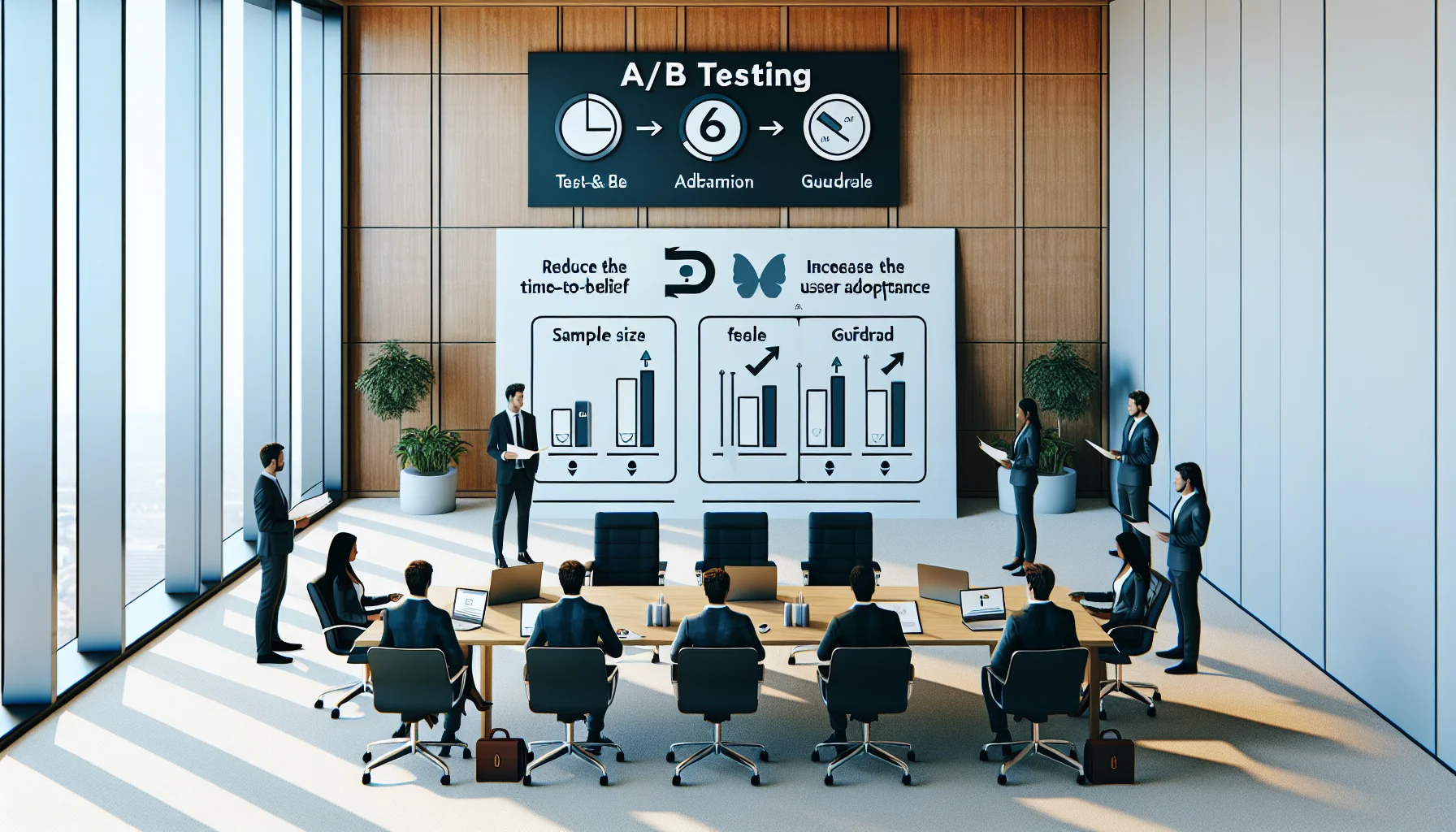
This article shows how A/B testing LMS experiments shorten learners' time-to-belief by exposing friction and measuring applied behavior. It outlines experiment design (hypothesis, metrics, sample size), tooling choices, six ready templates, an interpreted example result, and ethical guardrails—so teams can run practical tests and scale winners quickly.
 HR & People Analytics Insights
January 6, 2026
This article presents a practical five-step A/B testing training framework for LMS: hypothesis, metric selection, sample sizing, randomization, and analysis. It prioritizes high-impact tests (email cadence, microlearning), shares sample benchmark lifts (~7–10%), and offers solutions for small samples and implementation complexity to scale learning optimization.