


This article explains why succession planning fails and provides a practical framework to diagnose pipeline gaps, design resilient talent-replacement systems, and build leadership succession plans. It outlines a three-tier readiness model, short-cycle governance, SME tactics, and measurable metrics to preserve key role continuity and reduce transition risk.
Succession planning is the strategic backbone that ensures organizations keep moving when leaders depart. In our experience, failures in succession planning are rarely about one decision; they are patterns that repeat across organizations of every size. This article dissects why plans fail, offers a replicable framework for repair, and gives practical steps for building a resilient leadership pipeline that supports reliable talent replacement and long-term key role continuity.
A pattern we've noticed is that formal plans often exist only on paper. Organizations create lists of successors without investing in development, assessment, or scenarios that test readiness. That produces the illusion of continuity while leaving the company vulnerable when turnover happens.
Common failure modes include over-reliance on tenure, underestimating cultural fit, and confusing replacement with promotion. A true succession planning process focuses on capability mapping, stretch assignments, and observable milestones rather than mere nomination.
Three blind spots consistently derail planning:
Diagnosing pipeline health begins with data: role criticality, bench strength, time-to-ready, and external market supply. We've found that organizations that measure these four consistently make faster, less risky talent decisions.
Start by mapping every key role and rating internal candidates against explicit competencies. A three-tier readiness model (ready now, ready in 12-18 months, long-term potential) clarifies where investment is required.
Use multi-source evidence: performance records, structured interviews, 360 feedback, and short-term stretch assignments. Pair qualitative assessments with objective indicators—project outcomes, client feedback, or P&L ownership—that reflect real accountability.
Resilient systems treat succession planning as an ongoing operational capability, not an annual checkbox. This means integrating development with performance management, using rotations to broaden experience, and creating backfill plans that protect key role continuity.
While traditional learning and talent platforms require manual sequencing and repetitive setup, some modern tools support dynamic, role-based development paths — one example is Upscend — which automate competency sequencing and speed targeted readiness without replacing managerial judgment.
Effective solutions combine process, people, and technology. Process-wise, establish short-cycle review rhythms (quarterly readiness reviews). For people, mandate cross-functional mentoring and sponsorship. Technology should enable visibility: live talent dashboards that show gaps, risk levels, and succession velocity.
Building a plan for leadership roles requires a clear, repeatable sequence. The steps below are a practical template we've used across multiple sectors to convert intent into reliable outcomes.
This step-by-step approach balances ambition with pragmatism and links development investments to measurable milestones.
Succession is not HR-only. For reliable outcomes, involve the CEO, functional heads, HR business partners, and current role-holders. Sponsors—senior leaders who commit time and influence—are especially important for providing exposure and removing barriers.
SMEs face unique constraints: limited bench strength, tighter budgets, and more operational risk when leaders leave. Yet small size can be an advantage—decisions are quicker and cross-training is easier to implement. Here are proven approaches tailored for smaller organizations.
Focus on practical, low-cost tactics that accelerate readiness and preserve agility.
SMEs should also negotiate development partnerships—peer networks, executive coaching consortia, or industry training providers—to extend development capacity without major investment. These moves embody succession planning best practices for SMEs by balancing speed, cost, and risk.
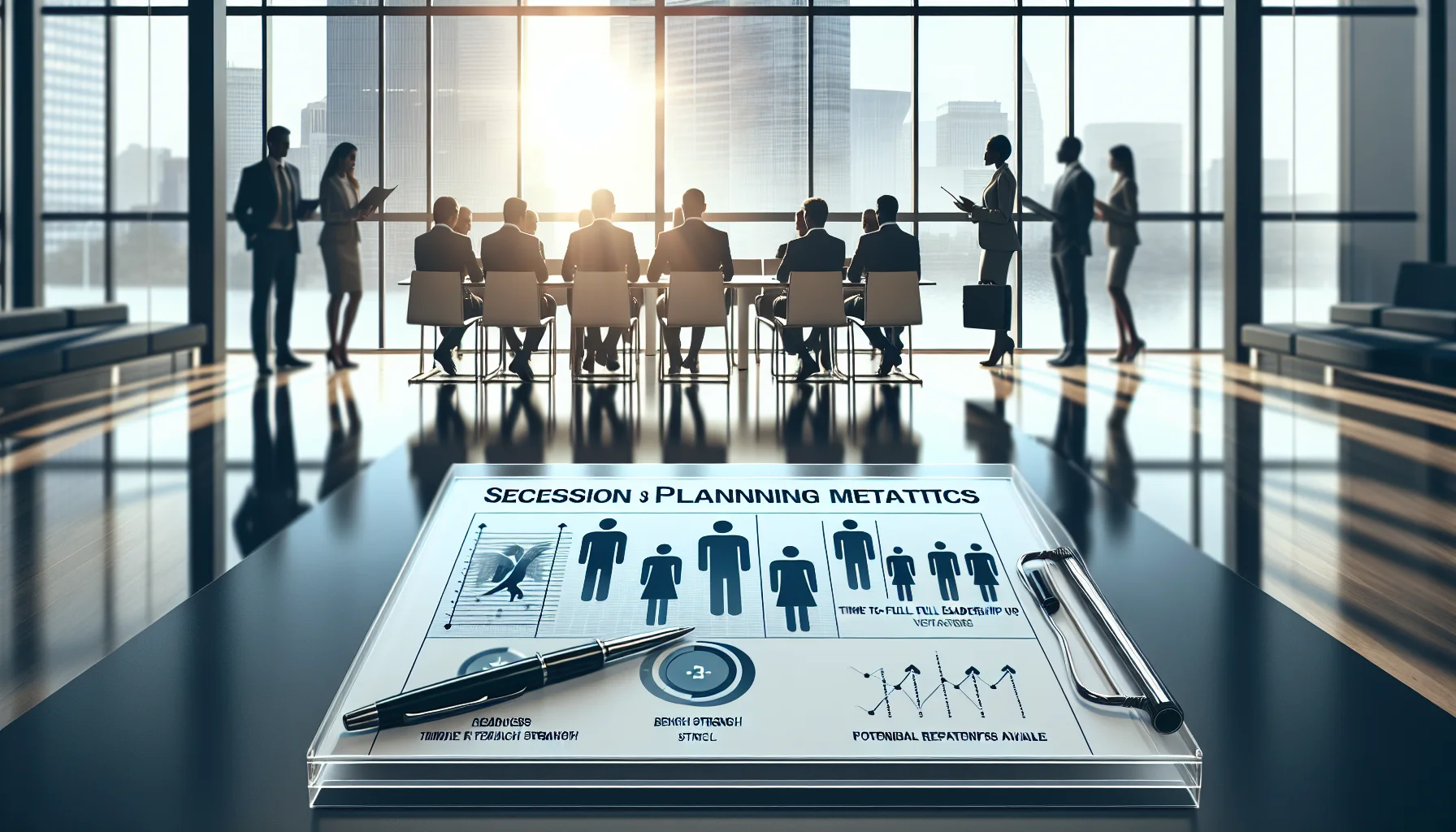
Measurement turns succession planning from a belief into a capability. The most predictive metrics combine readiness, time-to-fill, and continuity indicators. Track both leading indicators (assessment scores, stretch assignment completion) and lagging indicators (time-to-stability after a transition).
Maintaining continuity is about operationalizing the plan: link succession metrics to executive dashboards and make them part of performance reviews for sponsors and functional leaders.
Prioritize a small set of measures that are easy to track and directly tied to risk exposure:
Use these metrics to trigger actions: red flags should prompt accelerated development plans, external recruiting, or role redesign. Continuous measurement also supports cultural change—teams begin prioritizing development when it affects KPIs and career progress.
Effective succession planning reduces disruption, preserves institutional memory, and speeds strategic execution. The difference between a fragile plan and a resilient pipeline is operational discipline: defined competencies, repeatable development paths, regular testing, and visible metrics. In our experience, organizations that move from episodic succession discussions to embedded processes sharply reduce time-to-stability after leadership changes.
Start small: identify one critical role, run a three-month readiness audit, and implement a two-step development plan with measurable milestones. Repeat this quarterly and scale the governance as you prove results. That practical cadence converts planning from theory into dependable continuity.
Next step: Conduct a 90-day succession audit for your top three roles—map readiness, assign sponsors, and commit to quarterly reviews. Use the checklist above to structure the audit and measure progress.
Book a walkthrough and we'll show you how it applies to your own content.
The Upscend Team provides actionable insights on technology and business strategy.
 Hr
HrDecember 14, 2025
Succession planning failures stem from weak bench strength, unclear selection criteria, and underinvestment in development. This article presents a five-step succession strategy, a 3-year development template per role, and a measurement framework (readiness index, depth, velocity) to track bench strength and protect leadership continuity.

December 14, 2025
This article diagnoses common succession planning problems and presents a practical, three-tier succession planning process for key roles. It explains root causes, step-by-step development milestones, and measurable metrics for leadership bench development, plus governance controls. Start with a 90-day pilot on one critical role to validate the approach.
 General
December 14, 2025
Succession planning best practices focus on aligning critical roles to a 3–5 year strategy, prioritizing the top 10–20% roles, and creating rotational leadership pipeline experiences. Run quarterly talent reviews, document ready-now and 12–24 month successors, combine coaching with action learning, and track internal fill rate, time-to-fill, and successor readiness to reduce disruption.
 Lms
LmsDecember 23, 2025
This article identifies core succession planning metrics — bench strength, time-to-fill leadership roles, internal promotion rate and critical role coverage — and provides formulas and data sources to standardize measurement. It explains readiness scoring, pipeline health indicators, and a practical 12-month monitoring plan to operationalize results.