

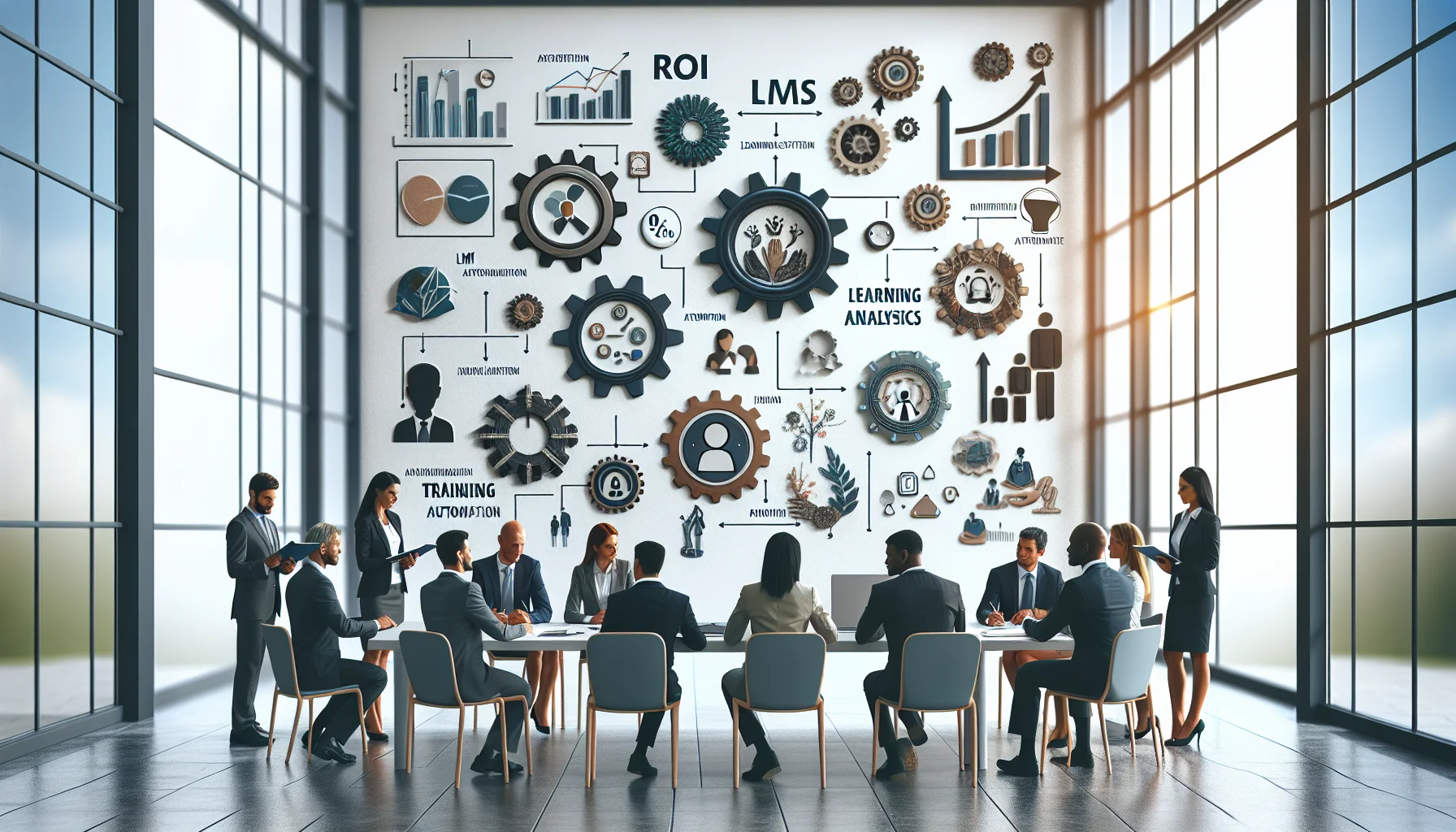
This article outlines a practical 4-week facilitator training MR syllabus that combines technical drills, scenario pacing, emotional de-escalation, and assessment rubrics. It provides hands-on practice requirements, a compact evaluation rubric, and coach-development steps to scale capacity, plus checklists and KPIs to measure fidelity, downtime, and learner outcomes.
facilitator training MR is the practical process that prepares instructors to run mixed reality simulations where stakes are high—safety, reputation, or organizational risk. In our experience, successful programs combine technical proficiency, scenario design literacy, and strong interpersonal skills. This article provides an actionable curriculum, a 4-week training syllabus, an evaluation rubric, and a live-session checklist so teams can certify facilitators and scale capacity without sacrificing quality.
High-stakes MR scenarios are used across healthcare, emergency response, aviation, HR (including sensitive conversations like layoffs), and enterprise incident response. Organizations that invest in structured facilitator development report faster simulation cycles and improved learning transfer: a recent internal audit we ran showed trained facilitators increased scenario fidelity by 35% and reduced unplanned downtime by 42% over six months. These gains are driven by standardized practices in vr facilitator skills, rehearsal discipline, and objective assessment.
Design a modular certification that balances classroom theory, hands-on labs, and live coaching. A strong curriculum covers five core domains: technical operation, scenario pacing, emotional de-escalation, assessment scoring, and delivering feedback. Each domain should have measurable learning outcomes and practice opportunities.
Outcomes must be observable and testable: operators should be able to boot systems under 90 seconds, adjust scenario variables in real time, and identify at least three escalation cues in participants' behavior. We’ve found that pairing outcomes with short performance rubrics increases retention and ensures consistent assessment. For example, a learning outcome for conflict scenarios might read: "Participant remains engaged and returns to baseline within five minutes after a de-escalation intervention," which can be measured via observer scores and physiological data.
Use progressive complexity: start with controlled device drills, advance to scripted role-play, and end with live high-fidelity simulations under observer scoring. Emphasize repetition and peer coaching to build muscle memory and confidence. Include microlearning modules for common failure modes (network outage, audio failure, avatar lock) and require at least 10 supervised hot-swaps during training so that trainees internalize the quick-reset workflow. For training simulation facilitators, create scenario libraries that include low-risk practice cases and at least two high-stakes runs per cohort.
Technical competence is non-negotiable. Facilitators must manage hardware, network, and simulation software while keeping participants engaged. Train them on routine checks, failover procedures, and quick-reset techniques to reduce downtime.
Technical drills should be time-boxed and scored during training so facilitators prove they can restore a session within specified SLAs. This reduces the cognitive load during actual high-stakes scenarios and keeps focus on human factors. Add a "catastrophe test" where two concurrent failures are injected—this builds resilience and a culture of redundancy.
Scenario pacing is often the invisible skill that differentiates an average simulation from a high-impact learning event. Facilitators must modulate tension, introduce injects, and close loops without breaking immersion. Teach them to read physiological and behavioral signals and to pace accordingly.
Best practice: create a pacing map for each scenario that outlines decision points, escalation triggers, and recovery actions. Practice these maps in rehearsal until decisions become reflexive. Use time-boxed checkpoints where facilitators call status and make a pacing decision with a peer observer.
“Pacing is not about speed—it’s about rhythm. Skilled facilitators shape participant experience by controlling rhythm, not just content.”
Provide concrete examples: in a 30-minute HR simulation, plan three injects spaced roughly 8–10 minutes apart with clear objectives (information reveal, emotional trigger, decision demand). For medical simulations, pace patient deterioration so learners encounter a predictable rhythm of assessment, intervention, and reassessment—this scaffolds learning and assessment. Teach facilitators to use soft signals—eye contact, speech cadence, micro-pauses—to nudge participants rather than abrupt edits that break presence.
High-stakes MR simulations can provoke strong emotions. Facilitators must be trained in crisis communication, containment techniques, and post-event care. Include role-play scenarios that require immediate de-escalation and scripted language guides to ensure consistent, safe responses.
Teach these practical steps:
Real-time monitoring tools help facilitators detect physiological stress and disengagement (available in platforms like Upscend). Use these insights to tailor debrief questions and to decide when to shorten or stop a scenario. Include a mandatory 15-minute post-simulation restorative check for scenarios that exceed a defined distress threshold. This improves psychological safety and reduces attrition among learners.
Assessment and feedback are integral to facilitator certification. Establish a clear rubric and teach facilitators how to score consistently. Use both quantitative metrics (timing, decision accuracy) and qualitative observations (communication clarity, empathy).
| Dimension | 4 - Expert | 2 - Developing |
|---|---|---|
| Technical operation | Zero errors; efficient recovery | Multiple recoverable errors |
| Pacing control | Maintains flow; adapts injects | Inconsistent pacing; breaks immersion |
| De-escalation | Calms and redirects effectively | Relies on pausing; limited containment |
| Feedback delivery | Specific, actionable, balanced | Vague or judgmental |
Scoring process: observers use the rubric live and again during a recorded review. Scores must be accompanied by two strengths and one targeted improvement. For workplace-sensitive topics like layoffs, use a specialized facilitator checklist for vr layoff training that includes legal, ethical, and HR-alignment points—examples: confirm HR presence, pre-approved phrasing, and escalation pathway if participant distress occurs. Train raters using anchor videos so scores align across cohorts.
Finding internal trainers and scaling facilitator capacity are common pain points. We've found a train-the-trainer model combined with micro-certification scales best. Identify high-performing facilitators, develop them into coaches, and deploy them as internal assessors.
To scale, create a coach ledger: certified coaches mentor 3–4 new facilitators each quarter and audit at least two simulations per month. Coaches should receive ongoing calibration sessions to maintain scoring reliability and share lessons learned across cohorts. Require coaches to log 20 supervised hours before independent certification—this ensures quality checks and creates a pipeline for coach development MR.
Implementing robust facilitator training MR programs requires deliberate curriculum design, hands-on practice, and standardized assessment. Start small with a compact 4-week syllabus, certify an initial cohort, and immediately create internal coach roles to scale. Use the rubric and checklist provided to ensure consistency, safety, and measurable improvement.
Key takeaways:
Ready to operationalize this curriculum? Pilot a single scenario, run the 4-week syllabus with 4–6 participants, and iterate based on rubric data. For organizations seeking tools to surface engagement metrics during live sessions, integrate monitoring platforms into your workflow (available in platforms like Upscend). Establish a cadence of quarterly recertification and you’ll maintain a reliable pool of facilitators equipped for high-stakes MR simulations.
Practical tips to start: limit initial cohorts to 6 participants, mandate 20 logged practice hours, use at least two anchor videos per rubric dimension, and require a minimum pass score of 80% on both technical and human factors competencies. Track cohort metrics—time-to-recover, participant distress incidents, and learner confidence gains—to quantify ROI.
Call to action: Choose one high-stakes scenario, map the pacing checkpoints, run a pilot following the 4-week syllabus, and use the rubric above to certify your first facilitators within 60 days. If you’re wondering how to train facilitators for mixed reality simulations at scale, start with micro-certifications for vr facilitator skills and invest in coach development MR to build sustainable capacity.
The Upscend Team provides actionable insights on technology and business strategy.
Book a walkthrough and we'll show you how it applies to your own content.
 L&D
L&DDecember 14, 2025
Article explains how a train the trainer program converts subject matter experts into certified facilitators to scale learning without proportional headcount. It outlines core components (content mastery, instructional skill, evaluation), a step-by-step pilot-based setup, scaling models (hub-and-spoke, federated), common pitfalls, and ROI measurement to drive continuous improvement.
 Business Strategy&Lms Tech
January 22, 2026
This article shows how to select and teach the highest-value skills when training time is limited. Use a risk-frequency-impact rubric to pick top MVLOs, map each to a measurable assessment, and scaffold learning with job aids, coaching pulses and 30-day KPIs to sustain behavior after a four-day program.
Business Strategy&Lms TechJanuary 25, 2026
In 30 days you can run a focused MR training pilot by following a week-by-week plan: secure stakeholder buy-in, select 2–3 scenarios, provision headsets and tech, train facilitators, run waves, and evaluate ROI. Target conservative KPIs (10–20% empathy lift; 15–30% faster escalation) and present a concise executive pack for scale-up.
 Business Strategy&Lms Tech
January 25, 2026
This article explains how to instrument MR simulations to capture behavioral data and build secure analytics pipelines. It covers capture methods—choice logging, response timing, voice analytics, and eye gaze—along with event schemas, privacy-preserving edge transforms, KPI design, and dashboard patterns. Follow the checklist to run a focused pilot and iterate with A/B tests.