


Executives should treat DEI challenges as strategic, not compliance tasks. Use a four-level maturity model, targeted recruitment and promotion interventions, and clear metrics (representation, pay equity, retention) governed by a DEI council. Start with a 90-day diagnostic, set measurable targets, and integrate DEI into leadership scorecards to sustain change.
DEI challenges are often framed as compliance tasks, but they are strategic risks and opportunities that affect retention, innovation, and market trust. In our experience, organizations that treat DEI challenges as a one-off program see short-term gains and long-term frustration. This article outlines a practical, executive-ready approach to diagnosing and addressing DEI challenges across large organizations.
We present a DEI maturity model, targeted interventions for recruitment and promotion, measurable metrics like representation and pay equity, governance structures including a DEI council, two longitudinal case studies, common pitfalls to avoid, and a clear implementation timeline with a communication plan.
When leaders ask why progress stalls, the answer is rarely singular. DEI challenges are systemic: they arise from legacy hiring practices, uncalibrated performance systems, uneven sponsorship, and incomplete measurement. We've found that organizations often confuse activity with impact — running diversity programs without shifting decision architecture.
Addressing root causes means recognizing that inclusive workplace issues are organizational design problems. Below are two primary drivers we repeatedly observe:
Tokenism is one of the most damaging manifestations of DEI failures. When hires are made without consequential authority or visibility, tokenism undermines trust and increases attrition. In our experience, the turning point is when leaders accept accountability and embed DEI goals into performance metrics. Without visible sponsorship from the C-suite, DEI challenges remain peripheral.
Leadership buy-in must be operationalized via incentives and transparent scorecards that link promotions and resource allocation to DEI outcomes.
Many organizations lack the data infrastructure to diagnose inclusive workplace issues accurately. Studies show companies with robust analytics outperform peers on retention and innovation. Measurement gaps create fuzzy targets and defensive responses when gaps surface. We've found that introducing precise, actionable metrics reduces blame and creates collaborative problem-solving.
A maturity model helps executives move from tactical fixes to sustainable capability. Our four-level model clarifies where to focus effort and what interventions scale with maturity. This model is a practical tool for prioritization and resource allocation when confronting DEI challenges.
Levels describe capability across governance, metrics, programs, and culture. Use the model to set realistic milestones and avoid programmatic overload.
Level 1 — Reactive: Activity-driven diversity programs with no clear metrics. Organizations primarily respond to incidents rather than prevent them. DEI challenges are visible but unmanaged.
Level 2 — Managed: Basic metrics and some equity initiatives exist, usually HR-led. Progress is inconsistent and dependent on individual champions.
Level 3 — Integrated: Equity initiatives are connected to talent systems: recruitment, performance, and succession. A governance body reviews metrics regularly, and DEI challenges are addressed as business-as-usual priorities.
Level 4 — Transformational: DEI is embedded in strategy and product design, with predictive analytics and continuous improvement. Representation targets, pay equity reviews, and inclusive workplace issues are proactively managed.
Start with a 90-day diagnostic: gap analysis of data, policy, and leadership commitment. Map current programs against the four levels and identify 3–5 levers that move you one level up. In our experience, credible movement requires combining governance changes with targeted interventions in hiring and promotion.
Targeted interventions are the practical levers for resolving DEI challenges. Recruitment and promotion are high-impact entry points because they reconfigure representation and power structures simultaneously. Below are prioritized actions that scale across large organizations.
These interventions are not optional; they form the backbone of any sustainable DEI strategy for executives.
We've seen structured hiring reduce inadvertent bias and increase candidate quality. Integrate diversity programs with sourcing budgets and recruiter scorecards to ensure traction.
Promotion policies must be transparent and tied to objective criteria. Implement quarterly calibration sessions where promotion decisions are reviewed for equity, and require sponsor attestations for high-potential employees from underrepresented groups. Create fast-track development programs that combine stretch assignments with mentorship and measurable goals.
These moves close the gap between representation in entry-level roles and leadership, a common place where DEI challenges re-emerge.
Good governance turns aspiration into measurable outcomes. To solve persistent DEI challenges, combine clear metrics with a decision-rights framework. Establishing a DEI council and linking metrics to leadership performance remaps incentives.
Below are the core metrics and governance elements every large organization should implement.
These metrics should be reviewed monthly at the HR leadership level and quarterly with the executive team. In our experience, when data is timely and layered, it moves conversations from defensiveness to problem-solving and mitigates many inclusive workplace issues.
Create a cross-functional DEI council with clear charter and veto rights on talent decisions. Assign explicit leadership accountability with measurable goals in executive scorecards. Use transparent dashboards and escalation paths when thresholds are missed.
The turning point for most teams isn’t just creating more content — it’s removing friction. Tools that make analytics and personalization part of core processes help. For example, platforms that integrate workforce analytics into talent workflows have accelerated measurement cycles and surfaced inequities earlier; the turning point for many teams was when analytics became operational, and Tools like Upscend help by making analytics and personalization part of the core process.
Concrete examples help clarify what success looks like. Below are two multi-year case studies showing measurable outcomes and how they addressed persistent DEI challenges.
Both case studies illustrate the interplay between governance, measurement, and targeted interventions.
Problem: Representation at senior levels lagged behind entry-level diversity. The company reported high attrition among mid-career women and people of color — a typical manifestation of unresolved DEI challenges.
Intervention: Introduced a DEI maturity model-led roadmap, mandatory bias-resistant promotion panels, sponsorship for high-potential diverse talent, and quarterly pay equity audits.
Outcome: Within 36 months, senior-level representation for targeted cohorts rose from 12% to 22%, adjusted promotion parity improved by 40%, and adjusted pay gap closed by 6 percentage points. Leadership accountability was tied to bonuses at year two, which sustained momentum.
Problem: Rapid hiring created noisy inclusive workplace issues and inconsistent hiring standards. The start-up faced reputational risk after several retention issues became public.
Intervention: Implemented structured interviews, recruiter diversity targets, return-to-work programs, and real-time inclusion pulse surveys. A cross-functional DEI council reviewed hiring dashboards weekly.
Outcome: Over 24 months, hiring funnel diversity improved by 30%, attrition among underrepresented groups decreased by 22%, and product teams reported higher innovation scores tied to diverse perspectives. Measurement cadence and council governance were key to sustaining change.
Executives need an operational timeline that balances speed and sustainability. Below is a recommended 12–18 month timeline focused on measurable wins and capability building to address DEI challenges.
Follow this sequence to minimize disruption and build momentum.
Each phase includes review gates and pre-defined success criteria. This phased approach helps address the most acute DEI challenges while building organizational capacity to sustain change.
Communication is the connective tissue between strategy and execution. A clear plan prevents rumors and reduces resistance. Use a tiered approach:
1) Launch messaging from the CEO that frames DEI as strategic and ties it to business outcomes. 2) Monthly dashboards for leaders with contextual narratives. 3) Quarterly all-hands updates that acknowledge setbacks and highlight wins. Transparency about data and actions reduces suspicion of tokenism and builds credibility.
In our experience, timely, honest communication accelerates adoption: employees are more forgiving of imperfect progress than they are of secrecy.
Even well-intentioned programs can fail. Below are recurrent pitfalls and concrete ways to avoid them when dealing with DEI challenges.
Addressing these reduces wasted effort and preserves credibility.
Tokenism: Avoid surface-level hires without power or visibility. Ensure diverse hires get meaningful assignments, sponsorship, and voice. Measurement traps: Don’t rely solely on headcount; combine representation with pay equity and advancement rates to get a full picture. Leadership gaps: Tie leadership accountability to measurable outcomes and include DEI goals in compensation design.
Common solutions include transparent promotion criteria, documented sponsor commitments, and mandatory calibration to detect outliers.
Many organizations see early improvements and then plateau. To sustain progress, institutionalize DEI into operating rhythms: quarterly reviews, budget allocations for equity initiatives, and integration into talent planning. Continuous learning and adapting prevent backsliding on earlier gains and make addressing DEI challenges part of how work gets done.
DEI challenges are solvable when leaders combine clarity of intent with operational rigor. Use the maturity model to prioritize, interventions in recruitment and promotion to change pipelines, and robust metrics plus governance to maintain accountability. Avoid tokenism by ensuring diverse employees have influence, solve measurement issues with integrated analytics, and secure leadership buy-in by linking DEI to business performance.
Next steps we recommend: conduct a 90-day diagnostic, set three measurable targets tied to the maturity model, and create a cross-functional DEI council with a clear charter. For executives looking for tools and methods to operationalize analytics into talent workflows, consider solutions that embed measurement where decisions are made — this pragmatic integration often unlocks sustainable change.
Call to action: Start with a 90-day diagnostic: gather hiring, promotion, pay, and pulse data, map your current maturity level, and commit to three specific, measurable interventions for the first 12 months.
The Upscend Team provides actionable insights on technology and business strategy.
Book a walkthrough and we'll show you how it applies to your own content.
 Hr
HrDecember 14, 2025
Executives can use a six-category framework and a four-dimension diagnostic to convert human resources issues into prioritized, measurable initiatives. The guide outlines a 30/90/180 roadmap, owner/KPI mappings, and a simple scoring formula so leaders secure quick wins and scale strategic HR investments with business-linked outcomes.
 General
December 14, 2025
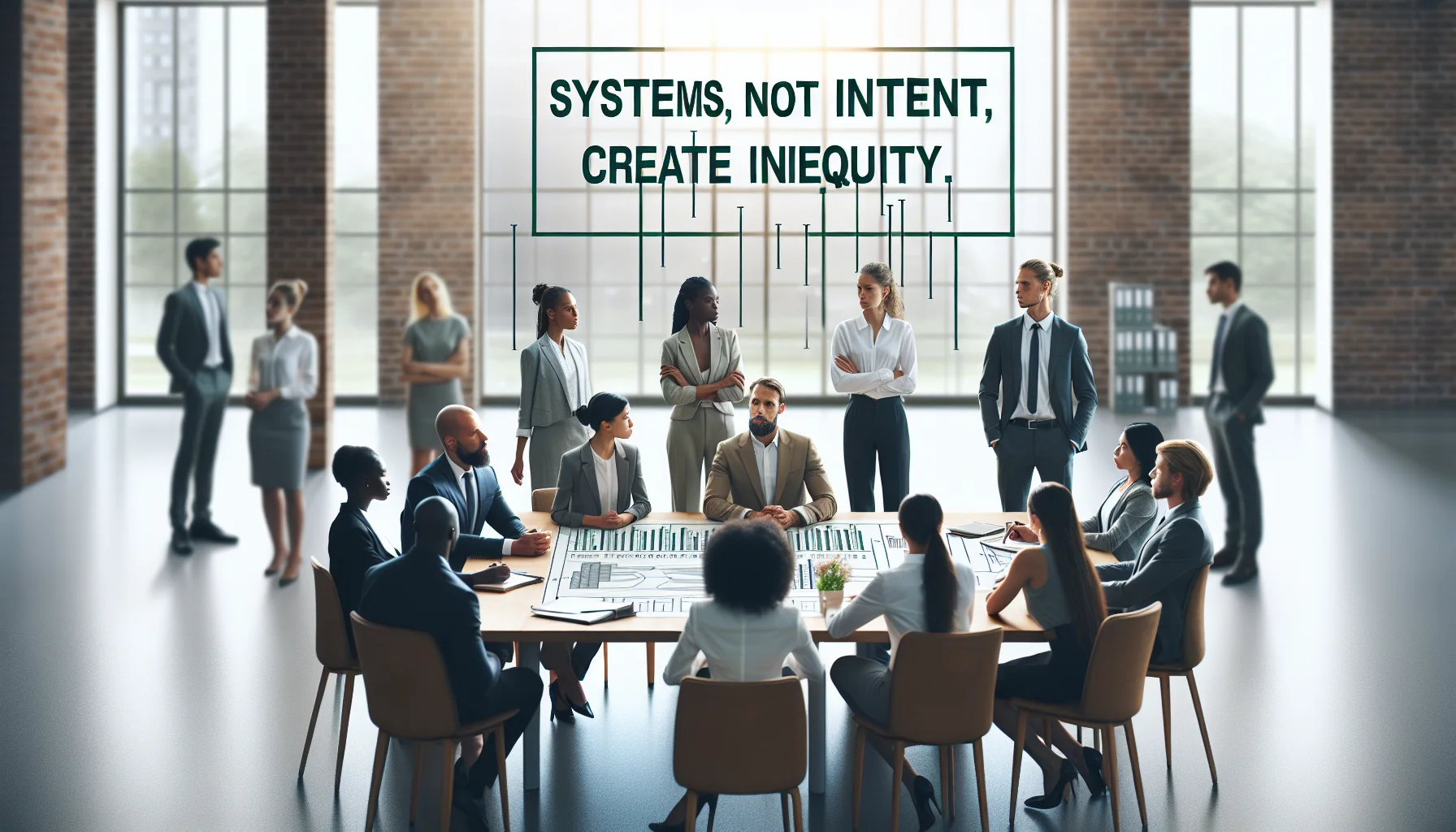
DEI challenges in HR persist because systems, not intent, create inequity. This article explains how to diagnose root causes, redesign decision processes (hiring, promotions, performance), and measure outcomes with practical tools—structured interviews, anonymized screening, calibrated panels, and clear metrics to hold leaders accountable.
 General
December 14, 2025
This article presents a six-step DEI roadmap for mid-sized companies that begins with a disciplined diagnosis of diversity and inclusion issues, then prioritizes interventions, pilots solutions, scales changes, and measures outcomes. Expect initial pilots in 6–9 months and structural embedding over 12–24 months, using KPIs and leadership accountability.
 General
December 14, 2025
This article explains why DEI challenges persist and provides a three-layer framework—governance, process, people—for moving beyond tokenism. It outlines a step-by-step rollout, measurement approaches linking inclusion to ROI, common pitfalls, timelines for visible progress, and skills leaders need to scale pilots into enterprise transformation.