


Districts should evaluate AI chatbot tutors by pedagogy, standards alignment, moderation, privacy compliance, and cost. Run a 6–8 week pilot with defined cohorts, SSO, and exportable analytics. Use vendor scorecards to compare real-time moderation, teacher controls, pricing models and require SLAs and data-deletion clauses before contracting.
Choosing the best AI chatbot tutors for a district is a balancing act between pedagogy, safety, and budget. In our experience, districts that start with clear selection criteria and a short pilot get faster adoption and measurable learning gains. This buyer’s guide focuses on pragmatic steps and vendor comparisons to help procurement teams evaluate the best AI chatbot tutors for K–12 classrooms.
District leaders need a concise rubric to vet education AI platforms. We recommend a five-factor framework: age-appropriate pedagogy, content alignment, moderation and student safety, data privacy and compliance, and cost per seat.
Start with learning design—how the chatbot scaffolds instruction for different grade bands. The best AI chatbot tutors demonstrate clear differentiation between elementary, middle, and high school learning paths and provide teacher controls for pacing and scope.
Look for platforms that map lessons to state standards and let teachers lock or approve content. The best AI chatbot tutors expose their alignment matrix and permit bulk uploads of approved curriculum. Prioritize vendors that support IEP accommodations, multilingual prompts, and formative-assessment exports that integrate with your LMS.
Moderation is non-negotiable. Choose vendors that offer real-time filtering, human review pipelines, and incident reporting. Verify FERPA, COPPA, and state privacy compliance in writing. The safest AI tutors K-12 provide per-student consent workflows and data retention controls administrators can audit.
Below are compact vendor scorecards for four leading options. These profiles focus on features important to districts selecting the best AI chatbot tutors for K–12.
| Feature / Vendor | EdBot Pro | ClassTutor AI | LearnMate | BrightChat EDU |
|---|---|---|---|---|
| Standards alignment | ✓ | ✓ | ✓ | ✓ |
| Real-time moderation | ✓ | ✓ | ✕ | ✓ |
| Teacher controls | ✓ | ✓ | ✓ | ✕ |
| Data privacy certs | FERPA/COPPA | FERPA | FERPA/COPPA | FERPA |
| Pricing model | Per-seat | Tiered district | Per-school | Subscription |
Price structures vary: the best AI chatbot tutors can be priced per seat, by school, or as a district license. Typical per-seat ranges for 2026 procurement cycles are $8–$30 annually for basic chat, rising for assessment and analytics bundles.
EdBot Pro – Pros: strong moderation, teacher analytics. Cons: higher per-seat cost. Ideal for districts prioritizing safety and assessment fidelity. The best AI chatbot tutors in districts with strong curriculum needs often look like EdBot Pro.
ClassTutor AI – Pros: scalable licensing, easy SIS integration. Cons: fewer language supports. Best for large districts focused on scale and low admin overhead.
LearnMate – Pros: low-cost pilot, excellent elementary UX. Cons: limited moderation workflows. Fit for pilot programs in elementary schools aiming to test engagement.
BrightChat EDU – Pros: strong UX for teachers, built-in PD. Cons: narrower analytics. Good for districts seeking teacher adoption with bundled training.
Procurement in K–12 follows budget cycles and requires alignment across IT, curriculum, legal, and principals. A clear procurement checklist reduces rework and accelerates contract approval.
For pilots, use a rotating cohort model: 4–6 schools, 2 grade bands, 6–8 week cycles. Collect baseline assessments, weekly teacher logs, and post-pilot proficiency checks. We’ve found pilots that include teacher coaching and scripted lesson plans increase fidelity and produce clearer ROI.
Data deletion SLA: "District data to be purged within 30 days of contract termination."
Moderation audit: "Quarterly moderation reports shared with district security lead."
Real-world feedback highlights common pain points and success patterns. These short quotes reflect the practical concerns procurement teams will face when choosing the best AI chatbot tutors.
"We launched a focused pilot across five elementary classrooms. Teacher coaching and strict moderation were the difference between busywork and measurable reading gains." — Curriculum Director, suburban district
"Budget timing forced us into a multi-year, per-district contract. Negotiating a data deletion clause saved us headaches during vendor transitions." — CTO, mid-size district
We've found that forward-thinking L&D teams use automation to streamline training and reporting. Some of the most efficient L&D teams we've worked with use platforms like Upscend to automate curriculum tagging and reporting, which is a useful model for districts integrating chatbot tutors.
Start with outcome alignment: match vendor features to the district’s top three learning goals. Use a rubric that weights content alignment (30%), safety and privacy (25%), cost (20%), teacher workflow integration (15%), and vendor support (10%). Run a 6–8 week pilot focused on those metrics and require exportable analytics for post-pilot analysis.
Elementary chatbots require simpler language, explicit scaffolds, and parent/teacher notification flows. High school solutions need deeper subject-matter reasoning, citation transparency, and advanced analytics for credit recovery or honors tracking. The best AI chatbot tutors present different UX and controls per grade band to reduce misuse and increase instructional value.
Selecting the best AI chatbot tutors for K–12 is an evidence-driven process: define success metrics, run a structured pilot, and include strict privacy and moderation clauses in contracts. Prioritize vendors that provide clear alignment to standards, teacher controls, and transparent pricing.
Key takeaways:
If your team wants a ready-to-use procurement checklist and sample contract language tailored to your state regulations, request a copy of the checklist and pilot-template workbook to accelerate evaluation and budgeting.
The Upscend Team provides actionable insights on technology and business strategy.
Book a walkthrough and we'll show you how it applies to your own content.
 Ai
AiDecember 25, 2025
Measure chatbot ROI as a design constraint: establish baselines, track deflection, AHT, and TCO, and use LMS analytics to tie learning outcomes to cost savings. The framework includes formulae, sensitivity testing, dashboards, and a worked 40% deflection example showing year‑one costs but multi‑year payback. Start with a labeled pilot and conservative assumptions.
 Ai
AiDecember 25, 2025
This article gives procurement and L&D teams a practical vendor checklist for course-embedded chatbots, outlining must-have vendor features AI assistants must deliver, technical and security criteria, RFP questions, pilot success metrics, and negotiation tactics. Use the weighted scoring matrix and pilot checklist to compare vendors objectively.
 Ai
AiDecember 25, 2025
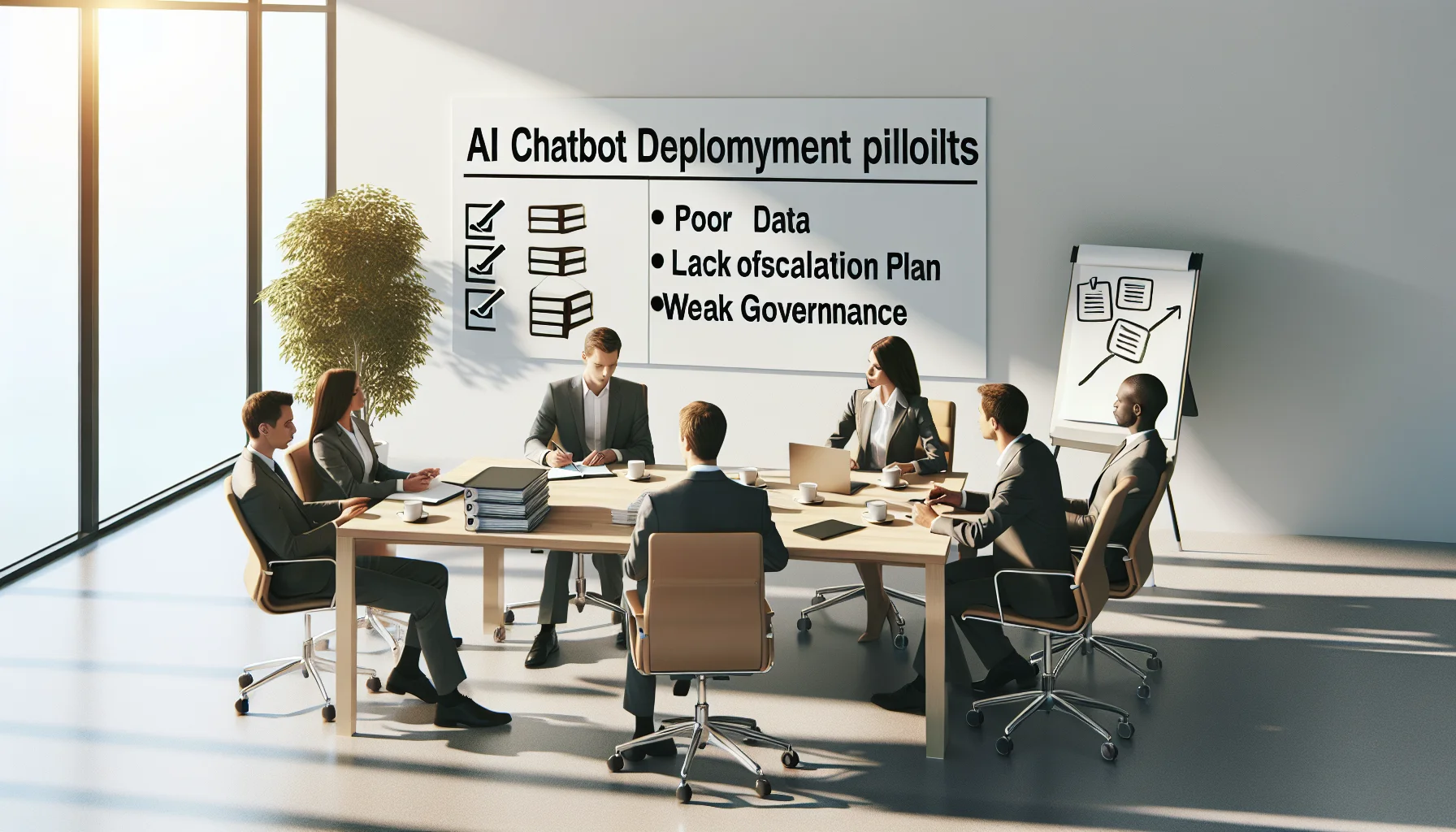
Article summarizes the top 10 AI chatbot deployment pitfalls—poor data, missing escalation, weak governance, skipped pilots, UX and measurement failures—and provides mitigation checklists, remediation examples, and a reusable postmortem template. Learning leaders and L&D teams get a compact implementation checklist to run controlled pilots, enforce governance, and measure outcomes.
Business Strategy&Lms TechJanuary 26, 2026
This article evaluates selection criteria and lists seven vetted school chatbot solutions, comparing features, license models, and estimated costs. It provides a procurement checklist, pilot scorecard, and rollout phases to help K-12 leaders run short pilots, assess security/compliance, and calculate TCO before district-wide adoption.