


AI Integration in Learning Design enables scalable personalization and faster content production by combining human-authored curricula, AI-driven adaptive rules, and continuous feedback. The article outlines practical patterns (rule-based branching, model recommendations, nudges), implementation steps, measurement KPIs, and governance checkpoints to pilot within a 90-day framework.
AI Integration in Learning Design is reshaping institutional learning by enabling tailored experiences at scale and dramatically reducing the time to produce quality content. In our experience, teams that treat AI as a design partner — not a replacement — unlock measurable gains in engagement, completion rates, and instructional efficiency.
This article outlines practical patterns, implementation steps, and governance guardrails that experienced L&D teams use to personalize learning paths and accelerate content creation without sacrificing instructional integrity.
Institutions face three pressures: diverse learner needs, constrained instructional resources, and demand for demonstrable outcomes. AI Integration in Learning Design directly addresses all three by enabling real-time adaptation, content scaling, and reliable measurement.
Studies show adaptive programs can increase mastery rates by 20–40% when they align content delivery with learner readiness and motivation. In our experience, the most impactful programs combine data-driven personalization with clearly defined learning objectives and human oversight.
AI shifts expert time from content assembly to curriculum strategy. Instructors become curators, evaluators, and designers of learning experiences, supported by AI for hypothesis testing, rapid prototyping, and micro-personalization.
Key benefits include faster iterations, fewer redundant assessments, and improved alignment to competency frameworks.
Designing for personalization requires a clear taxonomy: competencies, prerequisites, performance bands, and engagement signals. AI Integration in Learning Design uses these inputs to map individual learning journeys and predict next-best actions.
We recommend a layered approach: base curricula (human-authored), adaptive rules (AI-informed), and continuous feedback loops (analytics and human review).
Common patterns we've implemented include rule-based branching, model-driven recommendations, and contextual nudges. Each has trade-offs:
Start with rules to validate pedagogy, then pilot models in controlled cohorts. A phased rollout preserves instructional quality while capturing the data needed to improve models.
Adaptive paths are especially valuable for learners with variable backgrounds, those in competency-based programs, and large cohorts where manual personalization is impractical. We've found the highest ROI in technical reskilling and compliance learning with measurable skill gaps.
AI accelerates content creation by automating repetitive tasks, generating first-draft materials, and converting assets across modalities (text to video script, micro-lesson to assessment items). AI Integration in Learning Design reduces time-to-course from weeks to days for routine modules while preserving human review for nuanced topics.
We advise treating AI outputs as drafts that require rapid human revision. This hybrid workflow balances scale with fidelity.
Effective workflows combine prompt design, version control, and role-based QA. A typical sequence:
Governance checkpoints at steps 2 and 3 ensure quality and reduce downstream rework.
Choosing the right architecture is less about brand names and more about integration, data quality, and controls. AI Integration in Learning Design succeeds when platforms expose APIs for LMS integration, provide model explainability, and allow versioning of content artifacts.
Operational patterns we recommend: central model registry, content-to-assessment traceability, and a conservative default for automated grading on subjective tasks.
Some of the most efficient L&D teams we work with use Upscend to automate this workflow without sacrificing quality.
Prioritize tools that support standards (SCORM/xAPI), provide secure data handling, and offer explainable AI outputs. Integration with talent and HR systems closes the loop between learning and performance.
Tip: Build a sandbox environment to trial AI models before production deployment; this reduces risk and surfaces edge cases early.
Measurement is the backbone of trustworthy AI. For AI Integration in Learning Design, define success metrics tied to learning outcomes, not just usage statistics. Use a balanced mix of leading indicators (engagement, time-to-completion) and lagging indicators (skill mastery, on-the-job performance).
We use A/B testing and cohort comparisons to isolate the impact of adaptive interventions versus content changes.
Key metrics include mastery rate, transfer to role, drop-off points, and bias audits. Include periodic qualitative reviews where SMEs validate the pedagogical relevance of AI-suggested paths.
Governance checklist for measurement:
Institutions often rush to automate without sufficient dataset curation, which leads to brittle recommendations and biased outcomes. AI Integration in Learning Design requires upfront investment in data hygiene and a clear role map for human oversight.
Another frequent mistake is over-personalization without transparent learner choices; this can erode trust. Offer learners control over how much personalization they receive and surface explanations for recommendations.
Avoid deploying opaque models for high-stakes assessments. Ensure SME sign-off for rubrics and set thresholds where human review overrides automated decisions. Regular audits for fairness and accessibility should be mandatory.
Implementation safeguards include test datasets representing diverse learner profiles and automated alerts when model outputs deviate from expected ranges.
AI Integration in Learning Design is not a single technology choice but a disciplined practice that blends pedagogy, data, and engineering. In our experience, programs that treat AI as an iterative collaborator — with strong governance and SME involvement — achieve faster scaling and better outcomes.
To get started: map your highest-value use cases, run quick pilots with clear KPIs, and formalize a governance framework that assigns human checkpoints. Prioritize transparency and continuous evaluation to sustain trust and impact.
Next step: Assemble a 90-day pilot plan that outlines objectives, success metrics, and the human reviewers needed at each checkpoint. Use that plan to validate capability before broader rollout.
Call to action: If you're ready to translate strategy into a pilot, start by documenting one learning objective, one assessment, and one learner segment — then run an AI-assisted prototype and measure against pre-defined KPIs.
The Upscend Team provides actionable insights on technology and business strategy.
Book a walkthrough and we'll show you how it applies to your own content.
 L&D
L&DDecember 14, 2025
This article outlines practical AI in learning and development use cases—personalization, automation, and analytics—and shows how to link AI to measurable performance outcomes. It recommends layered governance and an 8–12 week pilot approach. Follow a discover → pilot → scale → optimize roadmap with measurement and human oversight.
 Learning System
December 28, 2025
This article lists prioritized learning data sources and the learner signals needed to build AI-driven personalization. It explains instrumenting event tracking (xAPI), LRS data normalization, labeling strategies, privacy and consent controls, and an ETL blueprint to convert fragmented systems into model-ready feature stores. Includes a practical checklist for pilots.
 Ai
AiJanuary 6, 2026
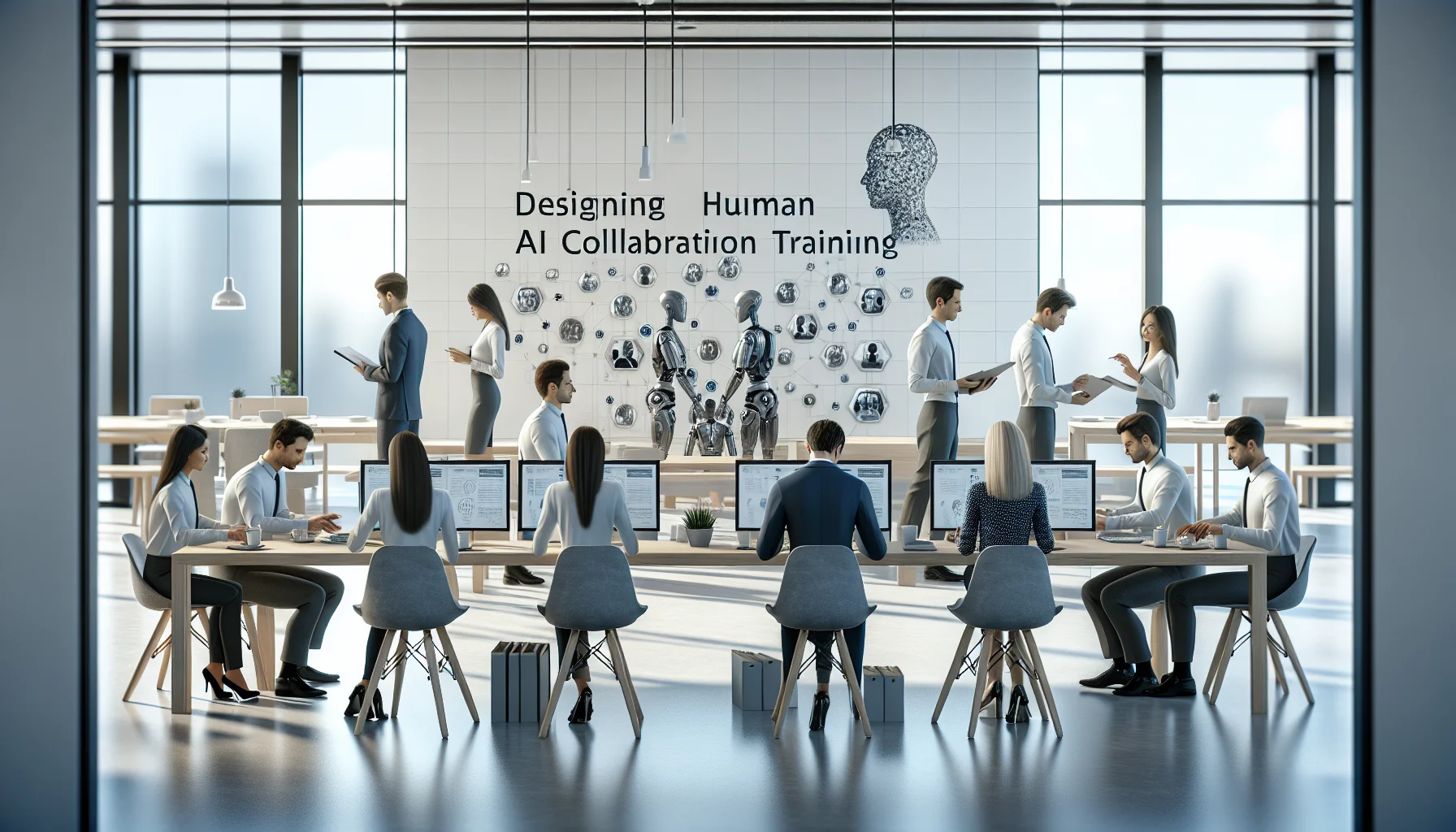
Step-by-step process to design human-AI collaboration training: assess needs, map personas, build role-specific competency maps, and deliver modular curricula with microlearning and simulations. Pilot, measure adoption and business KPIs, then scale via train-the-trainer and automated assessments. Includes templates and two case examples showing measurable impact.
 Business Strategy&Lms Tech
January 25, 2026
This article shows how advanced AI personalized learning combines NLP-driven content embeddings, reinforcement learning sequencing, and knowledge graph personalization into scalable, explainable L&D systems. It covers pipelines, architecture, implementation trade-offs, monitoring metrics, and a staged roadmap: deploy semantic search first, add graphs for constraints and explainability, then pilot RL policies with conservative exploration.