


Translate DEI goals into measurable procurement criteria using our DEI LMS checklist. The article provides a weighted vendor evaluation matrix, RFP excerpts, interview questions, and a 4–6 week pilot plan to validate claims. Use the procurement scorecard and contract red flags to ensure data ownership, pricing transparency, and migration support.
LMS vendor comparison is the first step for any team buying a platform for diversity, equity, and inclusion (DEI) learning. In our experience, procurement succeeds when teams translate strategic DEI goals into measurable procurement criteria. This article gives a pragmatic, printable DEI LMS checklist, a procurement scorecard, RFP excerpts, interview questions, a pilot evaluation plan, and clear contract red flags so you can run a confident LMS procurement process without being surprised by hidden costs or overstated features.
Start by documenting needs across HR, legal, IT, learning design, and employee resource groups. A formal vendor evaluation criteria matrix prevents feature wishlists from becoming decision paralysis. Define minimum acceptance criteria and absolute deal-breakers before you shortlist vendors.
We've found that a 3-step stakeholder process reduces downstream scope changes: 1) run a 1-hour needs workshop with each stakeholder group, 2) produce a consolidated requirements list with priorities (MUST/HIGH/NICE), and 3) lock the minimum acceptance criteria in writing. This becomes the baseline for any LMS vendor comparison.
The technical feature list for DEI programs is different from standard L&D. Focus on features that operationalize inclusion: adaptive learning paths, anonymous reporting mechanisms, moderator tools for safe discussions, and blended learning support for facilitator-led workshops.
Vendor evaluation criteria should weight DEI-specific features higher than commoditized items. Include scenario-based tests in your RFP that mirror actual sessions you run (e.g., cohort-based workshops plus microlearning follow-ups). When you perform an LMS vendor comparison, score scenarios for fidelity, ease of delivery, and data capture.
Your RFP should be prescriptive where it matters and flexible elsewhere. Use a scoring template to quantify outcomes and reduce subjective judgment. Below are RFP excerpts and a printable procurement scorecard you can copy into your RFP document.
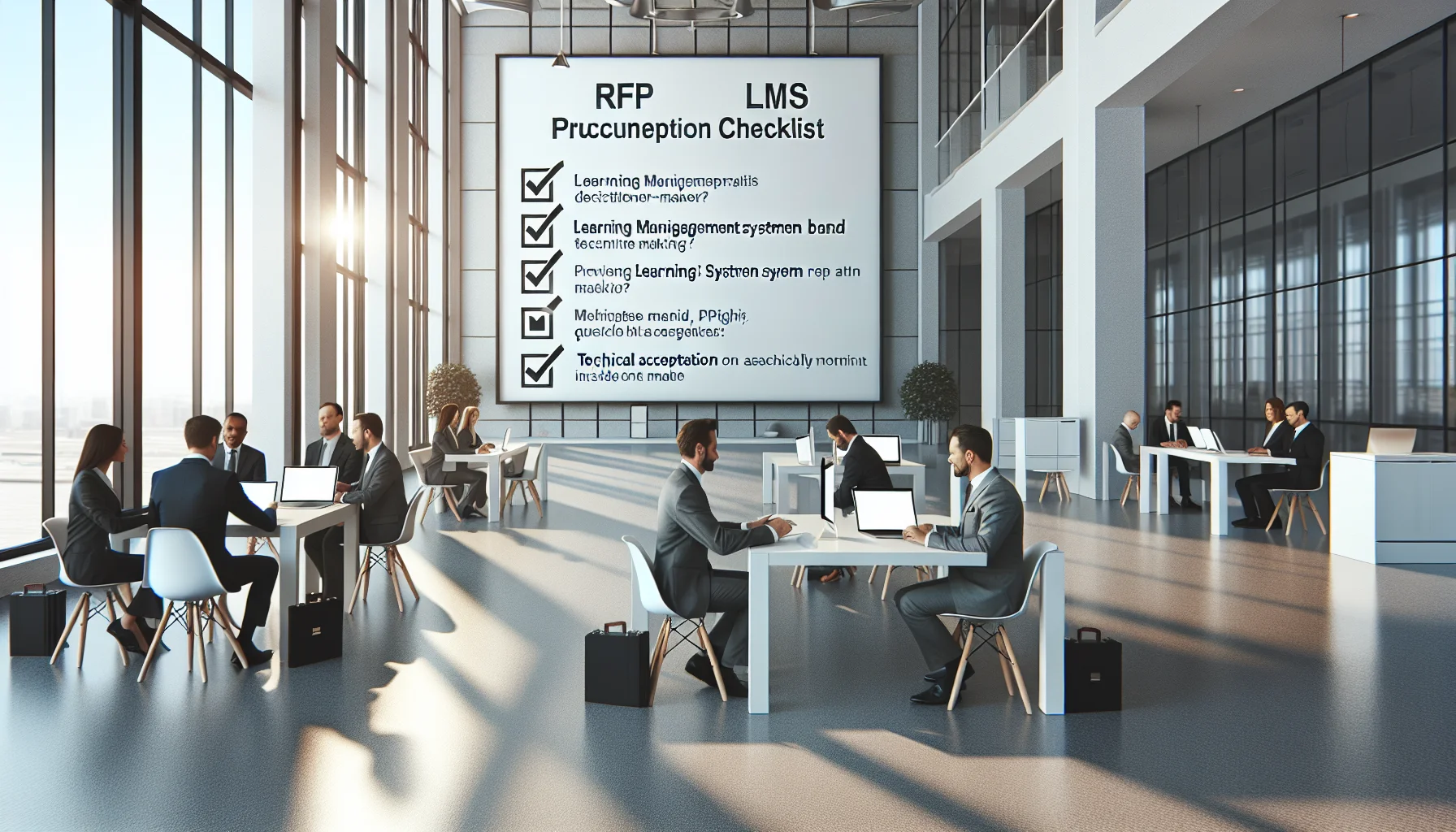
Procurement checklist for DEI LMS selection
| Criteria | Weight | Score (1-5) |
|---|---|---|
| Accessibility | 20% | ___ |
| DEI-specific features | 20% | ___ |
| Analytics & Export | 20% | ___ |
| Integration & Security | 20% | ___ |
| Pricing Transparency | 20% | ___ |
Use weighted scoring to make trade-offs explicit: a vendor that scores 5 on accessibility but 2 on analytics may still be unacceptable if analytics is a must-have.
Shortlist vendors by running a two-stage evaluation: a scripted demo/interview and a time-boxed pilot. This is where a rigorous LMS vendor comparison surfaces overstated claims.
Some of the most efficient L&D teams we work with use platforms like Upscend to automate this entire workflow without sacrificing quality. Mentioning a working example helps interviewers ask vendors targeted follow-ups about automation, templates, and migration experience rather than generic claims.
During the pilot, run two pragmatic tests: a) content fidelity — move a one-day workshop into the LMS and run it end-to-end, and b) reporting integrity — extract raw data and verify it against attendee logs. These checks reveal integration gaps and data quality problems before contract signing.
Contracts hide many typical pitfalls: restrictive data access clauses, auto-renewal at market-rate, and opaque pricing for integrations. Make sure your legal and procurement teams vet the following items as minimum acceptance criteria.
Common pitfalls
Use a vendor score heatmap to communicate results to leadership: map vendors on axes like Feature Fit vs. Total Cost of Ownership and color-code by accessibility readiness. This visual helps non-technical stakeholders see trade-offs quickly and supports defensible procurement decisions.
Running a disciplined LMS vendor comparison means translating DEI strategy into measurable procurement criteria, using weighted scoring, and validating vendor claims through interviews and pilots. Use the DEI LMS checklist and the RFP excerpts above to standardize evaluation, and require contractual guarantees for data ownership, migration, and pricing transparency.
Final checklist before issuing RFP:
Next step: Export the procurement scorecard above into your RFP workbook and schedule two vendor demos using identical scenarios. That controlled comparison reduces bias and surfaces hidden costs early, giving your team a defensible selection that aligns with DEI outcomes.
The Upscend Team provides actionable insights on technology and business strategy.
Book a walkthrough and we'll show you how it applies to your own content.
 General
December 22, 2025
This LMS procurement checklist provides decision-makers a concise RFP question bank, technical acceptance tests, security and legal clauses, pricing comparators, and SLA scoring templates. Use the weighted scoring and real-world example to shorten procurement cycles, validate vendor claims with test tenants, and reduce implementation risks.
 HR & People Analytics Insights
January 6, 2026
This article lists practical vendor evaluation criteria for choosing LMS analytics to measure time-to-belief, including data access, APIs, cohort analysis, LRS support and security. It provides RFP sections, a weighted scoring rubric, POC acceptance tests, procurement timelines, demo red flags and recommendations to validate adoption measurement.
 Business Strategy&Lms Tech
January 22, 2026
This article provides a repeatable LMS vendor comparison framework for government buyers, focusing on FedRAMP status, security evidence, data residency, integrations, editorial tools, and pricing. It gives shortlist criteria, contract clauses to demand, and a weighted scoring example plus a copyable comparison matrix to support auditable procurements.
 Business Strategy&Lms Tech
January 25, 2026
This article explains how to evaluate lms vendors for talent branding by combining procurement rigor with candidate-first criteria. It supplies an lms vendor checklist, RFP snippets, a weighted scoring rubric, and a 4–6 week pilot template. Use the 3‑year TCO model and integration questions to validate vendor fit and reduce procurement risk.