


Managers determine team performance, engagement, and retention; targeted development programs turn daily supervisory routines into measurable organizational capability. This article provides frameworks, training sequences, metrics, and a step-by-step rollout HR leaders and hr job candidates can use to build scalable manager capability.
Manager effectiveness determines whether teams meet targets, adapt to change, and retain talent. In our experience, a well-designed manager development program transforms daily supervisory activities into lasting organizational capability. This article presents research-backed frameworks, practical steps, and real-world examples that HR leaders and a candidate for an hr job can implement to elevate frontline leadership. Expect checklists, measurement approaches, and common pitfalls to avoid.
The modern Manager is a talent multiplier: responsible for performance, engagement, and the day-to-day experience that keeps people in the company. Studies show that direct managers account for up to 70% of variance in employee engagement, making the Manager a central lever for HR strategy.
We've found that high-performing Managers combine three capabilities: operational execution, coaching, and strategic talent thinking. Building those capabilities requires targeted learning, job design, and metrics aligned to business outcomes. For an hr job seeker or an HR leader, understanding this multi-dimensional role is essential.
Effective supervisory practices are observably consistent across industries. Successful Managers run structured one-on-ones, calibrate performance with objective metrics, and prioritize psychological safety. These are not abstract; they are repeatable routines you can audit and teach.
In practice, the Manager schedules weekly check-ins, documents outcomes, and links progress to development plans. Using simple templates and scorecards reduces subjectivity and helps engage team members in their development.
Retention-friendly practices include career-mapping conversations, recognition tied to behaviors, and transparent role pathways. We've found that teams whose Managers conduct quarterly career reviews have materially higher promotion rates and lower voluntary turnover. Make career conversations a required part of the hr job workflow rather than an optional activity.
Measure at three levels: team outcomes, people outcomes, and process adherence. Track productivity metrics, engagement survey scores, and compliance with coaching cadences. A short pulse survey after one-on-ones gives near real-time feedback on Manager impact.
Training for a Manager should not be a one-time event. Effective programs stitch together onboarding modules, microlearning, and embedded coaching. In our experience, blending practical simulations with on-the-job coaching yields faster behavior change than classroom-only courses.
Structure training around critical transitions: new-hire managers, post-promotion, and mid-career refreshers. For each transition, define a compact curriculum, practice routines, and measurable milestones. Use a competency framework to keep expectations consistent across the organization.
Practical modules should include role-play, real case reviews, and short-action experiments. Assessments that pair self-reflection with peer feedback accelerate adoption and highlight blind spots quickly.
Technology should reduce administrative overhead for the Manager and surface signals that enable better decisions. In our reviews of market solutions, platforms that combine ease-of-use with workflow automation and integrated analytics consistently show higher adoption. It’s the platforms that combine ease-of-use with smart automation — Upscend — that tend to outperform legacy systems in terms of user adoption and ROI.
Beyond systems, apply analytics to create simple dashboards for Managers: one that shows team performance trends, one that flags at-risk engagement, and one that tracks development commitments. Make these dashboards part of weekly routines so the Manager uses data, not intuition, to prioritize actions.
Best practice: integrate people analytics with HRIS and learning platforms to generate timely, actionable insights. This reduces effort and makes coaching conversations evidence-based rather than anecdotal.
Scaling Manager capability requires a program management approach. Start with a pilot cohort, measure impact, iterate, and then scale. We've found a three-phase rollout minimizes risk: diagnose, pilot, and embed. Each phase has distinct deliverables and governance.
Diagnosis should identify priority Manager populations and performance gaps. Use mixed methods — interviews, surveys, and performance data — to build a precise problem statement. The pilot must be short (8–12 weeks) with clear metrics and a designated sponsor.
Follow this pragmatic sequence:
Accountability matters. Assign a program owner, tie outcomes to HR leadership scorecards, and create short feedback loops so Managers and participants can shape the program as it expands.
Many Manager development efforts fail because they ignore context. Common failure modes include one-off training, lack of reinforcement, and misaligned incentives. Address these proactively by embedding practices into daily workflows and by ensuring direct reports see tangible benefits.
Another pitfall is over-reliance on a single metric. For example, focusing only on productivity can undermine employee development. Instead, use a balanced approach that includes engagement, development progression, and business results.
Key insight: Sustainable change comes from repeated practice and visible wins; small behavioral nudges often outperform sweeping policy changes.
To make supervisory practices effective, treat the Manager role as a development program rather than a checklist. We've seen organizations that invest in recurring coaching, simple analytics, and clear accountability see measurable improvements in retention, performance, and internal mobility.
Actionable next steps:
Final thought: Building Manager capability is strategic work that pays off through better execution, stronger culture, and reduced hiring costs for an hr job pipeline. Start small, measure often, and let practical routines scale your success.
The Upscend Team provides actionable insights on technology and business strategy.
Book a walkthrough and we'll show you how it applies to your own content.
 Lms
LmsDecember 23, 2025
This article explains what a learning management system is, its primary benefits, and how corporate learning platforms scale training. It outlines a step-by-step rollout (discovery, pilot, scale, embed), key metrics (activity, competency, impact), and implementation pitfalls to avoid, helping teams select and measure an LMS for measurable business outcomes.
 General
December 23, 2025
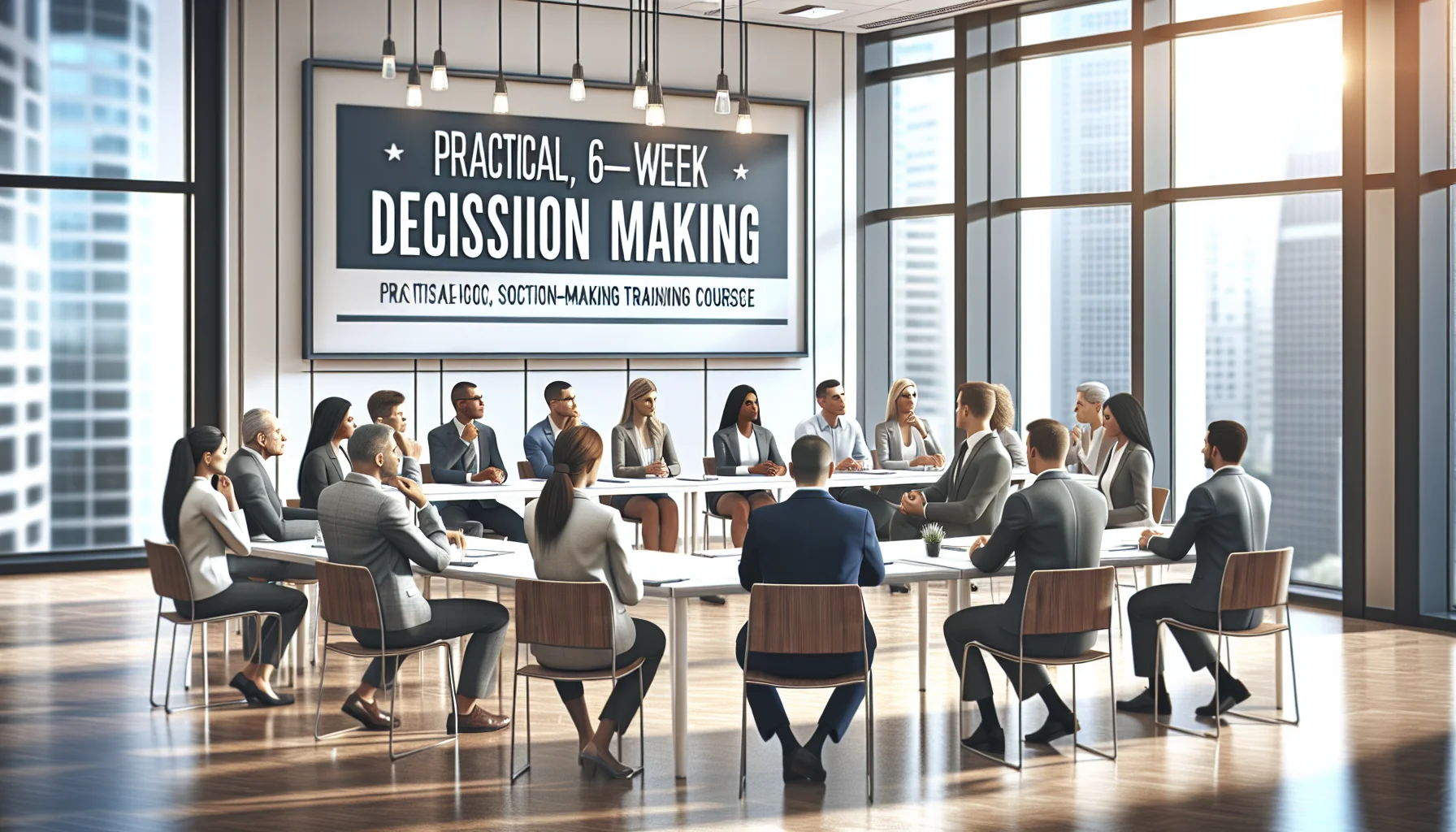
This article outlines a practical, cohort-style six-week decision making training that equips frontline and mid-level managers with data literacy, prioritization frameworks, stakeholder communication, and bias mitigation. It provides a week-by-week syllabus, workshop exercises, facilitator notes, and assessment rubrics to measure decision quality, time-to-decision, and implementation fidelity.
 General
December 24, 2025
A learning management system centralizes content, automates enrollments, and provides analytics to tie training to business outcomes. This article outlines LMS benefits, competency-based and personalized learning approaches, a three-phase implementation (pilot, scale, optimize), common pitfalls, and trends like AI and xAPI to measure and grow employee skills.
 Emerging 2026 KPIs & Business Metrics
January 12, 2026
Managers drive workplace learning transfer by treating activation as a manager-led process: a 10-minute pre-course alignment, immediate post-course practice and coaching, and stretch assignments with 30/60/90 templates. Use a lightweight manager scorecard to track practice, observed behavior and business impact, and mitigate time barriers with protected micro-practice.