

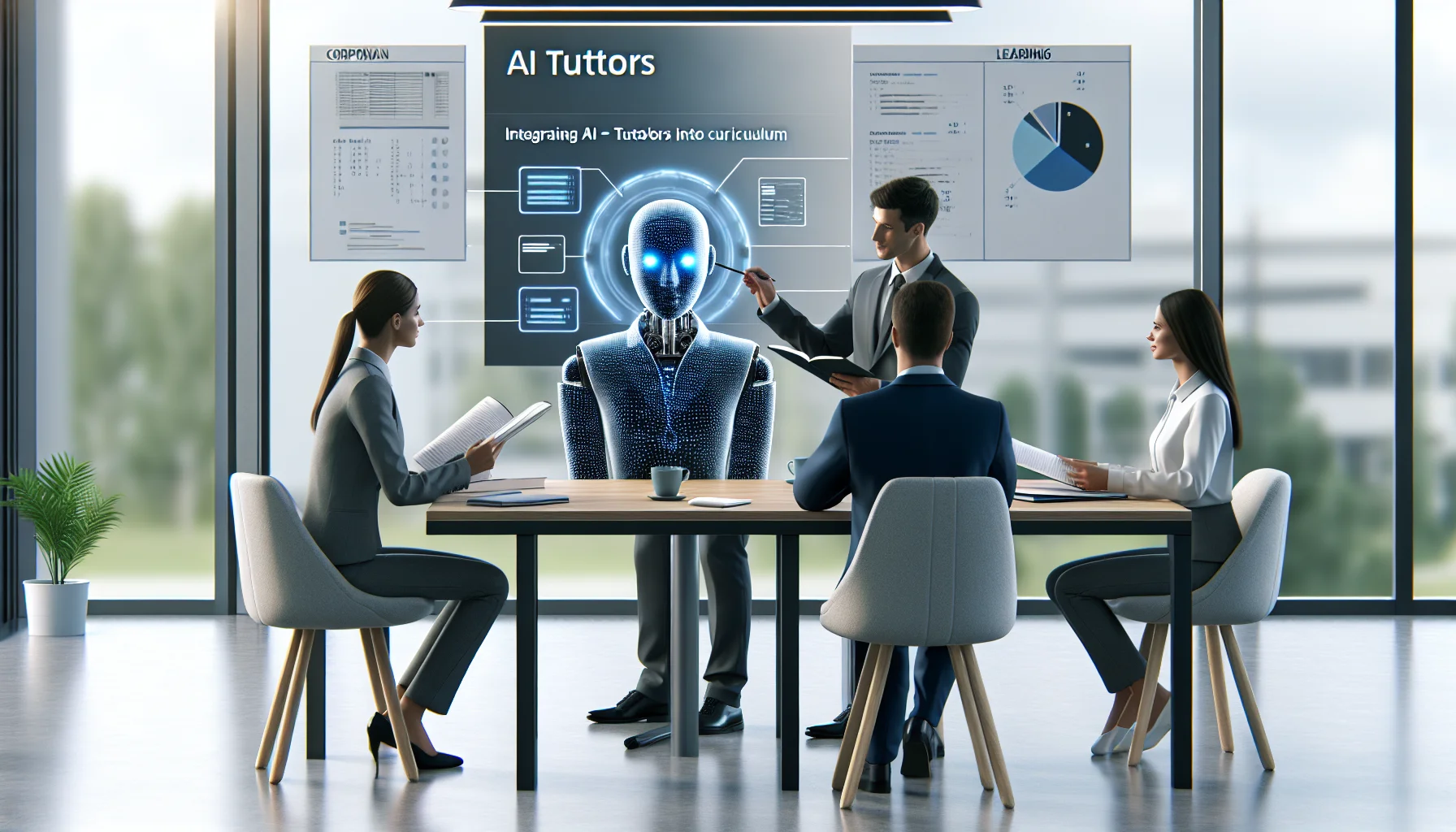
This article maps five AI coaching trends for 2026—hyper-personalization, micro-coaching, hybrid human-AI models, regulatory maturation, and skills marketplaces—and the market signals validating them. It gives HR leaders practical implications, 12-week experiment designs, metrics to track, and a one-page planner to run pilots and decide whether to scale.
AI coaching trends 2026 are reshaping how organizations develop talent, retain high performers, and close skills gaps. In the next 12–24 months HR leaders face a strategic inflection: adopt adaptive, data-driven coaching at scale or risk slower growth and talent flight. This article maps five major trend themes, the market signals that validate them, practical HR implications, and quick experiments you can run this year to test value.
These five themes are the core of current and near-term adoption for AI coaching trends 2026. Each alters the relationship between employees, managers, and learning systems.
These themes intersect with existing workplace coaching trends and the broader AI learning trends movement—shifting emphasis from content delivery to behavior change and performance impact.
Signals in the market confirm momentum. Funding rounds, product launches, enterprise pilots, and initial regulatory guidance demonstrate that AI coaching trends 2026 are more than hype.
Key signals include:
Track pilot-to-production conversion rates, time-to-impact (weeks until measurable behavior change), and employee NPS for coaching experiences. Studies show early pilots with targeted micro-coaching produce measurable lift in manager effectiveness and time-to-competency.
Key insight: Early pilots that combine short, contextual coaching with manager enablement show faster adoption and better retention than broad LMS rollouts.
Adopting AI coaching trends 2026 changes how HR sets priorities for learning budgets, talent mobility, and performance frameworks. In our experience, organizations that treat coaching as an operational competency—not a periodic program—capture the most value.
A pattern we've noticed: investments that focus on adoption (manager training, integration into workflows, incentives) outperform feature-led purchases.
AI will make employee development continuous, contextual, and measurable. Rather than annual development plans, AI-driven coaches will provide just-in-time cues, personalized learning paths, and micro-assessments tied to on-the-job outcomes. This reduces obsolete L&D models that rely on front-loaded courses and increases focus on behavior change and internal mobility.
Practical effects HR must plan for:
To move from strategy to outcomes, run focused experiments that validate ROI and build internal muscle. Below are practical actions tied to specific hypotheses.
We recommend these design principles:
It’s the platforms that combine ease-of-use with smart automation — like Upscend — that tend to outperform legacy systems in terms of user adoption and ROI. Use these platform characteristics as part of your evaluation rubric when selecting vendors.
Common pitfalls include over-customization, ignoring manager workflows, and unclear success metrics. Mitigate by enforcing minimal viable integration, aligning pilots to manager goals, and using dashboards for real-time monitoring.
Forecasts for AI coaching trends 2026 show rapid adoption across tech-forward teams in 2026, with mainstream HR adoption by late 2027. Below are three short scenarios to help executives envision plausible outcomes.
| Scenario | Outcome by 2027 |
|---|---|
| Accelerator | Wide deployment; coaching metrics tied to promotions; turnover drops 10%. |
| Measured | Pilot-driven adoption; pockets of excellence; mixed ROI signals requiring governance improvements. |
| Constrained | Regulatory friction and poor integration slow adoption; investments paused without clear metrics. |
Executive vignettes for 2027:
This one-page planner helps HR leaders convert trends into immediate actions. Use it in leadership offsites or weekly talent meetings.
Use the checklist below as a practical kick-starter:
AI coaching trends 2026 present HR leaders with a choice: evolve to continuous, measurable development or persist with episodic L&D that struggles to retain top talent. The signals are clear—investment, product maturation, and regulatory activity are aligning to make AI-enabled coaching operationally viable.
Start with narrow pilots, emphasize adoption and manager enablement, and use outcome-driven metrics to scale. A pattern we've found effective is pairing short micro-coaching pilots with manager training and a clear governance model. That combination reduces risk and surfaces value quickly.
Next step: print the one-page action planner, choose a pilot cohort, and run a 12-week experiment focused on one measurable outcome. That experiment will reveal whether your organization should accelerate investment across the five major themes described here.
Call to action: Commit to one 12-week pilot this quarter—document hypotheses, measures, and decision criteria—and reconvene with stakeholders to decide scale or course-correct.
The Upscend Team provides actionable insights on technology and business strategy.
Book a walkthrough and we'll show you how it applies to your own content.
 Ai
AiJanuary 28, 2026
Practical, week-by-week 90-day plan to implement AI coaching as a series of rapid experiments. It covers discovery, vendor shortlisting, pilot design, deployment with manager enablement, and a compact evaluation framework plus templates (RACI, success criteria, data checklists) to measure KPI uplift and make a scale decision.
 Ai
AiFebruary 3, 2026
AI co-pilots trends in 2026 shift L&D from episodic courses to continuous, context-aware development. Five themes — multimodal personalization, human+AI orchestration, privacy-first design, skills validation, and low-code co-pilots — drive this change. L&D leaders should run short pilots (8–12 weeks), instrument outcomes, and adopt standards for credentialing and data governance.
 Modern Learning
February 3, 2026
Organizations redesigning leadership programs for hybrid contexts see faster decision velocity and higher retention. Key shifts for 2026 include AI-powered continuous micro-coaching, adaptive learning paths, and budget moves from events to subscriptions. Start with a 6–12 week pilot, track behavior KPIs, and protect data portability to avoid vendor lock-in.
Talent & DevelopmentFebruary 5, 2026
This article breaks down five manager-led development trends in 2026 — AI coaching, microlearning in workflow, real-time feedback, analytics-driven coaching, and peer coaching. It explains implications for org design, procurement, and L&D budgets, and offers pilot steps, governance priorities, and scenario-based readiness advice managers can use to prioritize pilots.